


Learn how to address the underlying causes of a fishy smell in dogs, including veterinarian-recommended dietary solutions, manual procedures for anal gland issues, and expert tips for long-term preventative care. While many Pet Parents view a fishy odor as a minor issue, Vetnique recognizes it as a clinical signal of discomfort that requires a science-backed approach.
At Vetnique, we are grounded in clinical experience and believe in providing nose-to-tail wellness. Understanding the underlying causes and preventive measures is the first step toward long-term relief.
Introduction to anal gland issues
Anal gland issues are one of the most common reasons Pet Parents notice a strong fishy odor coming from their pets. Our founder, Dr. James Bascharon, created Glandex specifically to solve this frustrating problem he saw every day in his veterinary clinic. The anal glands, also known as anal sacs, are two small scent glands located on either side of your dog’s anus. These glands produce a unique, pungent secretion that dogs use to mark their territory and communicate with other dogs.
Problems arise when the anal glands become impacted, infected, or irritated. When this happens, the glands leak or build up fluid, resulting in a strong fishy smell. In addition to the unpleasant odor, dogs with anal gland issues experience discomfort, pain, and behavioral changes. Recognizing the signs of anxiety in dogs early ensures your family member stays comfortable and your home stays fresh.
Understanding anal glands
Anal glands produce a thick, oily secretion that is stored in the anal sacs and released during bowel movements. This natural process allows dogs to leave a scent marker, helping them communicate and establish territory. According to the American Veterinary Medical Association, these sacs normally empty through narrow ducts during defecation. However, when the anal glands do not empty properly, they become impacted, infected, or irritated. This leads to a strong fishy odor and significant discomfort.
Anal gland issues are triggered by factors including soft stool, allergies, or anatomical differences. To prevent these problems, Pet Parents should focus on maintaining overall health through a balanced diet, regular exercise, and routine veterinary check-ups. Supporting your dog’s anal gland health reduces the risk of strong fishy odors and keeps your pet happy.
What causes the fishy smell from anal glands?
Dogs have two small sacs called anal glands located on either side of the anus at roughly the 4 o’clock and 8 o’clock positions. These glands produce an oily, pungent fluid used for scent marking. In a healthy dog, these anal glands produce a distinct secretion released in small amounts during every bowel movement.
The smell becomes a problem when the glands do not empty properly. When fluid builds up, it thickens, becomes concentrated, and eventually leaks onto your dog’s fur, your bedding, or your carpet. A foul odor or your dog's fishy odor is the primary sign of anal sac issues or anal gland irritation.
There are definitive reasons the glands fail to empty on their own:
-
Soft or loose stool: Firm stool creates the pressure needed to squeeze the sacs; soft stool does not.
-
Excess weight: Pushes the glands deeper and reduces the muscle tone needed for natural expression.
-
Allergies: Food or environmental allergies cause perianal inflammation that blocks the gland ducts.
-
Anatomical factors: Some dogs, especially small breeds, have glands positioned in a way that makes natural emptying difficult.
-
Full anal glands or impacted anal glands: When the glands become too full or impacted, it leads to chronic anal gland problems.
Certain dog breeds are more prone to anal sac issues. For a deeper look at the full range of anal gland conditions, see our comprehensive guide to anal gland issues in dogs. If your dog smell like fish, it is due to anal sac issues or impacted anal glands, and veterinary attention is required.
Dental disease and dog smell
While anal gland issues are the leading cause of fishy odor, dental disease also contributes to unpleasant smells. Dental disease occurs when bacteria build up on teeth and gums, leading to inflammation, infection, and periodontal disease. This results in dog bad breath and a strong fishy odor that Pet Parents sometimes mistake for anal gland problems.
Regular dental care is essential. Brushing teeth regularly, offering dental chews, and scheduling professional cleanings maintain oral health. If dental disease is present, treatment includes antibiotics, pain medication, and dental procedures to remove plaque. Keeping teeth and gums healthy eliminates bad breath and reduces unpleasant odors in your home.
How to clean the smell off your dog
When an accident occurs, you must deal with it immediately to prevent the odor from spreading to furniture and hands. The odor clings to the dog's coat and skin, especially in skin folds, making it persistent.
Step 1: Wipe the source
Start by cleaning the perianal area directly. Glandex Wipes are formulated with enzymatic deodorizers that break down the compounds in anal gland fluid rather than just masking the odor. Gently wipe the area around the anus and any fur where fluid spread.
Step 2: Targeted bath
If the smell has spread, a bath is the next step. Use a mild, dog-safe shampoo for dogs and focus on the rear end, tail base, and inner thighs. The fishy odor lingers in skin folds and on the dog's coat, so clean these areas thoroughly. Regular soap often fails to break down the oily gland secretion, which is why an enzymatic formula is necessary.
Step 3: Dry and reassess
After drying your dog, perform a sniff check. If the odor lingers, apply another wipe to that area. Persistent smell concentrated around the anus after cleaning indicates the glands are still leaking, meaning the underlying issue is not resolved.
How to remove anal gland expression smell from your home
Anal gland secretions are oily and potent. If they get on carpet or furniture, standard cleaning is insufficient.
Carpet and upholstery
-
Blot first: Do not rub. Use paper towels to absorb as much fluid as possible before it sets.
-
Apply an enzymatic pet odor cleaner: Enzymatic cleaners contain bacteria that break down organic compounds. Spray generously and let it sit for the recommended time.
-
Avoid ammonia: Ammonia can chemically set the odor rather than remove it.
-
For stubborn smells: After the area dries, sprinkle baking soda over it, let it sit for a few hours, and vacuum.
Dog bedding and washable fabrics
-
Machine wash: Use the hottest setting the fabric allows.
-
Add a booster: Add an enzymatic laundry booster or white vinegar to the wash cycle.
-
Air dry: Check for residual odor before returning bedding to use.
When the smell means a vet visit
A mild, occasional whiff is common, but specific patterns require professional intervention:
-
Constant odor: Glands that leak continuously are likely impacted or infected, which indicates anal sac disease.
-
Visible discharge: Discharge, blood, or pus signals infection or an abscess requiring treatment. Severe infection requires oral medications or topical or oral medications prescribed by a veterinarian.
-
Scooting behaviors: Your dog is scooting to relieve pressure, a definitive sign of anal sac disease.
-
Physical inflammation: Swelling, redness, or heat around the anus indicates inflammation or abscess.
-
Obsessive licking: Licking or biting the rear is a pain response related to anal sac discomfort.
Persistent odors or changes in the dog's stool indicate underlying health issues such as urinary tract infections, kidney infection, or kidney disease. Both female dogs and male dogs develop fishy odors from various health issues, including vaginitis in a female dog and urinary tract infections or anal sac disease in male dogs.
How to prevent the smell from coming back
Preventing the odor is the ultimate goal. Since the smell comes from glands that do not empty naturally, you must support the conditions that allow them to drain during bowel movements. A balanced dog's diet with appropriate fiber content is essential for anal gland health.
Support firm stool with fiber
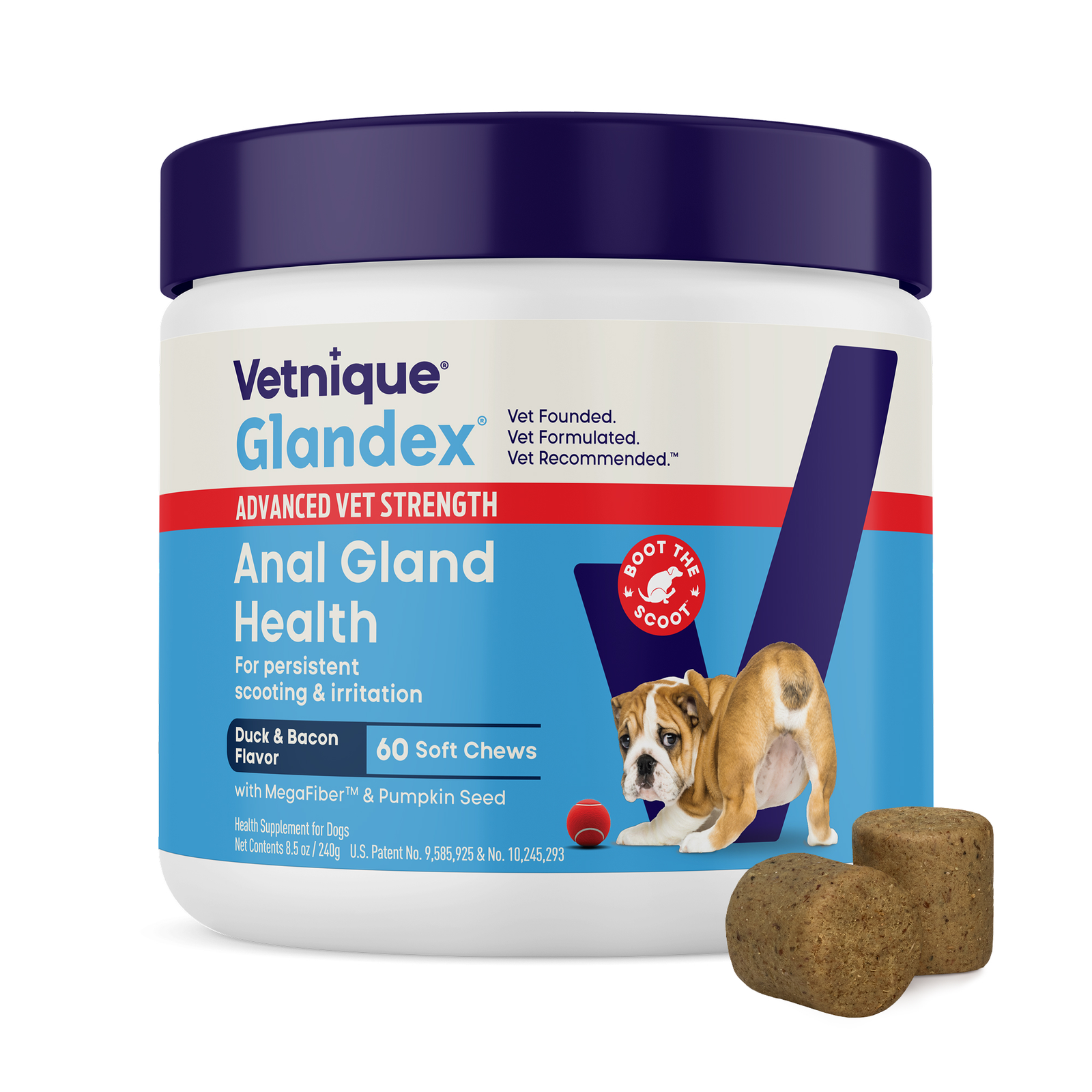
Firm stool physically presses on the anal sacs, squeezing out fluid before it builds up. Glandex Soft Chews are formulated with a patented blend of soluble and insoluble fiber, plus prebiotics and probiotics. These ensure the firm, bulky stool required for natural anal gland function. For more dietary strategies, see 7 foods that help dogs express their anal glands.
Maintain a healthy weight
Overweight dogs are prone to anal gland issues because excess tissue makes natural emptying difficult. Regular exercise and appropriate portions keep the glands functioning properly.
Address allergies
Allergies are a leading cause of chronic anal gland problems. Both food sensitivities and environmental allergies cause inflammation around the gland ducts. If your dog has recurring anal gland smell along with itchy skin or ear infections, consult your vet about allergy testing.
Keep up with perianal hygiene
Wiping the perianal area when you notice a mild odor prevents buildup. Glandex Wipes use enzymatic deodorizers that neutralize odor instantly.

Conclusion: how to stop dog fishy smell for good
Stopping the cycle of fishy odors requires moving beyond temporary masks to address the root cause: inefficient anal gland emptying.
By integrating a fiber-rich supplement like Glandex into your dog’s daily routine, you support the natural pressure needed for healthy bowel movements to clear the sacs.
Combine this dietary defense with proactive hygiene, such as using enzymatic wipes after outdoor adventures, to maintain a fresh, odor-free home.
While these proactive steps empower you to manage your pet's wellness at home, clinical symptoms like swelling or persistent discharge always require professional veterinary oversight.