

Ah, the perfect poop — coveted by pets and humans alike, a healthy stool means the digestive system is in healthy working condition. Food is being digested properly, nutrients are absorbed, and the body efficiently eliminates waste. But what happens when the perfect poop goes awry?
Every dog will struggle with imperfect poops. As a pet parent, it's your job to recognize normal, healthy dog poops from abnormal ones to understand how your pet's digestive system works. While it isn't the most glamorous job in the world, think of checking your dog's poops as a diagnostic check for their digestive health. A regular look-see can be hugely helpful in maintaining your furry friend's long-term health!
We're covering what healthy poop looks like in terms of shape, color, consistency, and other notable characteristics. Keep reading for a guide to canine stools with our dog poop color chart, a visual spectrum of dog poop shapes, and a cheat sheet for recognizing the perfect dog poop!
What Does Healthy Dog Poop Look Like?
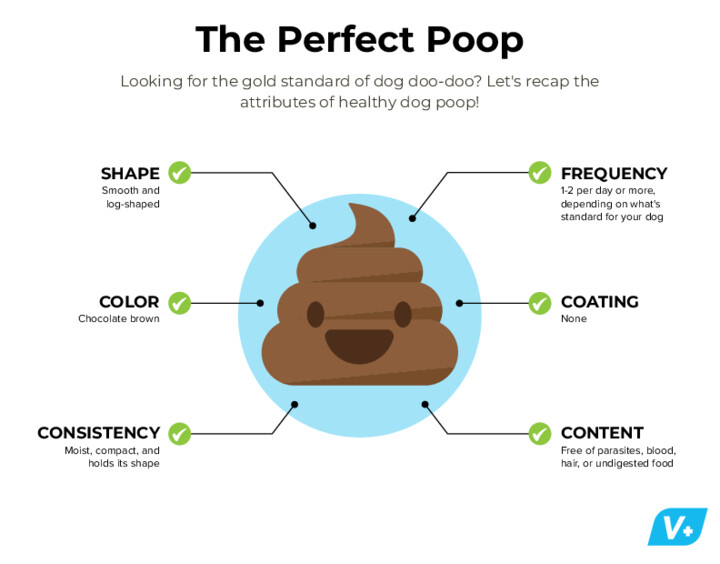
A healthy dog stool will be smooth, semi-firm, and chocolate brown. More specifically, the hallmarks of a perfect poop should include the following:
- Smooth log or sausage shape
- Chocolate brown color
- Moist consistency that's still firm enough to hold its shape
- No coating, though a thin layer of mucus can be normal
- Free of debris such as undigested food, blood, or large clumps of hair
Your dog's digestive system supports complete bodily health, including immunity, joint health, and heart health. You want your dog's gastrointestinal tract — including bowel movements — to work in tip-top shape so that it can continue to maintain other key functions in the body. A perfect poop indicates everything is going smoothly in that department — no pun intended!
A regular probiotic supplement for dogs can be an effective way to support your dog's stool quality and digestive health. Adding a fiber supplement can also be good for dogs struggling with loose, watery stools — which we'll explore next!
Characteristics of Healthy Dog Poop
Now that we know what a healthy dog poop should look like, let's explore the good, bad, and ugly of canine stools — and what they might mean for your pet's health!
Shape
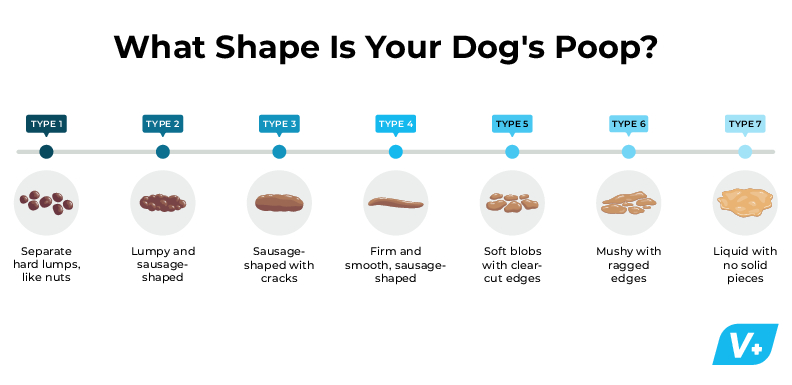
The shape of a dog's poop is another obvious indicator of digestive health. The shape of your dog's poop will tell you if your dog is leaning toward constipation or diarrhea or somewhere in the middle.
Type 1 stools are on one end of the spectrum and represent a more constipated dog. Type 1 stools are dry, hard, lumpy, and usually in multiple small pieces. Type 2 stools are lumpy but usually in a larger cluster. Type 3 stools near the 'perfect' poop status with a near-sausage shape but with cracks that signify light constipation.
The middle of the spectrum is a Type 4 stool that's log, cylindrical, or sausage-shaped (like the inner shape of the intestines). If your dog's poop matches this description, congratulations!
Stools on the latter end of the spectrum become softer and more formless in shape, signifying worsening diarrhea conditions. Type 5 stools are soft blobs with clearly defined edges.
Type 6 stools are mushier, and their edges are ragged and irregular. Type 7 stools are near-liquid in consistency with little-to-no definition or shape.
If your dog has harder stools, it could be linked to dehydration, low-fiber diets, or a sedentary lifestyle. If your dog has more watery stools, it could be linked to food intolerance, parasites, or stress.
Color
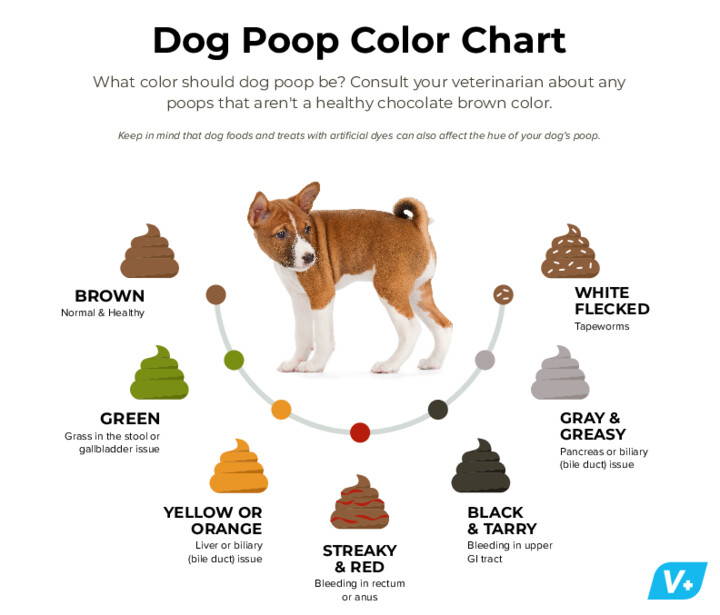
Dog poop color is a huge indicator of your dog's health. So what color should dog poop be? Chocolate brown is the ideal color of dog poop and means things are going pretty well in your dog's digestive system. So what does it mean when your dog's poop doesn't fall into the coveted chocolate brown category? Let's explore the many colors of dog poop!
Chocolate Brown Dog Poop
Sorry to ruin chocolate for you, but the good news is that a healthy brown stool indicates that food has been effectively digested in your canine's system. When mixed with yellow-green bile in the intestinal tract, digested food turns brown — the optimal hue for your dog's poop!
Green Dog Poop
There are a few reasons your dog's poop could be green. Pica could be causing your dog to eat more grass than usual, which can influence the hue of their poo. Green could also mean the presence of bile from a related gallbladder issue, which will warrant a discussion with your vet.
Yellow/Orange Dog Poop
Yellow dog poop can sometimes indicate a food intolerance, which can cause food to pass too quickly through the digestive tract. A yellow-orange or true orange dog poop often points to a bile duct issue, pancreas inflammation (pancreatitis), or liver issue. The liver produces the bile that travels through the digestive tract and affects the hue of stool.
Red Dog Poop
A dog pooping blood from the lower GI tract or the anorectal area can produce red, streaky poops. These injuries can be related to straining from constipation, scooting from anal gland issues, or even environmental injury. Red dog poop means the blood is new, which usually does not indicate bleeding in the upper GI or intestinal tract.
Black Dog Poop
Tarry dog poop indicates the presence of old blood in your dog's stool, likely from injury higher in the intestinal tract. Blood oxidizes as it travels through the digestive tract, darkening until it's black.
Gray Dog Poop
Grey, greasy-looking stool is a sign that your dog's suffering from a biliary issue that is preventing bile from entering the digestive tract to break down fats (hence the oily residue) from digested food. This could point to an issue with the gallbladder, pancreas, liver, or in some cases, colitis.
White Dog Poop
White or white-flecked dog poop can be a sign of parasites. A parasitic infection can cause parasites or worms in dog poop, as it is most notably connected to tapeworms. If the white poop is more of a solid chalky color, that indicates a diet too high in calcium — which can be an issue for dogs being fed a raw diet or who eat too many bones.
In addition to the veritable rainbow of dog poop colors mentioned above, always take the foods your dog has eaten into consideration. Both man-made dyes and natural pigments in some foods can affect the color of your dog's poop — FD&C dyes, beets, and carrots are a few ingredients that change the hue of your dog's poo.
Consistency
The most desirable dog poop consistency is a soft, moist material that still holds its shape. It's easy for your dog to pass without straining or pain and will glide more easily through the digestive tract. A dry, crumbly consistency means too little moisture in the stool, while a watery consistency means too much.
Coating
Mucus helps to lubricate your dog's digestive tract, so a mucous coating around dog poop can be normal — depending on the color of the mucus. Normal mucus will appear clear or slightly milky, while abnormal mucus related to an infection can be green. Red, bloody mucus around the stool is also a cause for concern. While it's normal for healthy dog poop to have a mucus coating every once in a while, be sure to report abnormal mucus colors, consistencies, or frequency to your veterinarian.
Content
What's inside your dog's poop matters, too! Don't be surprised if, once in a while, you see bits of undigested materials like hair, grass, or food. But if undigested content becomes a regular occurrence in your dog's poop, it could be cause for concern.
Report these to your vet if you find them in your dog's poop:
- Blood (red or black)
- White flecks that look like grains of rice (tapeworms)
- Clumps of mucus (due to parasites)
- Large clumps of hair (signs of over-grooming)
When to Contact Your Vet About Abnormal Dog Poop
Ideally, you would report any abnormal stools to your veterinarian to ensure you stay ahead of potentially dangerous issues. Stools that indicate bleeding — black or red dog poop — can be especially worrisome and should be reported immediately. White-flecked dog poop should also be on your high-risk list due to parasitic infection, which can cause weight loss and transmission to other pets if left untreated.
If your dog has diarrhea, it could take 2-3 days for it to resolve on its own fully. If, after a few days, your dog still isn't pooping normally or showing other signs of illness, contact your vet for clinical treatment options. You'll also want to call your vet if your dog is constipated regularly or stops pooping for more than 48 hours.
If you have any questions about your dog's stool, start by taking notes to share with your vet. Noting the appearance, timing, and any accompanying symptoms can help you and your vet get your furry friend back to perfect poops in no time!
Looking to support your dog's digestive health? Glandex Soft Chews combine fiber, prebiotics, and probiotics to promote firm, healthy stools and support natural anal gland expression.