

WRITTEN BY DR. CHANDLER BRUENING, DVM
Does your furry friend have an unusual fixation with their backside? My dog keeps biting his bum and tail…ring any bells? If your dog keeps licking and biting his bum, you’re probably looking for ways to keep the behaviors at bay.
Understanding the behavior: why dogs chew their butt and tail
Dogs are known for their quirky behaviors, and chewing at their rear end is just one of those behaviors we come to expect as “a dog being a dog.” But a dog biting their butt isn’t ‘normal’––several factors could be contributing to this behavior, ranging from physical discomfort to psychological stressors.
Why is my dog biting his butt? If your usually relaxed dog keeps biting butt or tail areas, one of these triggers could be to blame:
Anal gland issues
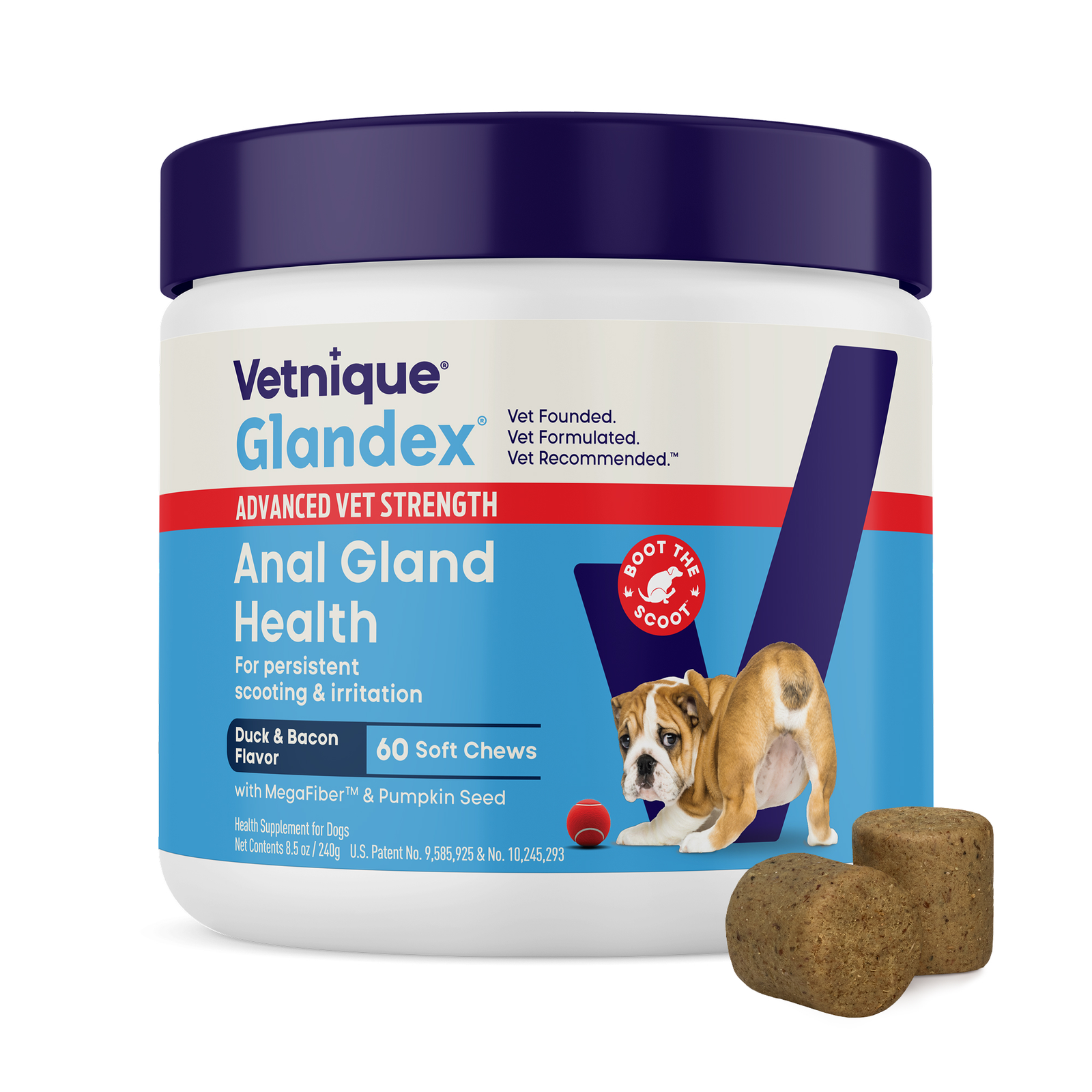
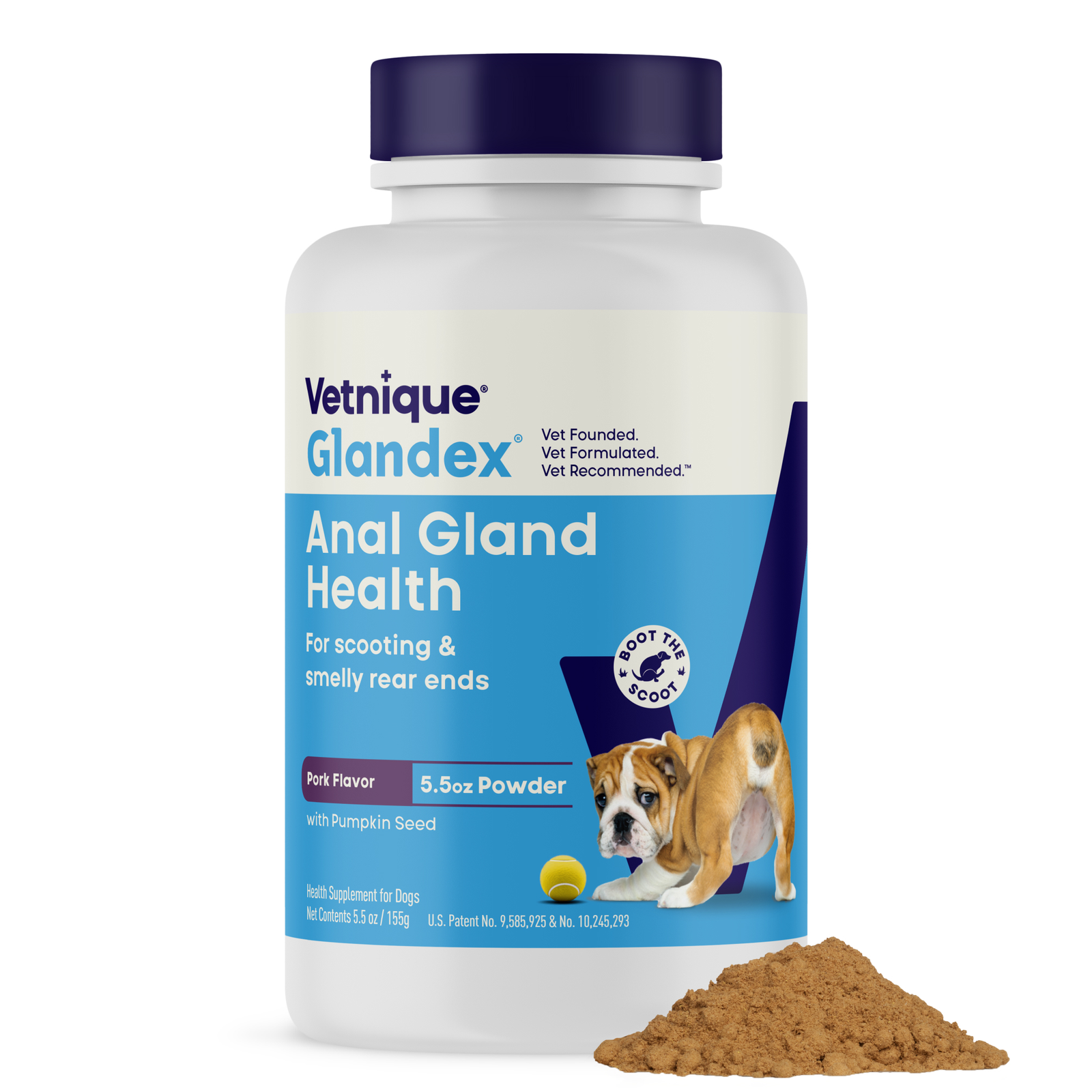
My dog keeps licking and biting his bum––what’s the deal? First up on the list of potential culprits are anal gland issues. Dogs have small sacs located on either side of the anus that produce a smelly substance. Sometimes, these glands can become blocked or infected, causing discomfort and itching that may make your dog chew or lick their rear end in an attempt to alleviate the irritation.
Skin allergies
Another common cause of butt-chewing behavior in dogs is skin allergies. Just like humans, dogs can be allergic to various environmental triggers like pollen, dust mites, or certain foods. Allergic reactions can lead to intense itching and irritation–even in the anal glands– prompting your dog to obsessively lick and chew at their bum and tail area.
Skin allergies can often be difficult to diagnose and treat, so have your pet evaluated by your veterinarian as soon as possible to determine how to best provide relief.
Parasites
The reality of parasites isn’t pleasant, but they’re common for many dogs. Fleas, ticks, and mites can cause significant discomfort for our canine companions. Even if you can’t see them, these tiny pests can wreak havoc on your dog's skin, triggering intense itching. In fact, oftentimes you won’t see the fleas causing the itch! Similar to a human getting bit by a mosquito or fire ant, the bug will go unnoticed until the itch is unbearable.
Your dog’s response to inflammation might look like butt-chewing behavior in an attempt to relieve the irritation caused by these unwelcome guests.
Skin irritation
Sometimes, the explanation for butt-chewing behavior is as simple as skin irritation. Rough play, anal gland issues, contact with irritants, or dry skin can all lead to discomfort for your pup. Just like us, dogs may try to alleviate the itchiness by chewing or licking at the affected area.
Behavioral factors
Last but not least, let's not overlook the role of behavioral factors in butt-chewing behavior. Dogs, like humans, can develop compulsive behaviors for a variety of reasons: stress, anxiety, boredom, or even habituation can lead to excessive grooming and chewing behaviors. If your dog is feeling anxious or stressed, they may resort to self-soothing behaviors like chewing on their tail or licking their rear end.
Regardless of the cause of itch, it’s important to have your pet examined by a veterinarian before the itching leads to broken skin, which can then lead to skin infection (if not already present).

Health Implications of excessive butt & tail chewing
While the occasional butt-chewing or a dog biting the tail area isn’t widely recognized as a red flag, persistent licking and biting can have serious health implications for your furry friend. Constant chewing and licking can break the skin, leading to open wounds and potential infections.
If left untreated, underlying health issues–like anal gland infections or skin allergies–can worsen over time, impacting your dog's overall well-being.
Home care & prevention strategies
Now that we understand some of the reasons behind that strange butt-chewing behavior, let’s explore some strategies to address and prevent it at home:
- Regular grooming: Keeping your dog's fur clean and free of mats with regular brushing and shampooing can help prevent skin irritation and discomfort.
- Healthy diet: A balanced diet that’s rich in essential nutrients can support your dog's overall skin health and reduce the likelihood of allergic reactions.
- Parasite prevention: Stay vigilant with flea and tick prevention methods to protect your dog from pesky parasites.
- Environmental enrichment: Providing mental and physical stimulation through toys, social play, and activities can help alleviate your pup’s boredom and reduce stress-related behaviors.
By implementing these preventive measures, you can help minimize the likelihood of your dog resorting to chewing and licking their butt and tail.
When to seek professional help
My dog keeps biting his bum and tail––but is it actually that serious?
If your dog's butt-chewing behavior persists despite your best efforts, it's time to consult with a veterinarian. A thorough examination can help identify any underlying health issues contributing to the behavior. Your vet may recommend treatments such as medicated shampoos, dietary changes, or medications to alleviate discomfort and manage any underlying conditions. Additionally, a certified animal behaviorist can provide valuable insights and guidance to address any behavioral issues contributing to your dog's butt-chewing habits.
In conclusion, a dog biting butt or tail areas may seem like a puzzling behavior, but with patience and understanding, you can help your furry friend find relief and comfort. By addressing any underlying health issues, implementing preventive measures, and seeking professional guidance when needed, you can ensure that your dog's rear end remains happy and healthy for years to come.
Still looking for answers about your dog’s rear-end health?
Why Do Dogs Scoot Their Butts?
What to Do If Your Dog Is Bleeding from the Butt
7 Foods to Help Dogs Express Anal Glands Naturally
This blog exists to provide general information and education about veterinary health and related subjects. The information and other content provided in this blog, website, or in any linked materials is not intended as and should not be considered, or used as a substitute for, medical advice, diagnosis, or treatment. We cannot diagnose conditions, provide second opinions, or make specific treatment recommendations through this blog or website.
If you suspect that your pet has a medical concern, you should consult with your veterinary health care provider or seek other professional medical treatment immediately. Never disregard professional medical advice or delay in seeking it because of something that you have read on this blog, website, or in any linked materials.