

Most cat owners have no idea their cat has anal glands until something goes wrong. Unlike dogs, where anal gland issues are widely discussed, cat anal gland problems tend to catch owners off guard. The good news is that the signs are fairly recognizable once you know what to look for, and most problems are manageable when caught early.
What Are Anal Glands In Cats?
Cats have two small glands (also called anal sacs) located on either side of the rectal opening, at roughly the 4 o'clock and 8 o'clock positions. These glands produce a strong-smelling fluid that cats use for scent marking — it is part of how they communicate territory to other animals.
Under normal circumstances, a small amount of this fluid is released each time your cat defecates. The pressure of firm stool passing through the rectum naturally squeezes the glands and expresses the fluid. Cats may also release this fluid when they are frightened or feel threatened, which is why a sudden foul smell can sometimes accompany a stressful event.
When the glands are functioning normally, you will never notice them. Problems start when the fluid is not being expressed properly and begins to build up.
What Are the Functions of Anal Glands in Cats?
Anal glands, also called anal sacs, are two small glands located just inside a cat’s anus, typically positioned at the 4 o’clock and 8 o’clock positions. While they’re easy to overlook, these glands actually play an important role in your cat’s natural communication and digestive process.
1. Scent Communication
Cats rely heavily on scent to interact with their environment. The fluid inside the anal glands contains unique chemical markers that act like a “personal signature.”
When a cat passes stool, a small amount of this fluid is naturally released. This helps:
- Mark territory
- Communicate with other animals
- Leave behind identifying scent cues
This is part of why cats are so particular about their litter box habits—it’s not just elimination, it’s communication.
2. Lubrication During Bowel Movements
Anal glands also help facilitate smoother stool passage. When functioning properly, they release a small amount of fluid during defecation, which can help lubricate the rectum and make bowel movements more comfortable.
3. Natural Expression Through Healthy Digestion
In healthy cats, anal glands empty on their own during normal bowel movements. Firm, well-formed stools apply the pressure needed to express the glands naturally, meaning most cats never need manual expression.
However, when stool consistency changes (such as chronic soft stools or digestive upset), this natural process can be disrupted. That’s when problems may begin to develop.
In short: Anal glands are a small but important part of your cat’s digestive and communication systems, and they rely heavily on proper gut health to function as intended.
Common Cat Anal Gland Issues
While anal gland problems are less common in cats than in dogs, they can still occur, especially when underlying digestive or health issues are present. Recognizing the early signs can help prevent more serious complications.
Here are the most common anal gland issues seen in cats:
1. Anal Gland Impaction
This occurs when the glands fail to empty properly, causing fluid to build up and thicken.
Signs may include:
- Scooting or dragging the rear
- Excessive licking under the tail
- Discomfort when sitting
Impaction is often the first stage and can usually be resolved if caught early.
2. Anal Gland Infection
If impacted glands aren’t addressed, bacteria can grow inside the gland, leading to infection.
Symptoms may include:
- Swelling near the anus
- Redness or irritation
- Pain or sensitivity
- Foul-smelling discharge
At this stage, veterinary care is typically needed to relieve discomfort and treat the infection.
3. Abscess or Rupture
In more advanced cases, an infected gland can form an abscess—a painful pocket of pus that may eventually rupture through the skin.
This can cause:
- Bleeding or open wounds
- Significant pain
- Lethargy or behavioral changes
Abscesses require prompt veterinary treatment to prevent further complications.
4. Chronic or Recurring Issues
Some cats may experience repeated anal gland problems, often linked to:
- Digestive imbalances
- Low-fiber diets
- Food sensitivities or allergies
- Obesity or reduced activity levels
Addressing the root cause, especially gut health, is key to long-term prevention.
Signs Your Cat Needs Anal Glands Expressed
Cats are subtle communicators, but anal gland discomfort produces behaviors that are hard to miss once you know what they mean.
Scooting
If your cat is dragging their rear end across the floor, carpet, or furniture, they are trying to relieve pressure or irritation in the anal area. Scooting is one of the most recognizable signs of full or impacted anal glands in cats.
Excessive Licking or Biting at the Rear
Cats are fastidious groomers, but repeated, focused licking or biting at the area around the anus goes beyond normal grooming. If your cat seems fixated on their rear end, anal gland discomfort is a likely cause.
Defecating Outside the Litter Box
A cat that suddenly stops using the litter box may be associating the box with the pain or discomfort they feel during bowel movements. If litter box avoidance starts alongside other signs on this list, anal glands should be evaluated.
Leaking Brown Fluid
You may notice small spots of brown, foul-smelling fluid on surfaces where your cat sits — bedding, furniture, or your lap. This is anal gland fluid that is leaking because the glands are overfull and not emptying properly during bowel movements.
A Sudden Foul or Fishy Odor
A strong, unpleasant smell that was not there before — especially one that seems to come from your cat's rear end — is a classic sign of anal gland problems. The odor comes from the gland fluid itself, which becomes more concentrated and pungent when it builds up.
Visible Swelling or Redness Near the Anus
In more advanced cases, you may see swelling, redness, or even an open wound near the anus. This can indicate an abscess — an infected anal gland that has ruptured through the skin — and requires prompt veterinary attention.
Read more about recognising the signs that your cat needs it's anal glands expressed.
What Causes Anal Gland Problems in Cats?
The underlying cause is almost always related to the glands not emptying naturally during bowel movements. Several factors can contribute.
Soft or Loose Stool
This is the most common cause. Firm, bulky stool creates the physical pressure needed to squeeze the anal sacs during defecation. When stool is soft, small, or loose, the glands do not receive that pressure and the fluid builds up over time.
Excess Weight
Overweight cats may have more tissue surrounding the anal glands, making natural expression more difficult. The reduced physical activity that often accompanies excess weight can also contribute to sluggish digestion and softer stool.
Inflammation
Irritation or inflammation of the anal glands can cause them to swell, which narrows or blocks the ducts and prevents fluid from draining even when stool consistency is adequate.
Infection
When impacted fluid sits in the glands for too long, bacteria can multiply and cause a glandular infection. The fluid becomes thickened, discolored, and increasingly difficult to express. An untreated infection can progress to an abscess.
Tumors or Growths
In rare cases, a tumor or growth in or near the anal gland can physically block the duct, preventing the gland from draining. This is more common in older cats and requires veterinary evaluation.
The Progression: Impaction to Infection to Abscess
Anal gland problems in cats tend to escalate if not addressed. Understanding the progression helps you recognize when urgency increases.
Stage 1 — Impaction. The glands are full of thickened fluid that is not emptying on its own. Your cat is uncomfortable and may scoot or lick excessively. At this stage, a veterinarian can manually express the glands and the problem is resolved relatively easily.
Stage 2 — Infection. Bacteria have multiplied in the stagnant fluid. The gland contents become discolored, thicker, and more foul-smelling. Your cat may show increased pain, more frequent scooting, and possible swelling near the anus. Treatment typically involves manual expression, flushing the glands, and antibiotics.
Stage 3 — Abscess. The infected gland becomes a painful, swollen mass. If it ruptures, you may see an open, draining wound near the anus. Abscesses require veterinary treatment that may include draining, flushing, antibiotics, pain management, and in some cases surgery. This stage is significantly more painful and expensive to treat than earlier stages.
This is why early recognition matters — catching the problem at the impaction stage prevents the more serious and costly complications that follow.
When to See the Vet About Cat Anal Gland Problems
Any time you notice the signs listed above, a veterinary evaluation is the right call. Situations that warrant prompt or immediate attention include visible swelling, redness, or an open wound near the anus, obvious pain such as crying when defecating or avoiding being touched near the rear, blood or pus around the anal area, loss of appetite or lethargy alongside anal gland symptoms, and symptoms that have been present for more than a day or two without improvement.
Unlike dogs, where some owners learn to express anal glands at home, cats are more sensitive in this area and at-home expression is not generally recommended without veterinary guidance. Improper technique can cause pain, bruising, or further damage to the glands. If your cat has recurring issues and your veterinarian determines at-home expression is appropriate, have them demonstrate the correct method first.
How Fiber Helps Prevent Cat Anal Gland Problems
Since the most common underlying cause is soft stool that does not create enough pressure to empty the glands, the most effective long-term prevention strategy is supporting firm, bulky stool through adequate dietary fiber.
Fiber adds bulk to stool, and bulkier stool applies more pressure to the anal sacs during bowel movements. This natural mechanical process is how the glands are designed to empty. When you support the right stool consistency, you support the glands' ability to function on their own.
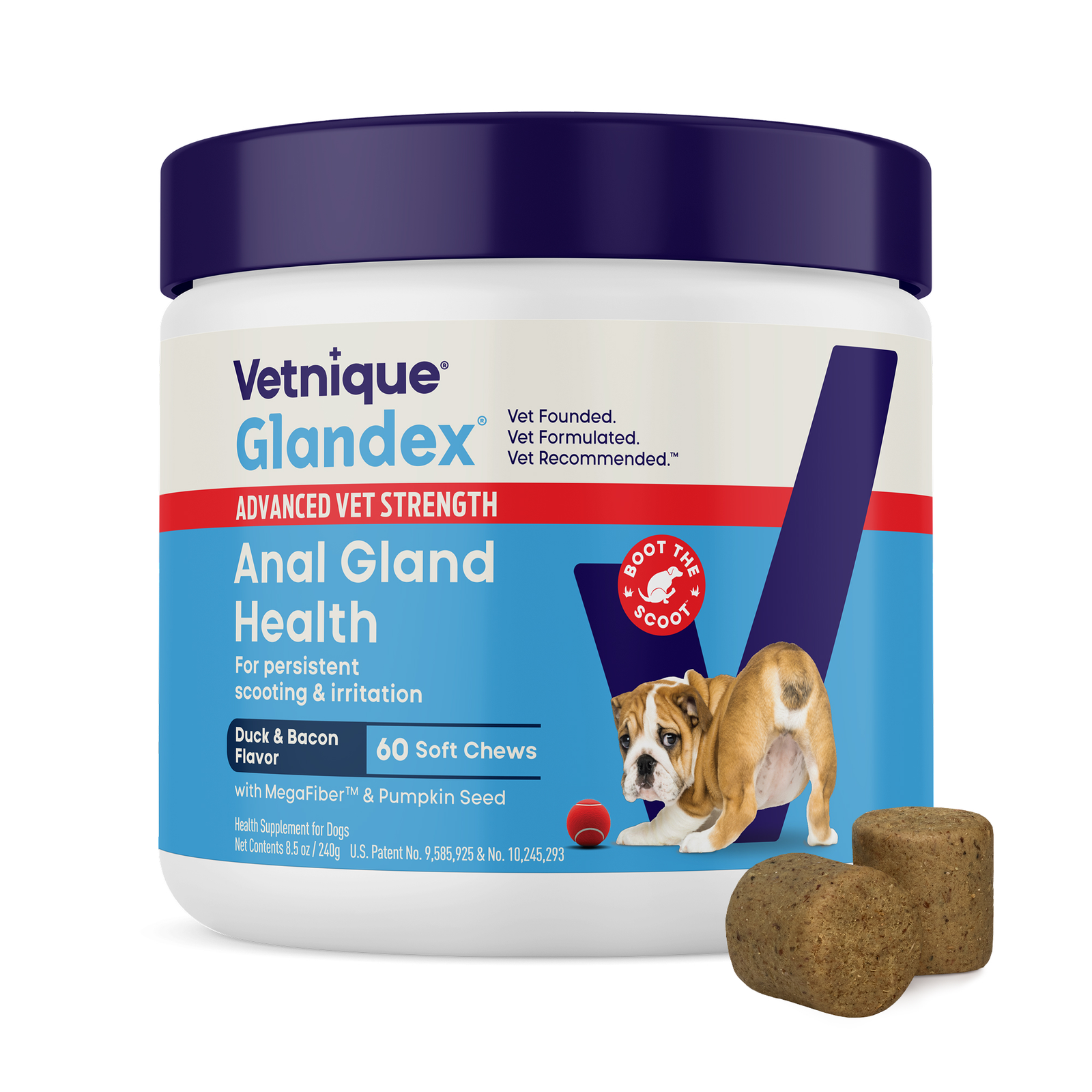
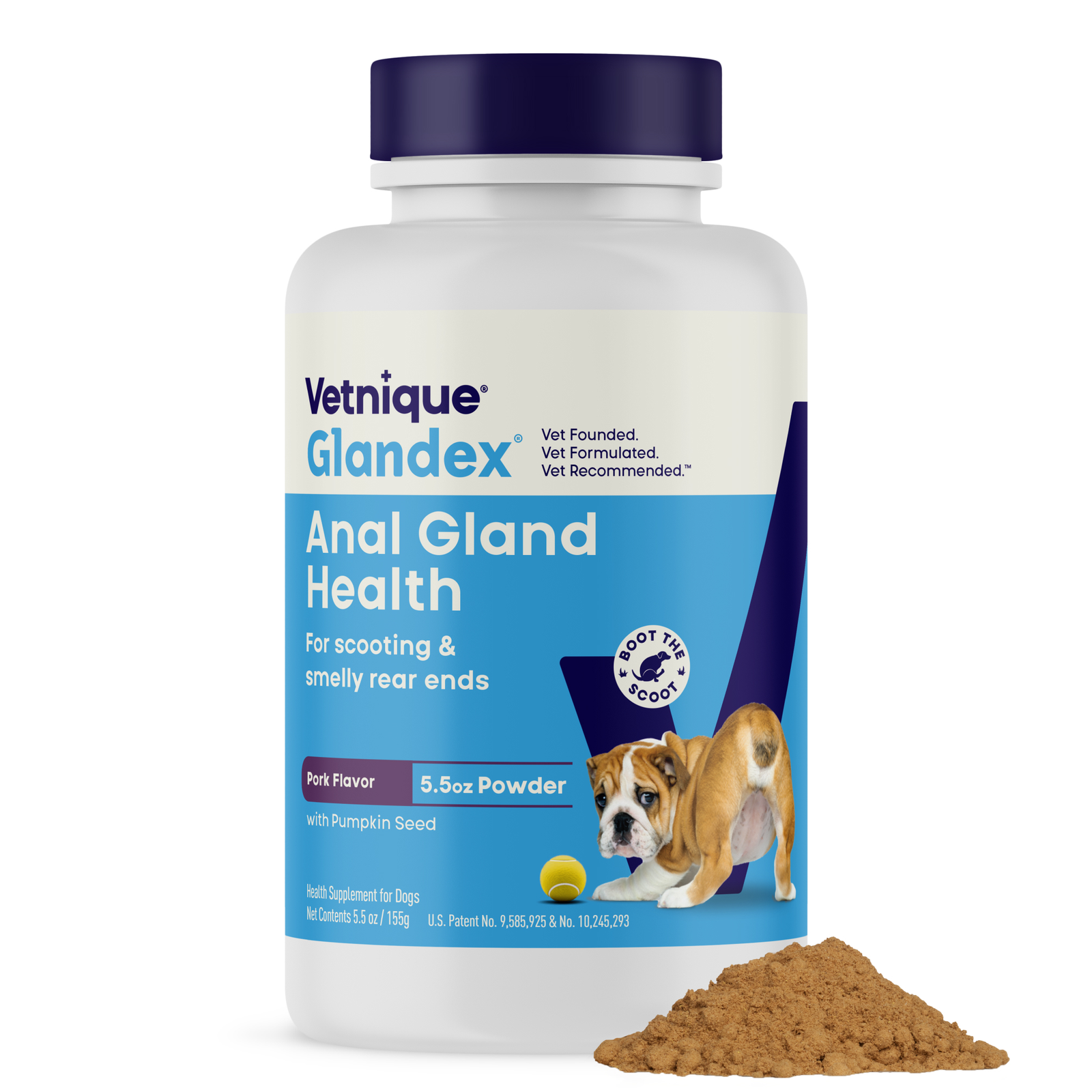
The Glandex Feline Anal Gland Supplement is formulated with fiber, probiotics, and digestive enzymes and can be mixed directly into your cat's food. The powder format is typically the best option for cats, since most cats will not willingly take a chew the way dogs do. The fiber promotes firm stool while the probiotics and digestive enzymes support overall gut health. For daily digestive and probiotic support, Glandex Probiotic Powder for Cats can be used alongside or as a complementary daily supplement.
For perianal hygiene — especially for cats recovering from an abscess or dealing with leaking fluid — Glandex Hygienic Wipes can help keep the area clean and reduce irritation between veterinary visits.
Other Cat Anal Gland Issue Prevention Tips
Maintaining a healthy weight is important, as overweight cats are more prone to anal gland issues — work with your veterinarian on a weight management plan if needed. Monitor the litter box regularly, since stool consistency is your best ongoing indicator of whether the glands are likely emptying naturally. Consistently soft or loose stool means the glands may not be getting the pressure they need. Encourage physical activity to support healthy digestion and bowel regularity, both of which contribute to firm stool and natural gland expression. If your cat has had anal gland problems before, ask your veterinarian to include an anal gland check during routine visits.
Cat anal gland problems are common, treatable, and in most cases preventable with the right dietary support. The key is recognizing the signs early — scooting, licking, odor, and leaking fluid — and addressing the underlying stool quality issue before impaction progresses to infection or abscess.