

One of the most common questions pet parents ask about anal glands is how often they should be expressed. The short answer: only when your dog actually needs it. Expressing too often can cause just as many problems as not expressing enough — and for most healthy dogs, the glands should empty naturally on their own.
So how do you know when expression is needed, how often is too often, and what can you do to reduce the need altogether? Let's break it all down.
How Anal Glands Are Supposed to Work
Your dog has two small anal glands (also called anal sacs) located on either side of the anus. These glands produce a strong-smelling fluid that's normally released in small amounts every time your dog has a bowel movement. The physical pressure of firm stool passing through the rectum squeezes the sacs and empties them naturally.
When this system works properly, you'll never need to think about your dog's anal glands at all. The problems start when the glands don't empty fully — either because stool is too soft, the ducts are inflamed, or the glands are positioned in a way that makes natural expression difficult.
How Often Should You Express Your Dog's Anal Glands?
There's no set schedule that works for every dog. The right answer depends entirely on your individual dog's needs:
Dogs With No Anal Gland Issues
If your dog has never shown signs of anal gland problems — no scooting, no fishy smell, no visible discomfort — there's no reason to express their glands at all. Healthy glands empty naturally during defecation, and routine expression when it's not needed can actually cause irritation and inflammation.
Dogs With Occasional Issues
Some dogs need their glands expressed a few times a year. You might notice occasional scooting or a mild fishy odor that resolves after expression. For these dogs, expressing every 3-6 months (or whenever symptoms appear) is typically sufficient. Your vet can help you determine the right interval based on how quickly the glands tend to refill.
Dogs With Chronic Anal Gland Problems
Dogs with recurring impactions, infections, or breed-related anatomy issues may need more frequent expression — sometimes as often as every 3-4 weeks. If your dog falls into this category, work with your vet to establish a schedule and focus on addressing the underlying causes (diet, allergies, weight) to reduce the frequency over time.
Signs Your Dog Needs Their Anal Glands Expressed
Rather than expressing on a calendar schedule, watch for these signs that the glands are full or blocked:
- Scooting — dragging the rear end across the floor is the most recognizable sign
- Excessive licking or biting — focused on the area around the tail base and anus
- Fishy or foul odor — a strong smell that persists even after bathing (see our guide on how to get rid of dog anal gland smell)
- Straining or discomfort during bowel movements — whimpering, hesitating, or visible effort
- Swelling near the anus — a firm lump on one or both sides
- Changes in sitting behavior — reluctance to sit down or shifting weight to one side
If you notice any of these signs, it's time for an expression — either at your vet's office or at home if you've been trained on proper technique.
Can You Express Anal Glands Too Often?
Yes — and this is one of the most important things to understand about anal gland care. Over-expression is a real problem that can make things worse over time.
When anal glands are manually squeezed too frequently, it can cause:
- Chronic inflammation — repeated manipulation irritates the tissue inside and around the gland
- Scar tissue buildup — inflammation leads to scarring in the ducts, narrowing them and making natural drainage even harder
- Dependency — glands that are regularly emptied manually may lose the ability to empty efficiently on their own, creating a cycle where your dog needs expression more and more often
This is why many veterinarians caution against having anal glands expressed at every grooming appointment "just in case." Unless your dog is showing actual signs of fullness or discomfort, leave the glands alone.
Anal Gland Expression in Dogs vs. Cats
While this guide focuses primarily on dogs, cats can also develop anal gland problems — though it's less common. Cats are experts at hiding discomfort, so the signs may be subtle. One of the most reliable indicators of an anal gland issue in cats is defecating outside the litter box. If your cat suddenly changes their litter box habits, anal glands are worth investigating alongside other potential causes.
How to Reduce the Need for Manual Expression
The ultimate goal is to help your dog's anal glands empty naturally as often as possible. Here's how:
Feed a High-Fiber Diet
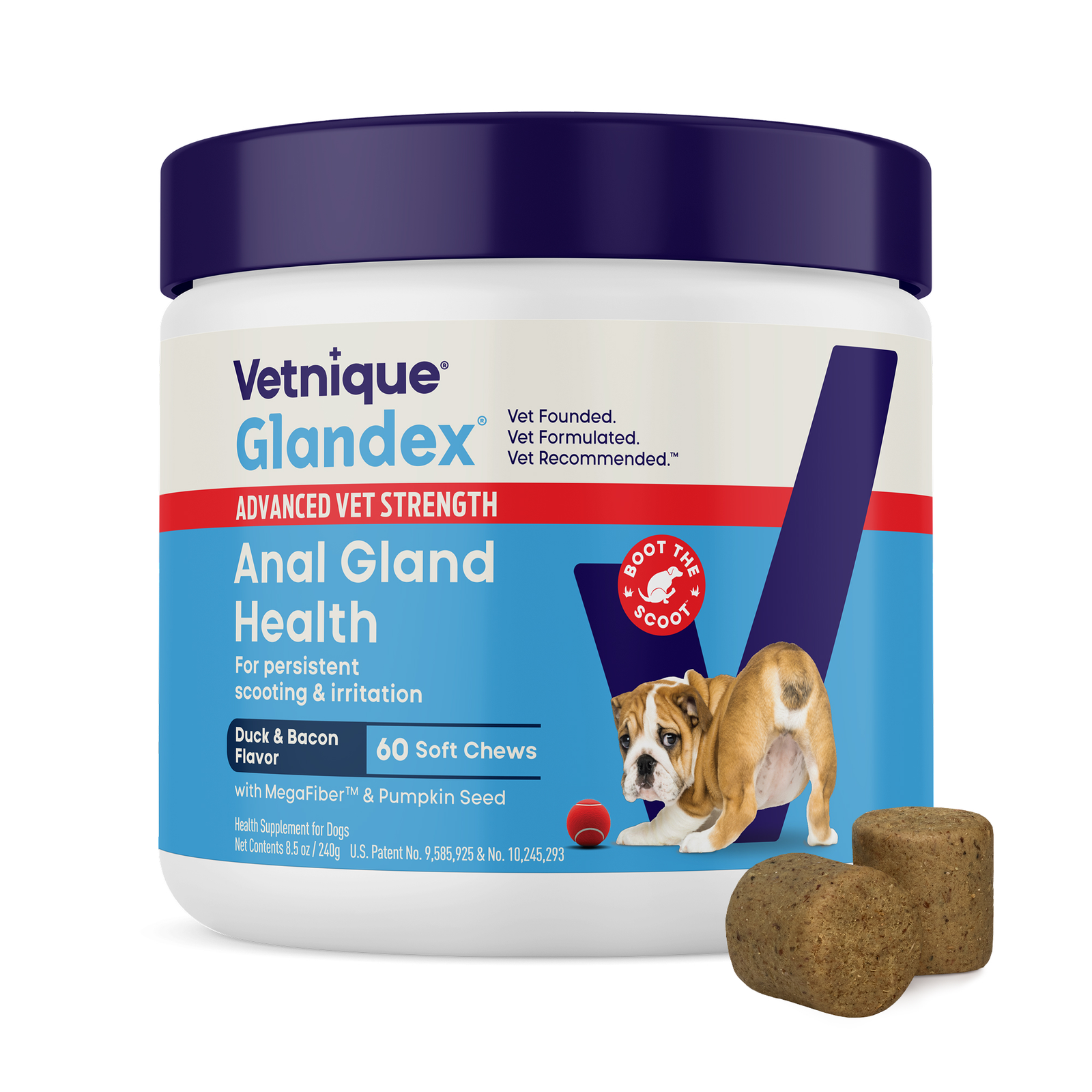
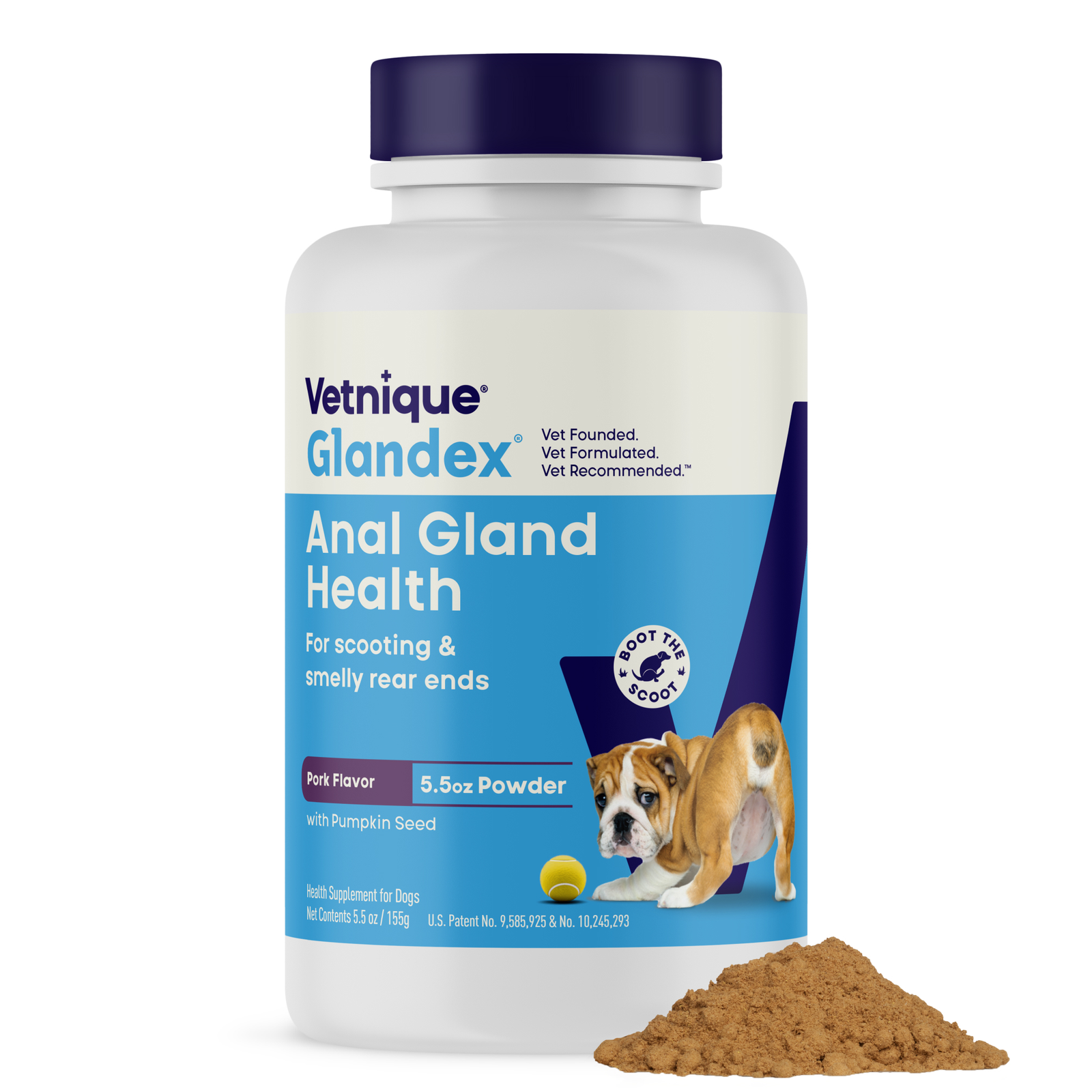
Fiber is the most effective tool for supporting natural gland expression. It adds bulk and firmness to stool, which creates the pressure needed to squeeze the glands during every bowel movement. Fiber-rich foods like pumpkin, sweet potato, and flaxseed can help. For targeted support, Glandex Soft Chews combine both soluble and insoluble fiber with prebiotics and probiotics to promote firm, healthy stools. Check out our full list of 7 foods that help dogs express their anal glands.
Maintain a Healthy Weight
Overweight dogs are more prone to anal gland problems because excess tissue pushes the glands deeper, making them harder to express naturally. Regular exercise also strengthens the pelvic muscles that assist in gland emptying.
Address Allergies
Food and environmental allergies cause inflammation around the anus that can block the gland ducts. If your dog has recurring anal gland issues alongside itchy skin, ear infections, or digestive upset, talk to your vet about allergy testing or an elimination diet.
Monitor Stool Quality
Your dog's stool is the best daily indicator of anal gland health. Firm, log-shaped stool means the glands are likely being expressed naturally. Soft, loose, or irregularly shaped stool is a warning sign. For a visual reference, check our dog poop color chart.
Keep the Area Clean
Good hygiene around the anal area helps prevent secondary infections and keeps you alert to any changes. Glandex Wipes are formulated specifically for this area and use enzymatic deodorizers that neutralize odor rather than covering it up.
When to See Your Vet
Schedule a vet visit if:
- Your dog is showing signs of anal gland fullness for the first time
- You notice blood, pus, or a ruptured area near the anus (this could be an abscess)
- Symptoms don't resolve after expression
- Your dog needs expression more frequently than every 3-4 weeks
- You want to learn proper at-home expression technique
Your vet can assess the glands, check for infection, and help you build a long-term management plan. For dogs with severe chronic problems that don't respond to dietary and lifestyle changes, surgical removal of the anal sacs (anal sacculectomy) is a safe, effective permanent solution.