

It is not unusual to see a dog scooting their bottom on the ground, especially if they have a history of anal gland problems. But what about female dogs specifically — do female dogs have anal glands? Can they cause irritation, or is something unique to female dogs causing the scooting?
What Bottom-Dragging Looks Like in Female Dogs
When a female dog scoots, she sits down and pulls herself forward using her front legs while her bottom drags along the ground and her tail sticks up. Scooting can appear awkward or uncomfortable, and your dog may seem restless or anxious while doing it. You may also notice her licking or biting at her hindquarters in an attempt to relieve discomfort or itching.
Scooting is a clear sign that something is causing irritation in the anal or perianal area. Pay attention to how frequently it occurs and consult your veterinarian if the behavior persists.
Why Female Dogs Drag Their Bottoms on the Ground
Female dogs drag their bottoms for the same reasons male dogs do. While being in heat may cause vulvar discomfort for intact (unspayed) female dogs, it usually is not a cause of scooting. The behavior is most likely caused by one of the following conditions.
Anal Gland Issues
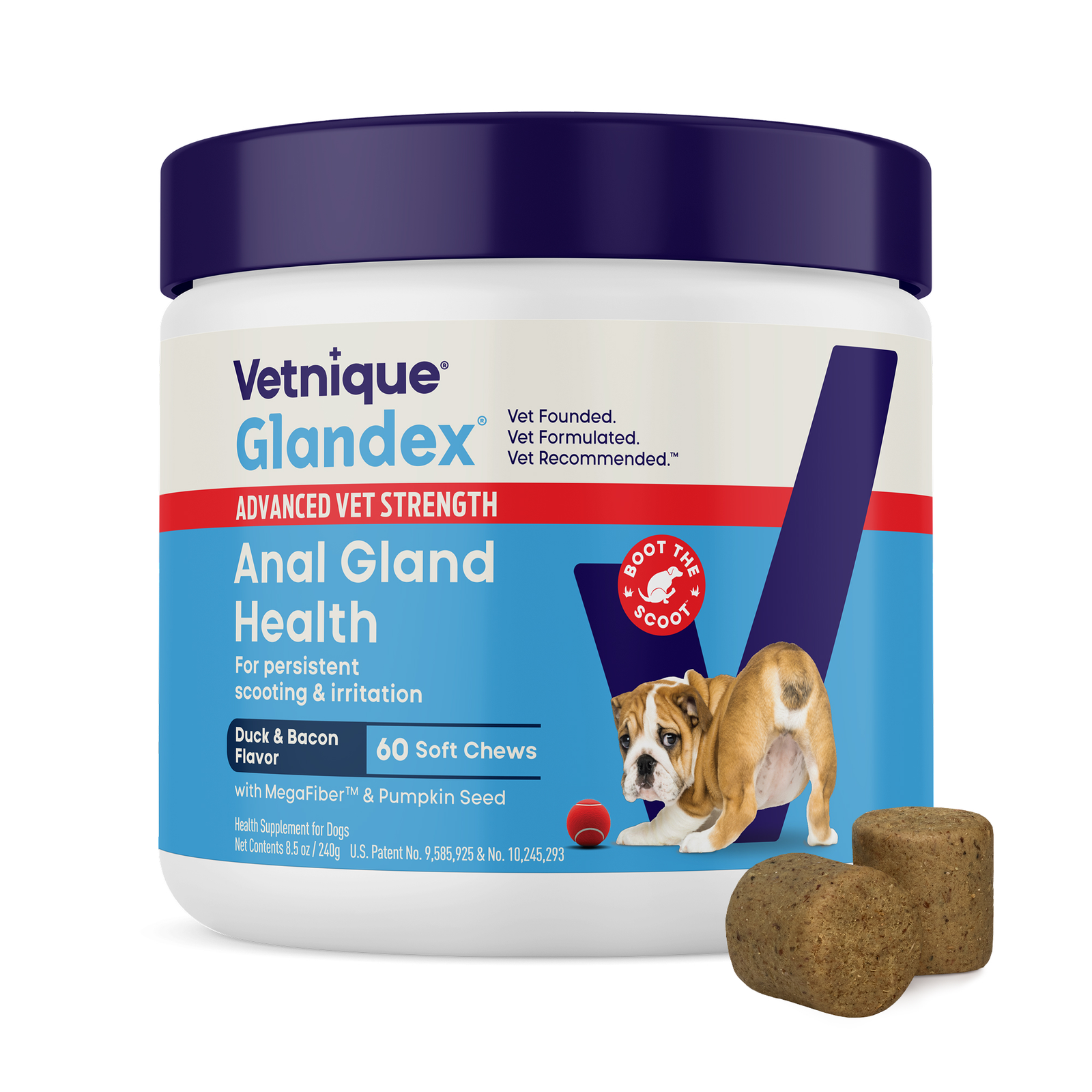
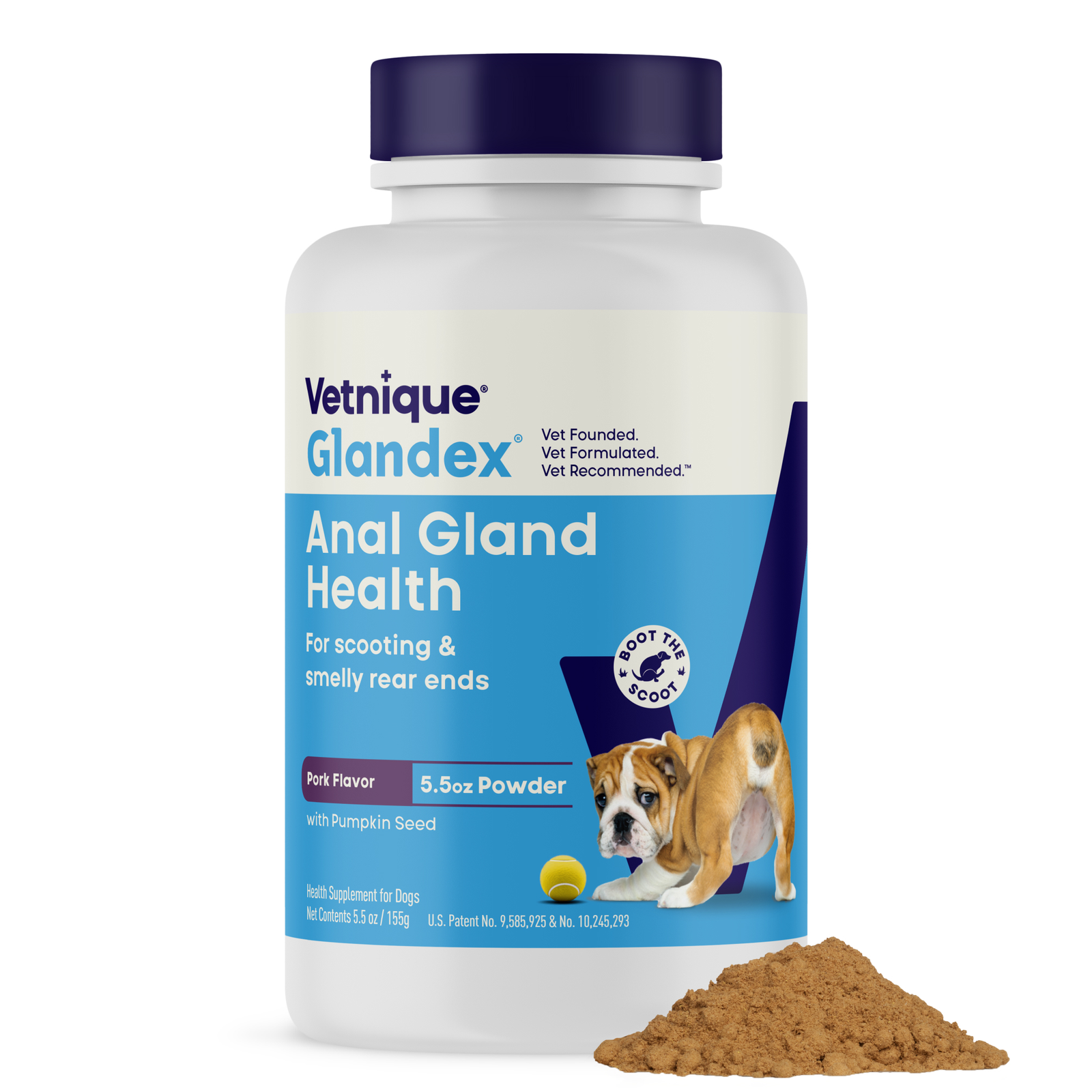
Yes, female dogs have anal glands. These are small sacs located near the anus that secrete a fluid with a distinct odor. When the anal glands become impacted or infected, it causes discomfort and the urge to relieve it by dragging the bottom on the ground. Anal gland issues are one of the primary reasons female dogs scoot. Supporting healthy anal gland function with a supplement like Glandex Advanced Vet Strength Chews or Glandex Soft Chews can help promote regular, natural gland expression. Browse the full Glandex anal gland support collection for chews, powders, and wipes.
Parasitic Infections
Parasitic infections such as intestinal worms are another common cause of scooting. These parasites can cause itching and irritation around the anal area, prompting dogs to drag their bottoms across the floor in an attempt to relieve the discomfort. If you notice visible worms in your dog's stool or around the anus, contact your veterinarian for a fecal examination and appropriate deworming treatment.
Skin Irritation or Allergies
Environmental allergens or food sensitivities can cause itching and irritation that leads to scooting. Repeated irritation can cause the skin around the anal area to thicken, which can lead to secondary yeast infections. Identifying and addressing the underlying allergen — whether environmental or dietary — is important for long-term management.
Hygiene and Grooming Issues
Accumulation of fecal matter around the anus or urine staining around the vulva can cause discomfort and itching, leading to bottom-dragging behavior. Regular cleaning of the perianal area and maintaining good hygiene can help reduce irritation. Glandex Hygienic Pet Wipes are designed to gently clean the area and help maintain comfort between baths.

How Scooting Can Differ Between Female and Male Dogs
While both male and female dogs scoot for the same underlying reasons, there are a few differences worth noting. An intact female dog in heat may experience itching from hormonal changes during her heat cycle, though this typically does not cause scooting behavior. Additionally, male dogs have larger anal glands than females, which may make them less susceptible to impaction or infection.
Home Treatment Options
Depending on the cause, there are steps you can take at home to help reduce your dog's scooting. Regularly cleaning the anal area and ensuring proper hygiene helps prevent irritation from fecal buildup or urine staining. Addressing potential environmental or food allergens can reduce allergy-related itching.
If full anal glands are contributing to the problem, introducing a fiber supplement can help regulate bowel movements and support more efficient natural anal gland expression. Glandex Soft Chews are formulated with a unique fiber blend, pumpkin seed, and probiotics to support healthy digestion and anal gland function. If scooting continues after introducing a fiber supplement, or if your dog appears to be in pain, seek veterinary attention for further evaluation and treatment.
When to See a Vet
Consult your veterinarian if your female dog's scooting is persistent or frequent, or if you notice any accompanying signs such as bleeding, swelling, discharge, visible worms in the stool, or signs of pain. A thorough examination can help identify the underlying cause — whether it is anal gland impaction, parasitic infection, allergies, or another condition — and determine the appropriate treatment plan.