

Pumpkin is more than a seasonal ingredient — it is one of the most practical, nutrient-dense foods you can add to your dog's or cat's diet. Packed with fiber, vitamins, minerals, and antioxidants, pumpkin supports everything from digestion and anal gland health to skin, coat, and immune function. Here are eight specific benefits of pumpkin and pumpkin seeds for pets, plus how to feed them safely.
1. Supports Firm Stool and Healthy Anal Glands
This is one of the most important benefits for dogs prone to anal gland problems. Pumpkin and pumpkin seeds are rich in both soluble and insoluble fiber. This fiber adds bulk to stool, and bulky, firm stool is what allows the anal glands to empty naturally during bowel movements.
When stool is soft or loose, it does not create enough pressure against the anal sacs, and the glands can become overfull, impacted, or infected over time. Adding pumpkin fiber to the diet helps maintain the stool consistency that supports natural gland expression — reducing the likelihood of scooting, discomfort, and repeated trips to the vet for manual expression.
For a deeper look at how anal gland problems develop and how to prevent them, see our comprehensive guide to anal gland issues in dogs.
2. Helps Regulate Digestion — Both Diarrhea and Constipation
One of pumpkin's most useful qualities is that it can help with digestive issues on both ends of the spectrum.
The soluble fiber in pumpkin absorbs excess water in the digestive tract, which helps firm up loose or watery stool. At the same time, the insoluble fiber adds bulk and helps move material through the gut, which can relieve mild constipation. This dual action makes pumpkin one of the most versatile at-home remedies for dogs and cats with irregular bowel movements.
For cats specifically, the soluble fiber in pumpkin may also help pass hair through the digestive tract, which can reduce hairball problems.
3. Rich in Vitamin A for Eye Health
Pumpkin is one of the richest natural sources of beta-carotene, which the body converts to Vitamin A. Vitamin A is essential for maintaining healthy vision in dogs, helping prevent night blindness and supporting overall eye health as dogs age. According to the USDA, one cup of cooked pumpkin contains approximately 14,100 IU of Vitamin A.
4. Boosts Immune Health with Antioxidants
Pumpkin contains Vitamin C, Vitamin A, Vitamin E, and other antioxidants that support the immune system. Antioxidants help neutralize free radicals — unstable molecules that can damage cells and contribute to disease over time. Including natural sources of antioxidants in your pet's diet supports the body's ability to fight off illness and maintain overall health.
5. Supports Healthy Skin and Coat
The combination of Vitamin A and Zinc in pumpkin supports skin cell turnover and coat quality from the inside out. The high water content in pumpkin also contributes to hydration, which can improve skin and coat condition. For dogs dealing with dry, flaky skin or a dull coat, pumpkin is a practical dietary addition alongside other skin-support strategies.
6. Supports Healthy Weight Management
Pumpkin is low in calories but high in fiber and water content, which means it helps dogs feel full without adding significant calories to their diet. For dogs that need to lose weight, replacing a small portion of their regular food with plain pumpkin can help reduce overall calorie intake while maintaining a feeling of fullness.
For small dogs, a few tablespoons of pumpkin can supplement a meal. For larger dogs, up to half a cup can be given as a food topper or mixed into their regular food.
7. Provides Essential Minerals
Beyond vitamins, pumpkin is a natural source of potassium, magnesium, iron, phosphorus, and folate. These minerals support muscle function, bone health, oxygen transport, and cellular processes throughout the body. The nutrient density of pumpkin relative to its low calorie count makes it one of the more efficient whole-food additions to a pet's diet.
8. Natural and Palatable
Unlike many dietary supplements or medicinal additions, most dogs (and many cats) actually enjoy the taste of pumpkin. This matters practically — a beneficial food that your pet will not eat does not help. Pumpkin's natural flavor and soft texture make it easy to mix into regular food, and many pets eat it willingly without any fuss.
How to Feed Pumpkin to Your Dog or Cat
Plain canned pumpkin
The most convenient option. Use plain canned pumpkin — not pumpkin pie filling. Pie filling contains added sugar, spices, and potentially xylitol, which is toxic to dogs. Check the ingredient label: the only ingredient should be pumpkin.
Fresh cooked pumpkin
Fresh pumpkin can be baked, boiled, or steamed, then pureed or mashed. Remove all seeds and rind before cooking. Do not add butter, salt, sugar, or seasoning.
Pumpkin seeds
Pumpkin seeds can be fed raw or dry-roasted. If roasting, use no oil or salt — spread them on a parchment-lined baking sheet and roast at 350°F for approximately 10 to 15 minutes. Grinding the seeds before adding them to food makes them easier for your pet to digest. Because seeds are higher in fat than pumpkin flesh, feed them in smaller amounts. Read more about the benefits of pumpkin seeds for dogs.
How Much Pumpkin to Give
A common guideline is about 1 teaspoon of plain canned or cooked pumpkin per 10 pounds of body weight per day. Start with a smaller amount and increase gradually over several days to avoid digestive upset.
For pumpkin seeds, about one ground seed per 10 pounds of body weight per day is a safe starting amount.
For puppies and very small or underweight dogs, only feed pumpkin in small amounts as a treat. If your dog has a health condition, talk to your vet before adding pumpkin to their diet.
Getting Consistent Fiber Support
Pumpkin is a great whole-food fiber source, but measuring and preparing it daily can be inconsistent. For dogs that need reliable daily fiber and digestive support — especially those with recurring anal gland issues — a supplement provides a more consistent approach.
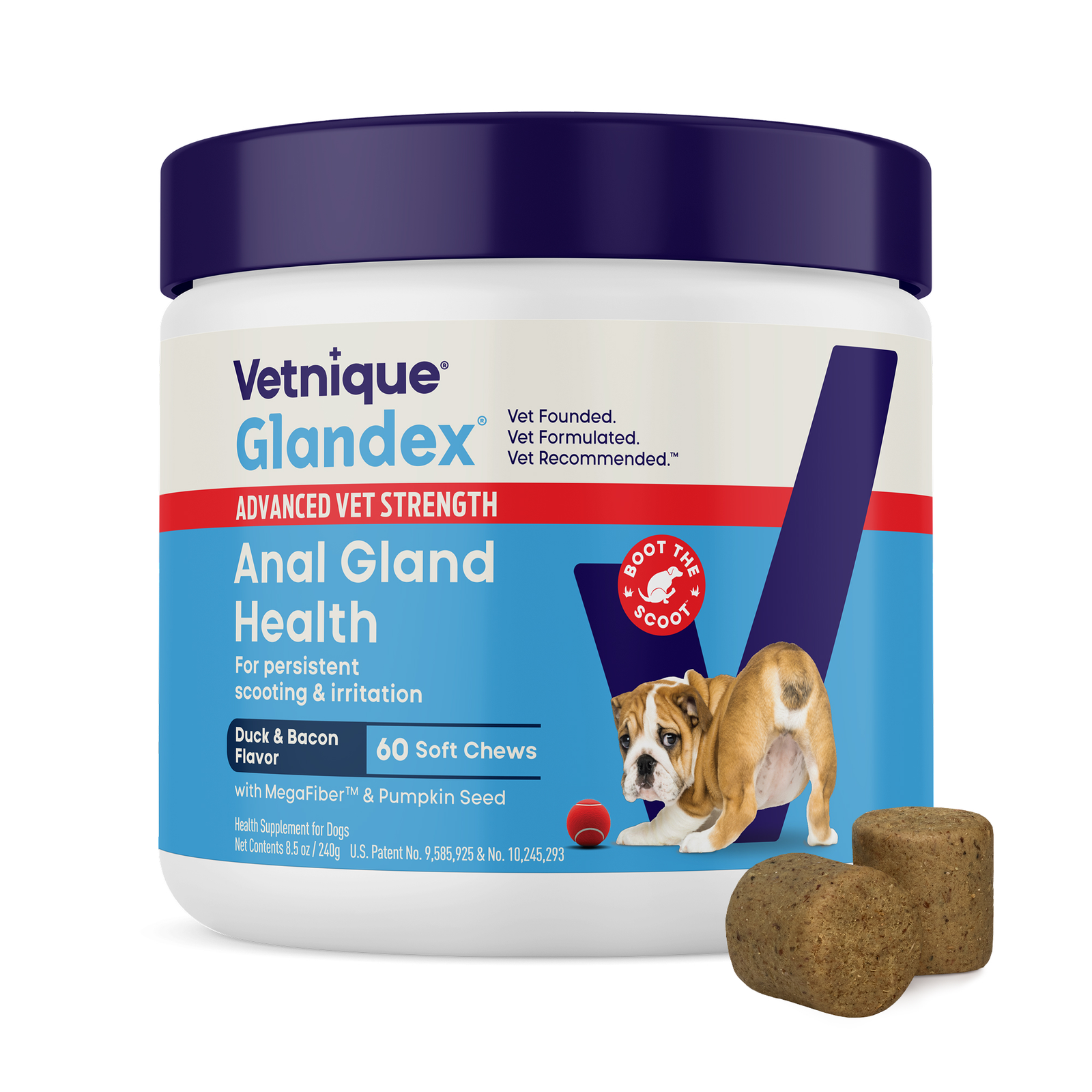
Glandex Soft Chews contain pumpkin seed fiber alongside probiotics, prebiotics, and digestive enzymes in a daily chew format. This combination addresses stool quality, gut health, and anal gland support in a single step, with a measured dose that stays consistent day to day.
For dogs with chronic or more severe anal gland problems, Glandex Advanced Vet Strength Chews provide a higher concentration of active ingredients for more intensive support.
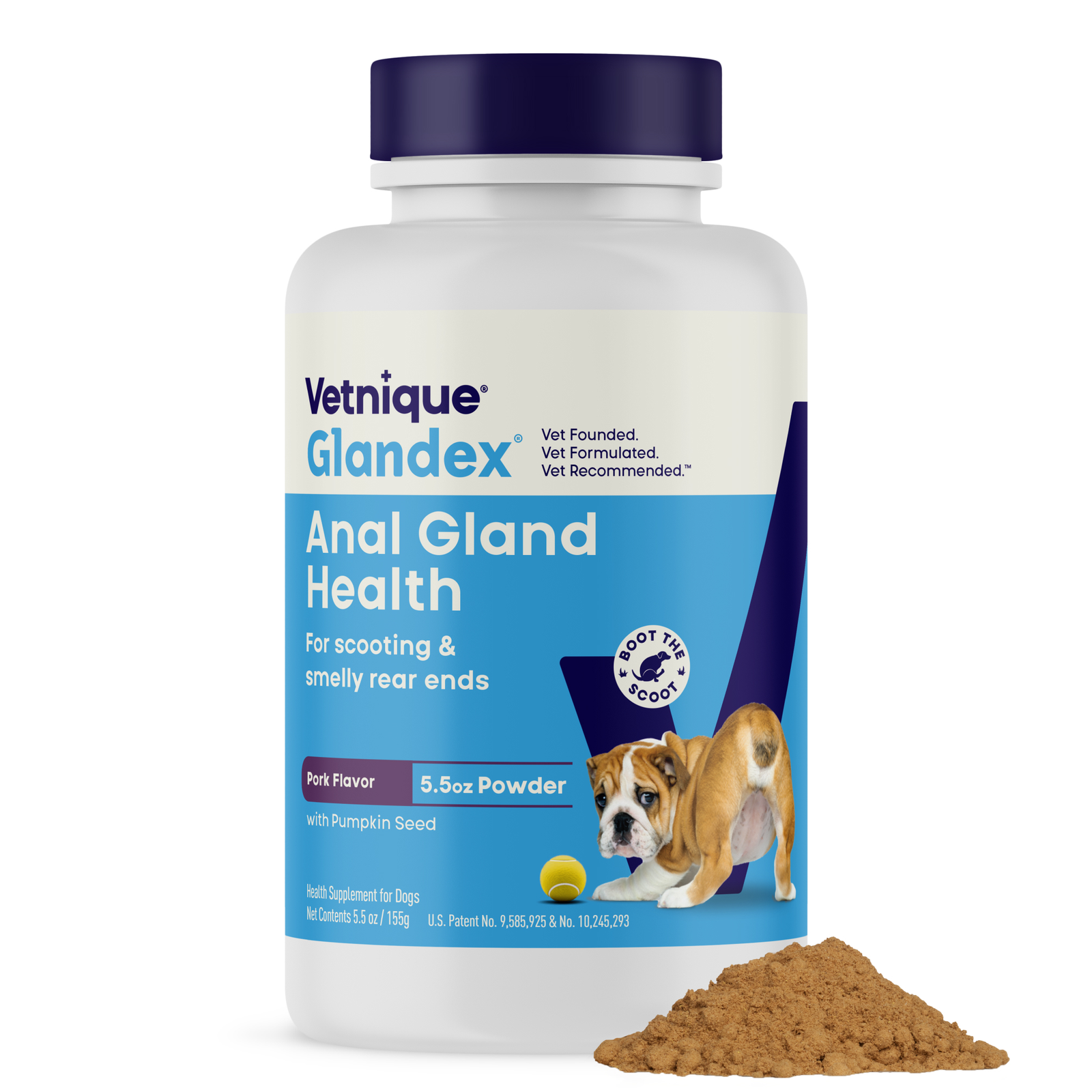
For picky eaters that resist chews or for cats, Glandex Powder can be mixed directly into food. For more on how to incorporate fiber into your pet's diet through both food and supplements, see our guide on how to add fiber to your dog's diet.
 ```
```