

My dog has diarrhea but is acting fine — what gives? It is one of the most common questions pet parents ask, and it makes sense why it is confusing. Your dog is playing, eating, and wagging their tail like nothing is wrong, but their stool tells a different story. Should you worry, or just wait it out?
The short answer is that normal behavior is a good sign — it means your dog is not in acute distress. But diarrhea on its own is still a signal that something in the digestive system needs attention. This guide will help you figure out what is likely going on, what you can do at home, and when it is time to call the vet.
Why Your Dog Can Have Diarrhea and Still Act Fine
Dogs are resilient. Many of the common causes of diarrhea — a sudden food switch, eating something questionable on a walk, mild stress — are uncomfortable but not painful enough to change a dog's behavior. Your dog may not even realize anything is off until the next trip outside.
This is different from a dog that has diarrhea and is lethargic, vomiting, or refusing food. That combination points to something more serious. A dog that has loose stool but is otherwise eating, drinking, and playing normally is generally dealing with a less severe digestive disruption — but it still needs your attention to make sure it does not escalate.
Common Causes of Diarrhea in Dogs That Are Acting Normal
When a dog has diarrhea but their energy and appetite are intact, the most likely causes include:
Sudden diet changes
Switching your dog's food abruptly is one of the most common triggers. The digestive system needs time to adjust to new proteins, fat levels, and fiber content. To avoid this, transition to a new food gradually over five to seven days, mixing increasing amounts of the new food with the old.
Dietary indiscretion
This is the veterinary term for "your dog ate something they should not have." Garbage, table scraps, sticks, mulch, or another animal's food can all trigger a bout of diarrhea. If your dog has access to things they should not be eating, the digestive upset often resolves once the offending material passes through.
Stress and anxiety
Stress is a recognized cause of diarrhea in dogs. Moving to a new home, changes in routine, loud noises like fireworks or thunderstorms, separation anxiety, travel, or the addition of a new pet or family member can all disrupt the digestive system. Stress-related diarrhea typically resolves once the stressor is removed or the dog adjusts to the change.
Food sensitivities and allergies
Some dogs develop sensitivities to specific proteins or ingredients in their food. Unlike acute food poisoning, food sensitivities often cause chronic or intermittent soft stool rather than a single dramatic episode. If your dog's diarrhea keeps coming back, especially alongside itchy skin, ear infections, or paw licking, a food sensitivity may be the underlying cause. For a deeper look at how allergies affect dogs, see our guide to allergies in dogs.
New treats, supplements, or medications
It is not unusual for dogs to get mild stomach upset when starting any new treat, supplement, or medication. This is usually temporary and resolves within a few days as the digestive system adjusts.
Parasites
Intestinal parasites such as roundworms, hookworms, whipworms, and giardia can cause diarrhea in dogs that otherwise seem healthy — especially in younger dogs or dogs that spend time in areas with other animals. If you suspect parasites, your vet can run a fecal test to check.
How to Assess Your Dog at Home
Before deciding whether to wait, manage at home, or call the vet, do a quick check on your dog:
Check their gums
Lift your dog's lip and press a finger gently on the gum above the teeth. The gum should be pink and moist. When you press and release, the color should return within two seconds. Pale, white, tacky, or dry gums can be a sign of dehydration and warrant a vet call.
Do a skin tent test
Gently pinch and lift the skin on the back of your dog's neck. In a well-hydrated dog, the skin should snap back into place immediately. If it returns slowly or stays tented, your dog may be dehydrated.
Monitor water intake
A dog with diarrhea should be drinking water. If they are refusing water or drinking significantly more than usual, note it — both can be relevant to your vet.
Look at the stool
Note the color, consistency, and whether there is any mucus or blood. A single episode of soft stool is different from multiple episodes of watery stool with blood. This information helps your vet if you do need to call. For a visual reference on what different stool colors mean, see our dog poop color chart.
Managing Diarrhea at Home
If your dog is an otherwise healthy adult, is still eating and drinking, shows no signs of dehydration, and the diarrhea does not contain blood, you can typically manage the situation at home for 24 to 48 hours. Here is how:
Consider a brief fast
For healthy adult dogs, a 12 to 24 hour fast can give the digestive system time to settle. Do not fast puppies, senior dogs, small breeds at risk of hypoglycemia, or dogs with underlying health conditions. Always keep fresh water available during any fast.
Start a bland diet
After the fast (or immediately, if fasting is not appropriate), feed a bland diet of boiled, unseasoned chicken breast or lean ground turkey mixed with plain white rice. Use a ratio of roughly one part protein to two parts rice. Feed smaller meals more frequently — three to four small meals per day rather than one or two large ones.
Transition back gradually
Once stool starts to firm up, gradually mix their regular food back in over three to five days. Going straight from bland diet back to regular food too quickly can trigger another round of loose stool.
Support gut health
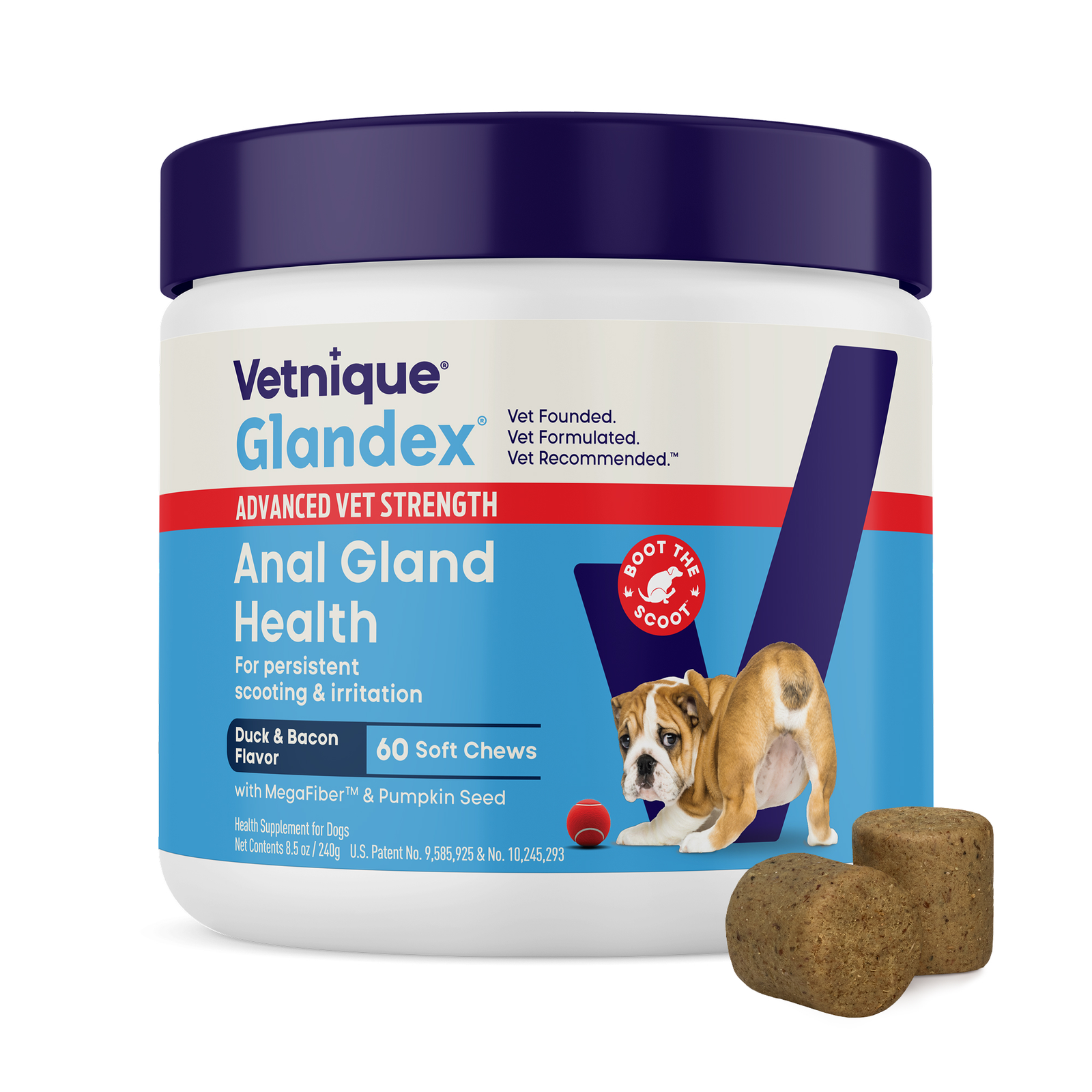
Fiber and probiotics can help firm stool and support recovery. Glandex Probiotic & Prebiotic Soft Chews provide daily probiotic and prebiotic support for digestive health. For ongoing stool-firming support, Glandex Soft Chews combine fiber, probiotics, and digestive enzymes to promote firm, healthy stool — which also supports natural anal gland function.
Keep things clean
Diarrhea episodes can be messy, especially around your dog's rear end. Glandex Wipes are useful for quick perianal cleanup between baths, helping reduce skin irritation from frequent loose stool.
When to Call the Vet — The Decision Guide
Not all diarrhea is a wait-and-see situation. Here is how to decide:
Call your vet within 24 hours if:
- The diarrhea has lasted more than 48 hours despite bland diet and home management
- Your dog is a puppy, a senior, or has a known underlying health condition
- There is mucus in the stool
- Your dog has had recurring episodes of diarrhea over several weeks, even if they resolve temporarily
- You recently started a new medication and suspect it may be contributing
Seek immediate veterinary attention if:
- The diarrhea contains blood (bright red or dark, tarry black)
- Your dog is vomiting repeatedly in addition to having diarrhea
- Your dog becomes lethargic, stops eating, or refuses water
- You see signs of dehydration — dry or tacky gums, sunken eyes, skin that does not snap back when pinched
- Your dog's abdomen appears bloated or painful to the touch
- You suspect your dog ingested something toxic
When you visit the vet, they will likely conduct a physical examination and may recommend a fecal test, bloodwork, or imaging depending on the symptoms. Treatment options may include medication to address infections or inflammation, dietary modifications, and supportive care.
The Connection Between Diarrhea and Anal Gland Problems
This is a link many pet parents do not realize: chronic or recurring diarrhea can lead to anal gland problems. Here is why.
Dogs have two small anal glands located on either side of the anus. These glands are designed to empty naturally during bowel movements — firm stool presses against the glands as it passes, squeezing out the fluid. When a dog has diarrhea or consistently soft stool, that pressure is missing. The glands do not empty, fluid builds up, and over time this can lead to impaction, discomfort, scooting, and infection.
If your dog has recurring loose stool and you have also noticed scooting, a fishy smell, or licking at their rear end, the two issues may be connected. For a comprehensive look at how anal gland problems develop and how to prevent them, see our guide to anal gland issues in dogs.
Supporting firm, healthy stool is the most effective way to prevent both recurring digestive upset and the downstream anal gland problems it can cause. A daily supplement that combines fiber with probiotics addresses both issues at once.
Preventing Diarrhea in the Future
Once your dog's current episode resolves, there are practical steps to reduce the chances of it happening again:
- Transition foods slowly — any change in diet, including new treats or a new brand of food, should be introduced gradually over five to seven days
- Limit dietary indiscretion — monitor your dog during walks and play, keep garbage secured, and avoid feeding high-fat table scraps
- Address allergies — if diarrhea keeps returning alongside skin or ear symptoms, talk to your vet about food allergy testing or an elimination diet
- Support daily digestive health — a daily fiber and probiotic supplement like Glandex Soft Chews helps maintain consistent stool quality and a balanced gut
- Keep up with parasite prevention — maintain your dog on a regular deworming schedule as recommended by your vet
- Manage stress — if your dog is prone to stress-related digestive upset, address the stressor where possible and talk to your vet about calming strategies
 ```
---
```
---