




Canine anxiety is common, and in some cases, veterinarians may prescribe medications like Xanax (alprazolam) to help manage it. Here is what you need to know about how Xanax works in dogs, when it may be appropriate, potential side effects, and alternative treatments.
What Is Xanax (Alprazolam)?
Xanax is a benzodiazepine — a class of sedative drugs that affects the central nervous system. Its active ingredient, alprazolam, interacts with GABA (gamma-aminobutyric acid) receptors in the brain. GABA is a neurotransmitter that inhibits nerve signals, producing a calming effect. By enhancing GABA activity, Xanax calms overactive neurons that fire in response to stressors.
Originally prescribed for human anxiety disorders, Xanax has been adopted in veterinary medicine for cases of canine anxiety. When prescribed for dogs, the goal is typically to mitigate issues like thunderstorm fear, separation anxiety, or other acute stress triggers.
Can Dogs Take Xanax?
In specific cases, veterinarians may prescribe Xanax to address anxiety in dogs. However, whether Xanax is appropriate depends on several factors, including the dog's size, overall health, and the nature of the anxiety.
Dogs with liver issues may have difficulty metabolizing the drug, which can lead to side effects. Some breeds, especially smaller ones, may also be more sensitive to its effects. Additionally, certain medications in a dog's regimen — including antihistamines, some antibiotics, and pain relievers — may interact with Xanax. Discuss potential drug interactions with your veterinarian before starting treatment.
While Xanax can be a valuable tool for addressing canine anxiety, its use requires a thorough understanding of the individual dog's health profile and specific anxiety triggers. A veterinary consultation is essential.

How Does Xanax Work in Dogs?
When administered to dogs, alprazolam binds to GABA receptors, which are neurotransmitters that inhibit brain activity. This binding produces a calming effect by reducing the overactive neural firing that occurs in response to stressors such as fireworks, thunderstorms, and other anxiety-inducing events.
Anxiety triggers a surge in neurotransmitters like norepinephrine (responsible for alertness and arousal) and serotonin (involved in mood regulation). Xanax eases anxiety by boosting GABA activity, which helps calm this heightened neural response.
Dosage is critical and must be determined by a veterinarian. Too little may be ineffective, while too much can cause excessive sedation or other adverse effects. Xanax is not a simple sedative — it is a precise tool for balancing neural activity to reduce anxiety.
What Is Xanax Used for in Dogs?
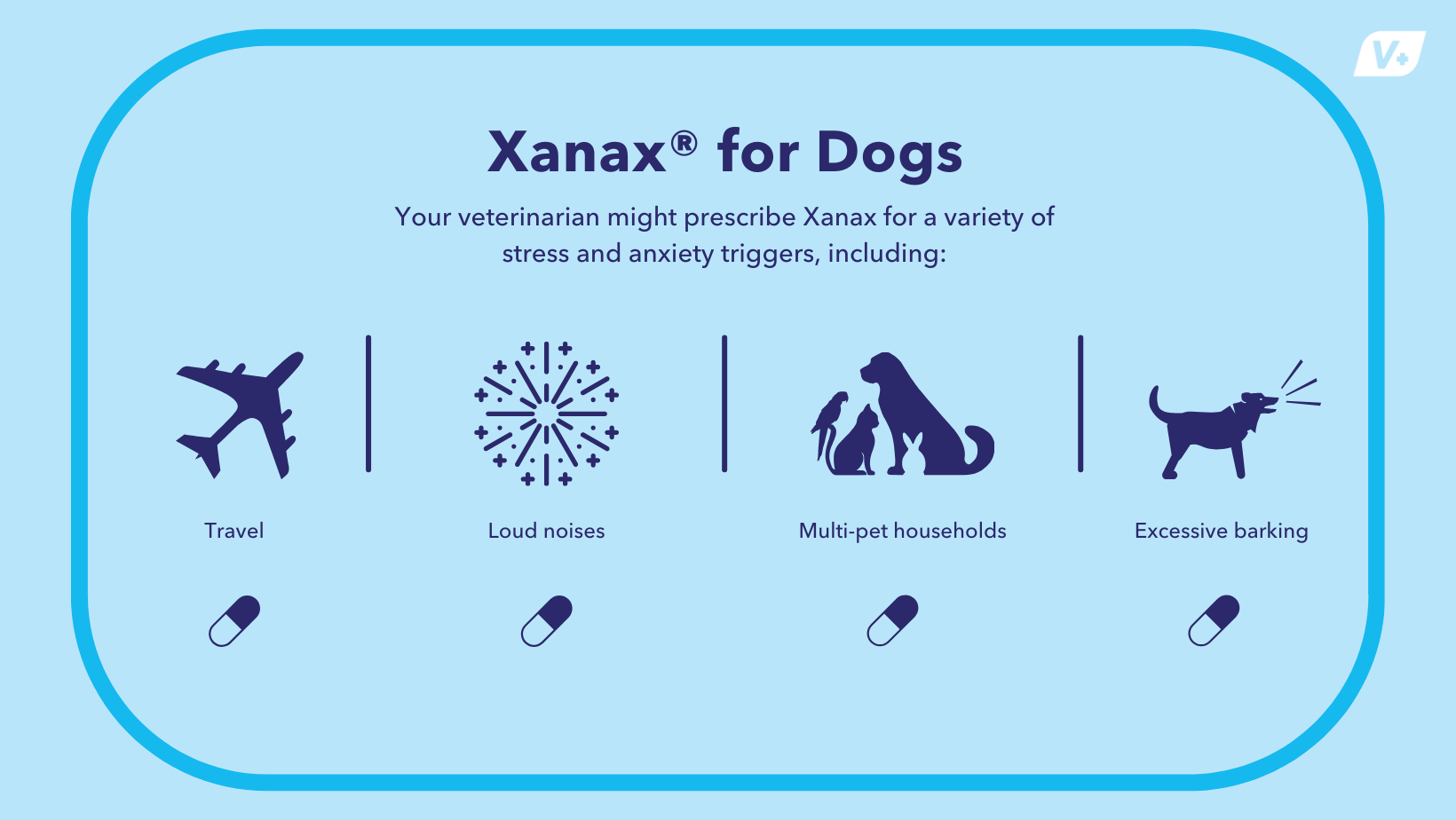
Xanax can address a variety of anxiety-related behavioral challenges in dogs. Discuss your pet's specific triggers with your veterinarian if you think medication may help.
Loud Noises
Fireworks, thunderstorms, and car alarms are among the most common stressors for dogs. Your veterinarian may recommend Xanax on an as-needed basis during these situational events.
Travel
Whether driving long distances or flying, travel can cause significant stress and anxiety in dogs. Xanax may be prescribed to help manage travel-related anxiety.
Multi-Pet Households
In multi-pet households where tensions between animals are high, Xanax can serve as a temporary solution while the household works toward a sustainable long-term management plan. Since Xanax is typically prescribed for short-term use, your veterinarian may recommend it as a bridge during the adjustment period.
Territorial Behaviors
Dogs displaying territorial behaviors may benefit from the calming effects of Xanax, providing relief for both the pet and the household.
Destructive Behaviors
For dogs prone to excessive barking or destructive chewing rooted in anxiety, Xanax may be prescribed to help reduce these behaviors.
New Family Members
Introducing a new family member — whether another pet or a person — can be a significant adjustment. Xanax may help ease the stress associated with these transitions.
Compulsive Behaviors
Xanax can be useful in cases of compulsive behaviors such as incessant licking or tail chasing that have been diagnosed by a veterinarian as anxiety-driven.
Medical Procedures
Dogs facing medical procedures or recovering from surgery may benefit from the anxiety-reducing effects of Xanax to support a calmer healing process.
What Is the Standard Dosage of Xanax for Dogs?
Xanax is designed for short-term use. It has several behavioral and physical effects that can make it incompatible for certain dogs over extended periods. If your pet needs ongoing treatment for stress or anxiety, your veterinarian can help develop long-term solutions.
Your veterinarian is the only person who can determine how much Xanax your dog needs, how often, and for how long. Any time a behavioral medication is recommended, behavioral therapy should be used alongside it. Combining medication with behavioral modification techniques such as positive reinforcement and desensitization is the most effective approach to managing anxiety in dogs.
Common Side Effects of Xanax for Dogs
Xanax can be a valuable tool for managing canine anxiety, but understanding the potential side effects is important before starting treatment.
Drowsiness
Dogs may exhibit drowsiness as a side effect due to the calming impact of Xanax on the central nervous system. While this sedative effect is intended to reduce anxiety, it can sometimes lead to lethargy.
Gastrointestinal Issues
Some dogs may experience vomiting or diarrhea while taking Xanax. If this occurs, contact your veterinarian for a dosage adjustment or an alternative medication.
Appetite Changes
Changes in appetite — from increased hunger to temporary loss of interest in food — may occur. Monitor your dog's eating habits during treatment and contact your veterinarian if you notice abnormal patterns.
Behavioral Changes
Behavioral changes can vary from dog to dog, ranging from increased affection to disorientation. These shifts are usually temporary but should be monitored during the initial stages of treatment. Individual responses to Xanax vary — some dogs tolerate it well while others may experience noticeable side effects.
Alternatives to Xanax for Dogs
Veterinary science offers a variety of alternatives for addressing canine anxiety beyond Xanax.
Behavioral Therapy
Behavioral therapy aims to reshape problematic behaviors through positive reinforcement and desensitization, helping dogs learn to cope with stressors independently. Your veterinarian may recommend behavioral therapy before or in conjunction with medications like Xanax for chronic anxiety.
Adaptil (DAP) Diffusers
Adaptil diffusers emit synthetic pheromones that mimic a mother dog's calming scent. These can be particularly helpful for separation anxiety by creating a calmer environment.
Trazodone
Trazodone is a prescription medication often used off-label for canine anxiety. It influences serotonin levels to promote a calming effect.
CBD Products
Cannabidiol (CBD) is a natural alternative derived from hemp. Consult your veterinarian to determine whether CBD treats or tinctures are appropriate for your dog.
Nutraceuticals
Supplements containing L-theanine, chamomile, or valerian root have calming properties. While not a rapid-acting solution, they can contribute to long-term anxiety management by promoting a balanced mood.
Prescription Antidepressants
For dogs with chronic anxiety, veterinarians may prescribe antidepressant medications like fluoxetine, which increases serotonin levels in the brain. Antidepressants require consistent dosing and close monitoring for side effects.
Thundershirts
These snug-fitting garments provide gentle, constant pressure designed to offer comfort during anxiety-inducing events such as thunderstorms and fireworks.
Finding the right treatment may require trying a few different approaches. Your veterinarian can help tailor a plan to your dog's specific triggers and overall health. Xanax is a controlled substance that requires special veterinary licensure to dispense — only your veterinarian can determine whether this medication is appropriate for your dog.