Pet Health
· Updated March 06, 2026· 7 min read

How to Help Your Dog's Itchy Butt: Remedies and Relief

✓ Vet-Reviewed Content
Dr. James Bascharon
Written by Dr. James Bascharon, DVMVeterinarian | Founder & CEO
Last medically reviewed: March 06, 2026
Meet our Vet Advisory Board →

- If your dog is scooting or showing signs of an itchy rear end, several treatment and relief options can help — but persistent scooting should always be evaluated by a veterinarian to rule out an underlying condition
- Five practical approaches to relief include consulting your vet for personalized treatment (antihistamines, topical corticosteroids), regular grooming with attention to the anal area after defecation, allergy testing or immunotherapy for severe allergic triggers, topical sprays with hydrocortisone and lidocaine for immediate soothing, and encouraging natural anal gland expression through a fiber-rich diet and adequate hydration
- Quercetin — a natural antihistamine and anti-inflammatory compound found in certain plants — can help soothe irritation and target inflammation related to anal gland itchiness or allergies when included in your dog's diet or supplement routine
- Manual expression of anal glands should only be performed by a trained professional or veterinarian — relying solely on manual expression can be detrimental, and the goal should be to support natural expression through dietary and lifestyle adjustments
- Neglecting anal gland issues can lead to pain, discomfort, and complications such as impaction — contact your vet promptly if you notice signs of impaction or persistent discomfort
- A comprehensive approach combining veterinary guidance, grooming practices, dietary support, and targeted supplements provides the best path to long-term relief

If your dog is scooting across the floor or showing persistent signs of an itchy rear end, they are likely uncomfortable and looking for relief. While scooting can sometimes look amusing, it usually indicates irritation in the anal area that should be addressed. Here are practical ways to help your dog find relief — and when to involve your veterinarian.

For a detailed guide to the underlying causes of scooting — including anal gland issues, allergies, parasites, and digestive irritation — see our comprehensive article on why dogs scoot and how to stop it.

Common Causes of an Itchy Rear End in Dogs

Anal sacculitis. This condition occurs when the anal glands become inflamed and irritated. The anal glands, positioned on either side of the anus, secrete a fluid used for scent marking. These glands should express naturally during bowel movements, but when they become full, blocked, or infected, dogs may scoot to relieve the discomfort. Your veterinarian can provide appropriate treatment, which may include antibiotics if infection is present.

Allergies. Both food-related and environmental allergies can cause itchiness around the anal area. All-over itching tends to be associated with food allergies, while localized itchiness may result from environmental or topical product allergies. If your dog suddenly starts scooting with no history of anal gland problems, consider whether any recent changes in their environment or diet could be triggering an allergic reaction.

Parasites and gastrointestinal issues. Excessive licking or biting around the rear can indicate underlying concerns such as intestinal parasites or gastrointestinal problems. If you notice these behaviors, a veterinary evaluation is essential to rule out parasites or other health issues.

Five Ways to Relieve Your Dog's Itchy Butt

1. Consult Your Veterinarian

If your dog's itching seems unusual or persistent, your veterinarian can provide personalized treatment options. They may recommend oral antihistamines or topical corticosteroid creams to address severe itchiness and help determine the underlying cause.

2. Regular Grooming and Hygiene

Regular bathing with a medicated shampoo, combined with careful attention to the anal area after defecation, helps maintain cleanliness and reduce irritation. For dogs prone to seasonal allergies, using hypoallergenic wipes to clean the rear end after outdoor time can be especially beneficial.

3. Allergy Testing

In severe or persistent cases, your veterinarian may suggest allergy testing or immunotherapy to identify and address specific allergic triggers that are contributing to your dog's discomfort.

4. Topical Soothing

A medicated spray containing hydrocortisone to reduce inflammation and lidocaine for pain relief can provide significant immediate comfort for an itchy rear end.

5. Encourage Natural Anal Gland Expression

A fiber-rich diet and adequate hydration promote firm, regular bowel movements — which is how the anal glands are designed to express naturally. Supporting healthy bowel movements through diet is one of the most effective long-term strategies for preventing anal gland issues.

Quercetin: A Natural Ingredient for Itch Relief

Quercetin is a natural antihistamine and anti-inflammatory compound found in certain plants. When incorporated into a dog's diet or supplement routine, quercetin can help soothe irritation and target inflammation related to anal gland itchiness or allergies. Some anal gland supplements, including Glandex products, include quercetin as part of their formula to provide additional itch-relief support.

A Note on Manual Anal Gland Expression

Manual expression of anal glands should only be performed by a trained professional or your veterinarian. Relying solely on manual expression can be detrimental to long-term anal gland health. The goal should always be to encourage natural expression through dietary and lifestyle adjustments that support regular, firm bowel movements.

Neglecting anal gland issues can lead to pain, discomfort, and complications such as impaction. If you notice signs of impaction — including persistent scooting, visible discomfort, swelling, or a foul odor from the rear — contact your veterinarian promptly.

Supporting Anal Gland Health With Glandex

A comprehensive approach combining veterinary guidance, grooming practices, and targeted supplementation provides the best path to long-term relief.

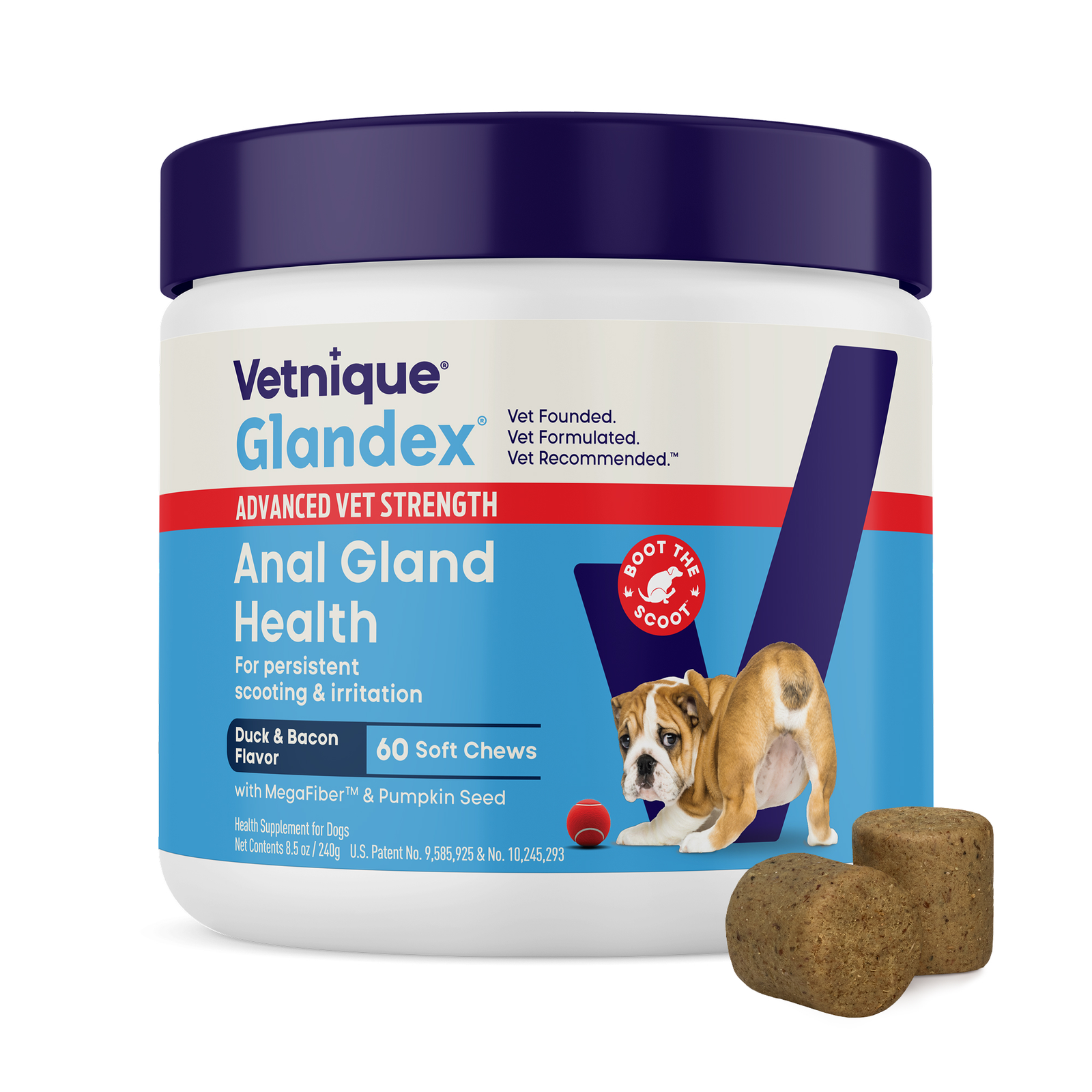
Glandex Soft Chews are vet-recommended and specifically designed to promote healthy anal gland function. They contain a combination of natural ingredients including pumpkin seed, digestive enzymes, probiotics, and quercetin to support digestive health and regular bowel movements.

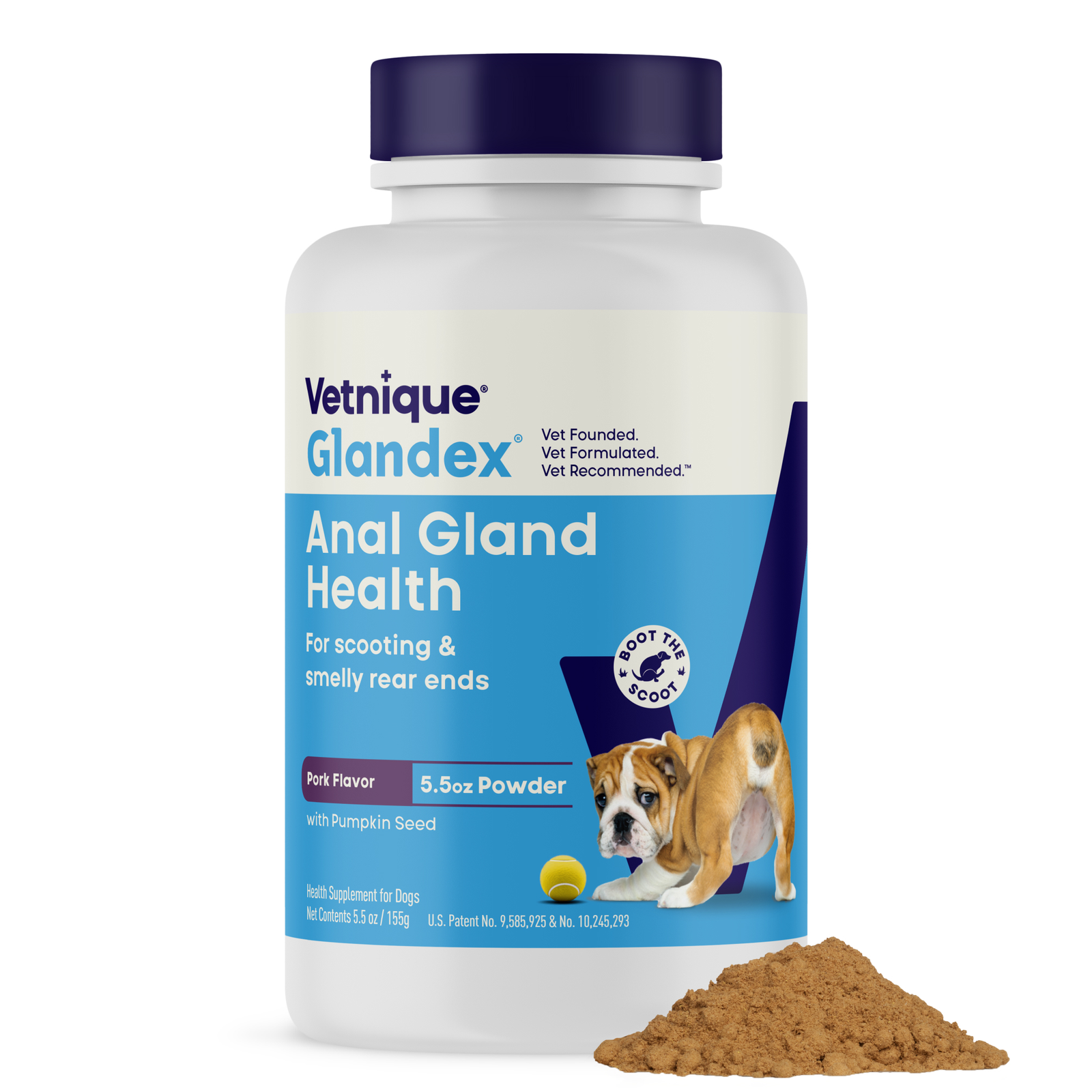
For dogs that prefer a powder supplement, Glandex Powder offers the same benefits and can be easily mixed into food. Glandex Wipes provide convenient, on-the-go hygiene for cleaning the rear end area and keeping it fresh between baths. For more severe or chronic anal gland concerns, Glandex Advanced Vet Strength Chews provide a higher-potency formula. Browse the full Glandex collection for the complete range of anal gland health products.

🩺
DR. JAMES BASCHARON SAYS
"Manual expression of anal glands should only be performed by a trained professional or your veterinarian. Relying solely on manual expression can be detrimental — the goal should be to encourage natural expression through dietary and lifestyle adjustments that promote regular, firm bowel movements."
— Dr. James Bascharon, DVM , General Practice
Breeds commonly affected
Most at risk

Frequently Asked Questions

How can I help my dog's itchy butt?

Several approaches can help relieve your dog's itchy rear end. Consult your veterinarian for personalized treatment, which may include antihistamines or topical corticosteroid creams. Maintain regular grooming with attention to the anal area after defecation, using hypoallergenic wipes to keep the area clean. Topical medicated sprays containing hydrocortisone and lidocaine can provide immediate soothing. A fiber-rich diet with adequate hydration supports natural anal gland expression by promoting firm, regular bowel movements. If symptoms persist, your vet can perform allergy testing or recommend immunotherapy.

What causes a dog's itchy butt?

Common causes include anal sacculitis (inflammation of the anal glands, which should normally express during bowel movements but can become full or infected), allergies (both food-related and environmental, which can cause localized or all-over itching), and parasites or gastrointestinal issues. If your dog suddenly starts scooting with no history of anal gland problems, consider whether any changes in their environment could be causing an allergic reaction. For a detailed guide to scooting causes, see our article on why dogs scoot.

What is quercetin and can it help with a dog's itchy butt?

Quercetin is a natural antihistamine and anti-inflammatory compound found in certain plants. When incorporated into a dog's diet or supplement routine, it can help soothe irritation and target inflammation related to anal gland itchiness or allergies. Some anal gland supplements, including Glandex products, contain quercetin as part of their formula.

Should I manually express my dog's anal glands?

Manual expression of anal glands should only be performed by a trained professional or veterinarian. Relying solely on manual expression can be detrimental to long-term anal gland health. The goal should be to encourage natural expression through dietary and lifestyle adjustments that promote regular, firm bowel movements — including a fiber-rich diet and adequate hydration. If you notice signs of impaction or persistent discomfort, contact your veterinarian promptly.

Can allergies cause a dog to scoot?

Yes. Allergies — both food-related and environmental — can cause itchiness in the anal area that leads to scooting. All-over itching is more commonly associated with food allergies, while localized itchiness may result from environmental or topical product allergies. If your dog suddenly starts scooting and has no history of anal gland problems, an allergic trigger may be the cause. Your veterinarian can help identify the allergen and recommend appropriate treatment such as hypoallergenic shampoos, dietary adjustments, allergy testing, or immunotherapy.

📋
Veterinary Disclaimer

Vetnique Labs was founded by Dr. James Bascharon, DVM, and all content is reviewed by our Vet Advisory Board. This information is not a substitute for professional veterinary advice. Always consult your veterinarian.

Dr. James Bascharon
About the Author

Dr. James Bascharon, DVM

Veterinarian | Founder & CEO

Dr. James Bascharon is a veterinarian, entrepreneur, and the visionary founder of Vetnique. He launched Vetnique in 2012 after formulating Glandex® in his own kitchen to address anal gland health in pets.

Search