



Cats are masters at masking physical discomfort, which makes it easy for even the most conscientious pet parents to miss the early signs of underlying health problems. One common yet frequently overlooked issue is discomfort involving the cat's anal glands—a condition that can lead to significant pain if left untreated.
As a team of veterinary experts, we have seen how these small sacs cause significant distress. Anal glands in cats are small sacs located near the anal opening that play a role in scent marking and communication. If your cat is displaying clinical signs such as unusual behaviors like scooting, straining while defecating, swelling around the anal opening, or starting to repeatedly lick or bite the area near their tail, these are behavioral indicators of anal gland disease or anal sac disease.
Recognizing these clinical signs is vital for timely intervention. Our mission is to provide effective, high-quality solutions that deliver tangible results to keep your cat comfortable and "nose-to-tail" healthy.
-
How do you naturally empty cat anal glands?
-
What are the side effects of impacted anal sacs?
-
Can diet help prevent anal gland blockages?
Signs your cat may need anal glands expressed
Determining whether your cat needs their anal glands expressed requires close observation of their behavior and physical condition. Clinical signs such as scooting, excessive licking of the anal area, and the presence of hard masses near the anus indicate anal gland blockages. Hard masses felt in the anal area are a sign of blocked or infected glands.
Here are the most common signs to watch for:
-
Repeatedly lick the anal area: All cats groom themselves, but the discomfort of anal gland inflammation or impaction causes a cat to interrupt normal activities to lick the area. If your cat licks this area with urgency, it indicates a problem with the anal glands.
-
Scooting: This is a telltale sign that a cat is trying to relieve itching or pressure in the rectal area. The cat sits and pulls their body forward with their front paws, dragging their hindquarters along the floor. While more common in dogs, cats scoot for the same reason—discomfort in the anal gland area.
-
Defecating outside the litter box: While often related to the box itself, avoidance can indicate discomfort or constipation caused by anal gland inflammation. Impacted anal glands narrow the anal cavity, making defecation painful and causing the cat to associate the litter box with that pain.
-
Foul odor or fishy smell: A healthy cat should not have noticeable unpleasant body odors. If you notice a foul smelling fluid, especially a fishy, foul-smelling liquid on furniture or bedding, it indicates anal gland problems. Detectable fishy smells from the rear end are a red flag that the anal glands are full, leaking, or infected.
-
Redness or swelling around the anus: Visible inflammation or swelling around the anus is a definitive sign of an anal gland problem. Swelling around the anal area is a sign of anal gland disease in cats. The anal glands are located on either side of the rectal opening at the 4 o’clock and 8 o’clock positions. Redness, puffiness, or swelling in these areas means the glands need veterinary attention. Severe swelling may indicate an anal sac abscess, where a pocket of pus forms, causing significant pain.
What are cat anal glands?
Cat anal glands, also known as anal sacs or cat's anal sacs, are two anal glands that are small, pea-sized sacs located on either side of the rectum near the anal opening. Both male and female cats, including female cats, possess these scent-producing cat's glands.
The anal sac fluid is released through tiny ducts that open near the anus. This fluid is used for scent marking and communication. These secretions contain chemicals that act as territorial markers. In healthy cats, the anal glands empty naturally every time the cat defecates, as the pressure of a firm stool passing through the rectum squeezes the glands to release the fluid.
Most pet parents never notice these glands when they are functioning properly. However, anal sac disorders, such as impaction, infection, abscess, and tumors, occur when the tiny ducts become clogged. This interferes with normal litter box usage and causes constipation. When bacteria build up in impacted glands, infection develops. This makes the entire area painful, leading to persistent scooting and licking. Untreated anal gland infections progress into an anal sac abscess—a condition that requires prompt veterinary intervention.
Treatment options for cat anal gland problems
If your cat shows signs of anal gland problems, start by consulting your veterinarian. Anal gland disease and anal sac disease are common reasons for seeking veterinary medicine.
-
Manual expression: This is the most common treatment for full or impacted anal glands. A veterinarian or trained professional can manually perform anal gland expression to relieve pressure. Do not attempt this at home, as incorrect technique causes injury or makes the problem worse.
-
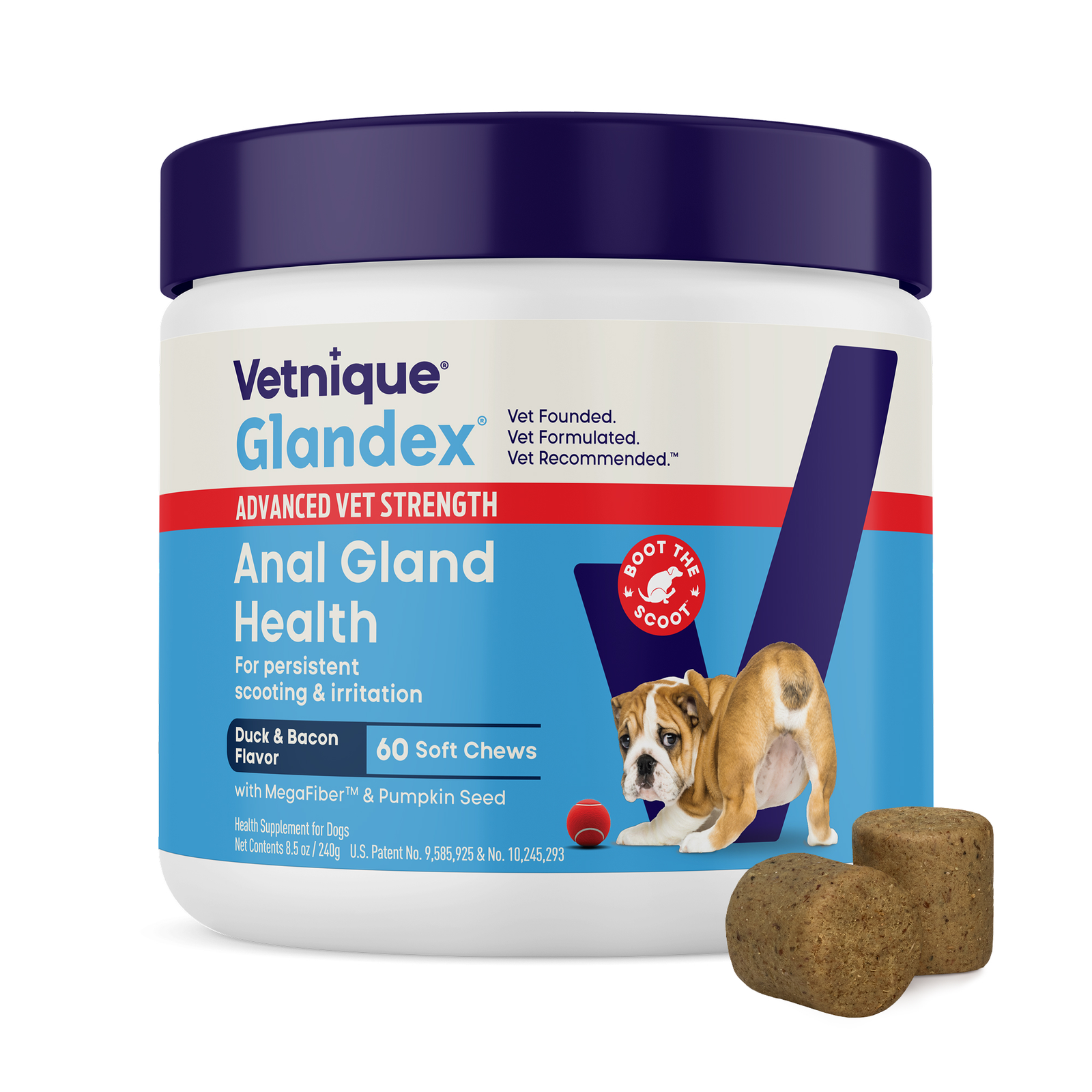
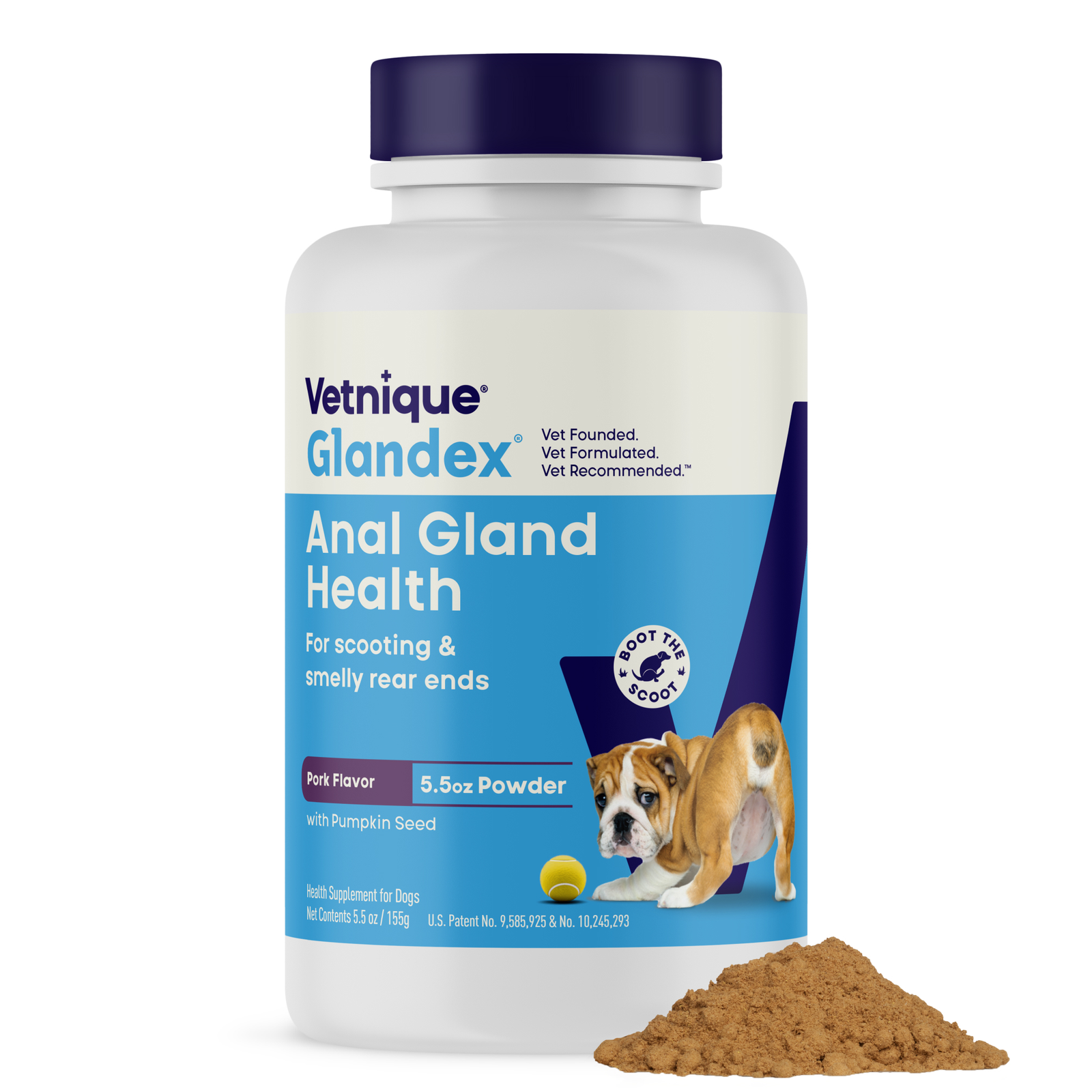
Dietary changes and supplementation: Adding fiber to your cat's diet promotes firm bowel movements that put adequate pressure on the anal glands. High-fiber cat food or fiber supplements are beneficial. For cats that need ongoing support, Glandex® Anal Gland Powder Supplement for Dogs & Cats is a daily supplement added directly to food. This veterinarian-formulated powder combines fiber, digestive enzymes, and probiotics to support normal anal gland function. For cats with persistent issues, Glandex® Advanced Anal Gland Chews for Dogs (formulated for both species) provides a higher-potency option.
-
Medications: If infection is present, your veterinarian prescribes antibiotics or anti-inflammatory medications to reduce swelling. Pain medication is also recommended to keep your cat comfortable during recovery.
-
Surgery: In severe cases where the glands repeatedly become impacted, surgical removal of the anal glands is recommended. This is a last resort when medical management is not effective. If anal gland tumors are present, surgical treatment or oncology referral is required.
Risks associated with improper anal gland expression
Attempting to express your cat's anal glands at home without professional training leads to serious health challenges. One of the most significant risks is the introduction of harmful bacteria, which results in painful anal gland infections or severe anal gland abscesses.
If these infections are left untreated, they may burst open, causing tissue damage and fecal incontinence. Improper techniques cause significant pain and discomfort for your cat. In rare cases, incorrect technique damages the delicate nerves around those critical glands, resulting in chronic pain or long-term fecal incontinence complications.
Because of these risks, it is essential to seek veterinary advice before attempting any anal gland expression. A veterinary professional can safely assess the area with advanced techniques. They also identify underlying health issues, such as anal gland tumors, that require surgical removal or radiation therapy in severe cases.
How often do cats need anal glands expressed?
Many healthy cats never require manual anal gland expression. In fact, healthy cats do not need their anal glands manually expressed because their glands empty naturally during regular bowel movements.
However, some cats—especially those prone to anal gland issues—need their glands expressed on a regular schedule. Cats with recurrent anal sac issues require routine expression under veterinary guidance. The frequency varies by individual and ranges from every few months to more frequently. Daily supplementation with fiber helps prevent anal gland issues by promoting consistently firm stools that express the glands naturally.
When to see your veterinarian
Consult a vet immediately whenever you suspect your cat is experiencing anal gland problems. Veterinary medicine plays a crucial role in diagnosing these issues, and regular check ups help catch any recurrence early.
Seek immediate veterinary attention if:
- Your cat is in visible pain or discomfort.
- There is swelling, redness, or bleeding around the anal area.
- Your cat has difficulty defecating or shows signs of constipation.
- You notice a strong foul odor that indicates infection.
- Symptoms persist or worsen despite dietary changes.
Early intervention prevents minor anal gland issues from developing into serious conditions. By taking a proactive approach and relying on a veterinary professional, you ensure your cat remains comfortable and healthy for years to come.