


As dogs age, their hips and joints become more susceptible to wear and tear, which can result in discomfort and pain. This guide covers everything you need to know about dog joint pain — from signs to watch for to home support strategies and when to contact your veterinarian.
Signs of Joint Pain in Senior Dogs
As dogs get older, they tend to experience more stiffness in the hips and joints. This can lead to a variety of symptoms that indicate your dog is in pain.
Limping
Limping is one of the most obvious signs of joint pain. If your dog is favoring one leg or limping, it is time to start a conversation with your veterinarian.
Hesitance to jump or climb
If your dog seems hesitant to jump onto the couch or climb stairs, it could be a sign that their joints are feeling stiff or tender.
Slower movement
A senior dog moving slower than usual or struggling to keep up on walks may be dealing with joint pain. They may run in shorter bursts or avoid running altogether.
Struggling to stand up
Difficulty standing after lying down — or using the front legs to push up — can indicate joint pain in the low back, hips, knees, or elsewhere in the rear legs.
Whimpering or whining
Some dogs vocalize when they are in pain. Whimpering or whining is a sign that your dog may be dealing with significant discomfort and needs attention.
Licking or chewing affected joints
A dog constantly licking or chewing at a particular joint may be trying to self-soothe pain or discomfort. Senior dogs licking their paws, knees, or hips could be attempting to alleviate joint pain on their own.
Irritability when touched
If your dog seems irritable or becomes agitated when you touch a certain area, they may be experiencing joint pain in that region.
Posture changes
Dogs may hunch their backs or shift their weight to one side to alleviate pain in an affected joint.
When is a dog considered senior? Generally speaking, small to medium dogs are considered seniors after 11–12 years of age, medium-to-large dogs after 10–11 years, and giant breeds after 7 years. The stress on the musculoskeletal systems of large and giant breeds affects their life expectancy, leading to an earlier transition into their senior years.
What Causes Dog Joint Pain?
Several factors can contribute to dog joint pain in the legs, shoulders, hips, and other areas — especially in senior dogs.
Arthritis
Arthritis means joint inflammation and is more common in senior dogs, though it can also affect younger dogs. Common causes include day-to-day wear and tear, as well as more severe trauma like falls or accidents. Less commonly, arthritis can have infectious causes such as tick-borne bacteria, or can occur when the immune system attacks the joints.
When arthritis causes enough inflammation to significantly impact joint surfaces, the condition is known as osteoarthritis or degenerative joint disease. Under these conditions, a dog's joint range of motion and comfort can be permanently altered.
Hip dysplasia
Hip dysplasia is a genetic condition in which the hip joint does not develop properly, causing the bones to rub against each other. This leads to hip pain and stiffness that can be severe enough to prevent dogs from walking altogether.
Bone deformities
Some dogs are born with or develop bone abnormalities that cause limbs to have a misshapen appearance, known as angular limb deformities. One such condition is chondrodysplasia, a developmental abnormality of bone and cartilage that can lead to angular limb deformities, increased joint stress, and earlier onset of arthritis.
Breed predisposition
Certain dog breeds are genetically predisposed to hip and joint issues. German Shepherds, Golden Retrievers, Labrador Retrievers, and multiple hound breeds have a higher risk of hip dysplasia.
Giant breeds — including Great Danes, St. Bernards, Mastiffs, Bernese Mountain Dogs, Rottweilers, and Newfoundlands — are at higher risk for joint disorders like arthritis and osteochondrosis, a condition that affects bone formation in the early stages of a dog's life.
Obesity
Excess weight puts extra strain on a dog's joints, leading to pain and discomfort. Being overweight affects more than just the joints — the cardiovascular, digestive, nervous, and immune systems are all negatively impacted.
Carrying too much weight can impair the immune system's ability to manage inflammation associated with arthritis, causing pain and clinical signs to persist longer than they would in dogs at a healthy weight.
Mechanical overuse
Dogs that engage in repetitive activities or overexert themselves may develop joint pain. Working breeds like Labrador Retrievers, Akitas, and German Shepherds are associated with a higher risk because of their high drive to perform, making them more prone to arthritis and related overuse injuries compared to less-driven, non-working dogs.
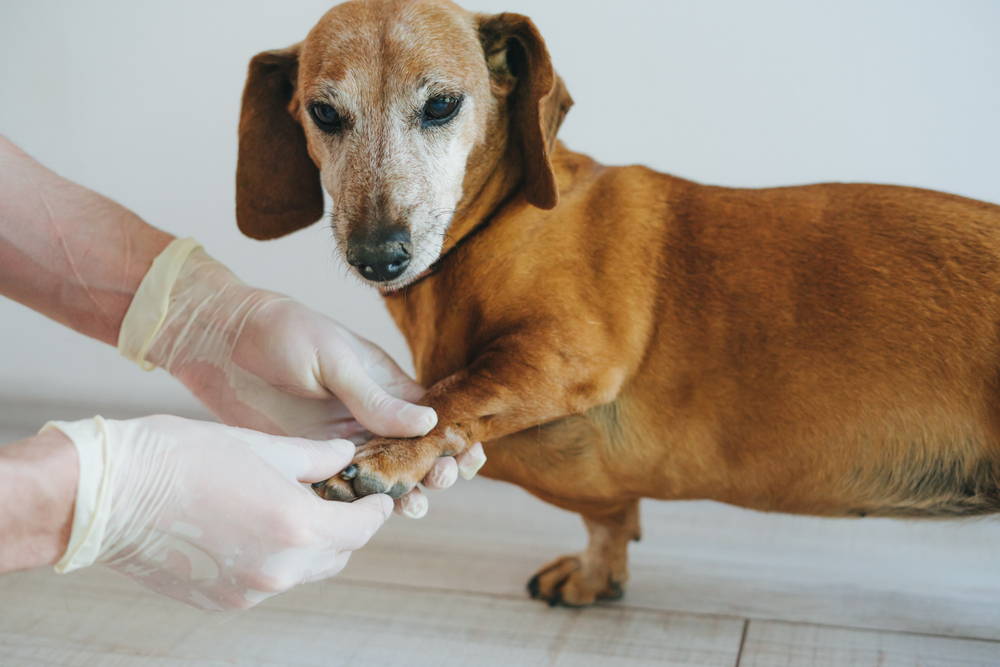
How to Support Senior Dogs with Hip and Joint Pain
If you suspect your senior dog is experiencing hip and joint pain, there are several things you can do at home to help them feel more comfortable — in addition to developing a treatment plan with your veterinarian.
Hip and joint supplements
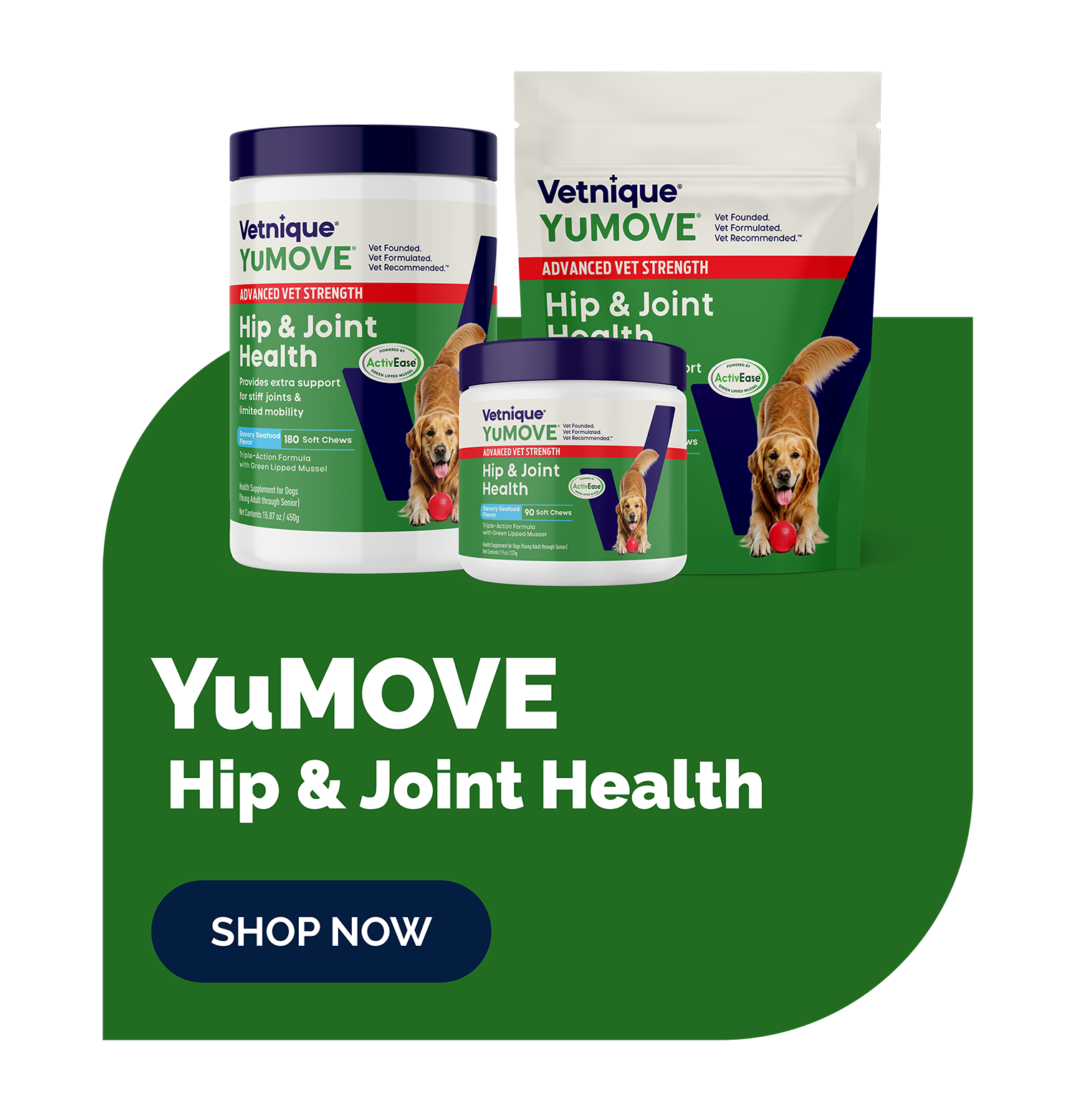
A daily hip and joint supplement can make a meaningful difference for senior dogs. Look for formulas with ingredients like glucosamine, chondroitin, MSM, and omega fatty acids, all of which have been clinically tested to support joint health in dogs. YuMOVE Advanced Vet Strength Hip & Joint Health Chews are formulated specifically for dogs who need high-strength joint support.
Supportive bedding
Orthopedic beds or memory foam mattresses can help alleviate joint pain by providing firm support for your dog's body weight without sinking or becoming lumpy.
Adapted accessibility
Making your home more accessible can significantly reduce discomfort. Consider adding ramps to help your dog reach furniture or navigate stairs, and move food and water bowls to the same floor or area where they spend most of their time.
Safeguard slippery surfaces
Slippery surfaces can lead to new injuries or worsen existing conditions like arthritis, especially in senior dogs. Adding traction with carpeting, yoga mats, or other textured surfaces can improve your dog's comfort and mobility. Ask your veterinarian about foot or nail covers and paw appliques that enhance grip on hardwood and linoleum.
Weight management
If your dog is overweight, talk to your veterinarian about a weight loss plan. Studies have shown that a 25% reduction in food intake can increase a dog's lifespan by 2 years on average and reduce the onset of both osteoarthritis and degenerative joint disease. Always get veterinary guidance before making significant dietary changes to ensure your dog still receives the nutrients they need.
Exercise modification
Modify your dog's exercise routine to reduce direct impact on their joints. Low-impact activities like swimming, gentle walks, and dog yoga are better alternatives to high-impact activities like toy chasing, rough play, and running.
Heat therapy
Applying heat to affected joints can help alleviate pain and stiffness. Use a warm compress or heating pad on a low setting for about 10 minutes every 8–12 hours. Never leave a heating pad unattended with your pet.
Massage therapy
Massaging your dog's muscles can help relieve tension and improve circulation. Avoid directly massaging the affected joint, which may be tender to the touch. If you are not familiar with canine massage technique, ask your veterinarian for instruction or request a referral to a veterinary physical rehabilitation facility where massage is included as part of their arthritis treatment protocol.
Diet changes
Certain foods and supplements can help support joint health, while some ingredients can worsen inflammation. Talk to your veterinarian about incorporating these ingredients into your dog's diet: turmeric for inflammation, glucosamine for joint fluid viscosity and lubrication, MSM (methylsulfonylmethane) for cartilage and connective tissue support, eggshell membrane for joint stiffness from normal daily exercise, chondroitin to support joint function and cartilage development, and omega fatty acids to support nerve, joint, muscle, skin, and immune health.
Many clinically tested, natural supplements for senior dogs can support daily joint function. The full YuMOVE hip and joint collection offers options for dogs at every stage of joint health. Avoid supplements made with sugar, fillers, or other ingredients that can cause weight gain or additional inflammation.
When to Contact Your Vet About Dog Joint Pain
While home support strategies can help manage mild to moderate joint discomfort, certain situations require professional veterinary care. Contact your veterinarian if your dog cannot stand up or appears to be in extreme pain, stops eating or drinking, becomes lethargic or unresponsive, suddenly starts limping or shows weakness in their legs, or if joint pain does not improve after a few days of home treatment.
Your veterinarian may recommend diagnostic imaging like radiographs (x-rays) or more advanced imaging like MRI or CT scans. Blood, urine, fecal, and other tests may be needed to assess whole-body health. Your vet may also prescribe pain medication or suggest other treatments, especially if the cause of the pain indicates a chronic condition.
Dog joint pain is a common issue, especially in senior dogs. Pay attention to the signs of joint pain, take notes and record videos to share with your veterinarian, and be prepared to take action to alleviate your dog's discomfort. Ask about hip and joint supplements for dogs or other treatment options that may be right for your pet.