


As your dog ages and shows signs of joint stiffness, climbing up and down the stairs can become increasingly difficult. When a dog uses the stairs, th
As dogs age and develop joint stiffness, climbing stairs can become increasingly difficult. Stairs place more pressure on the joints than walking on a flat surface and require a greater range of motion. For senior dogs, this can mean difficulty navigating the stairs safely. Here are practical ways to help your senior dog with stairs and keep them comfortable at home.
Signs Your Dog Needs Help on the Stairs
Several signs indicate that your senior dog is struggling with the stairs. Watch for reluctance to go up or down, descending too quickly or appearing out of control as they pick up speed, occasional slipping, stumbling, or appearing unsteady, and visible signs of stiffness while climbing. These behaviors suggest that the stairs are putting strain on your dog's joints and that they need additional support to use them safely.
Use a Lifting Harness or Mobility Sling

A lifting harness or mobility sling wraps around your dog's body and allows you to lift and support them while they navigate the stairs. This is a practical solution for dogs who occasionally lose their balance or need extra stability.
Make sure you select a harness that supports the area your dog needs help with most. Senior dogs with weakened back legs or stiff hip and knee joints benefit from a rear-support harness that lifts the hind end. For dogs with less stable front legs, a front lifting harness that supports the chest and front legs is the better choice.
Improve Stair Traction
The surface covering your stairs makes a significant difference in safety. Hardwood stair treads create a slippery surface that can be dangerous for an older dog. In comparison, carpeted stairs provide more traction and are easier for senior dogs to navigate.
If your stairs are hardwood, adding carpet runners or non-slip stair treads can help your dog grip the surface more securely. Dog boots or traction socks with rubber soles can also be worn indoors to reduce the risk of slipping on smooth floors and stairs.
Support Joint Health
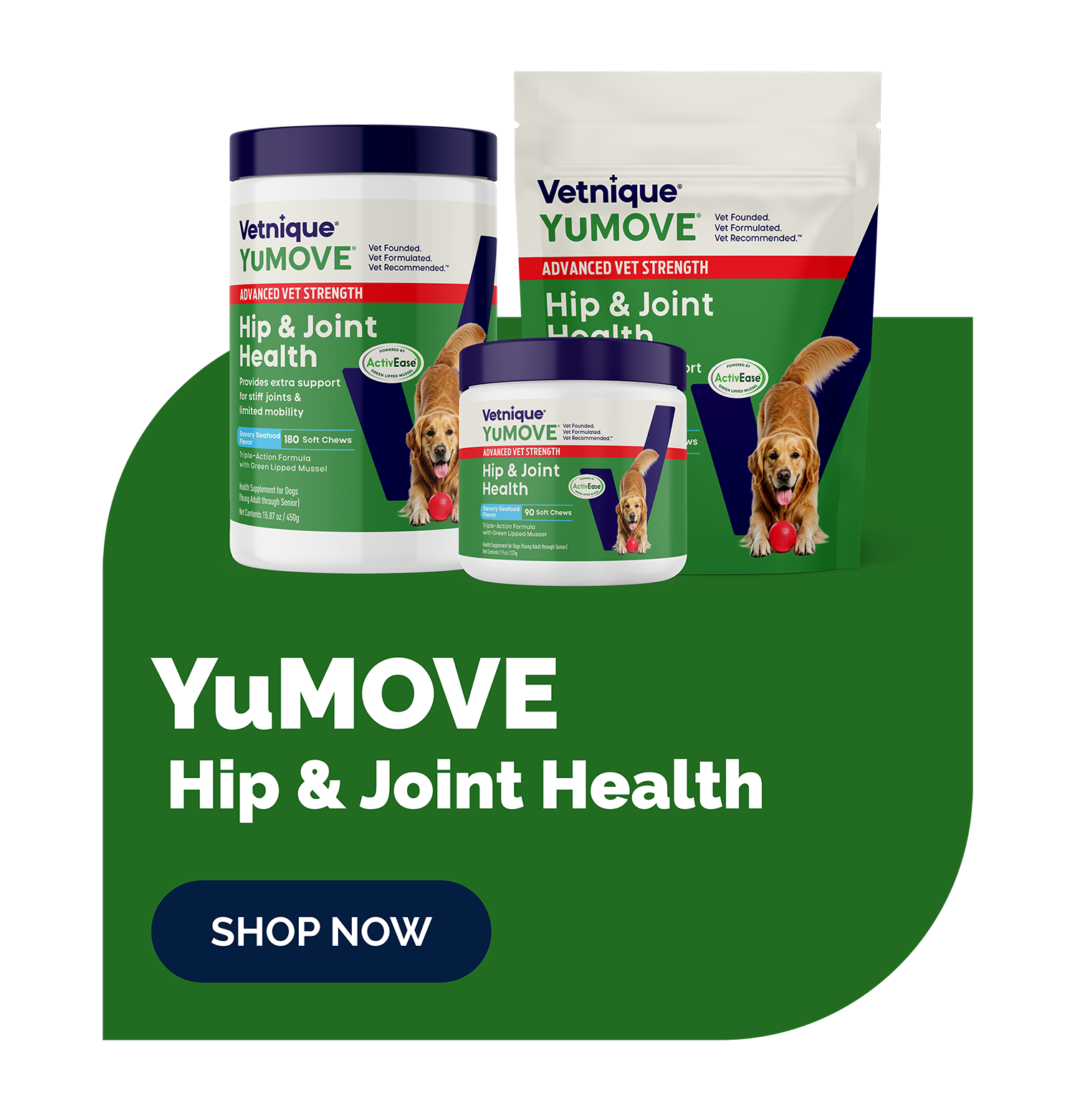
A joint supplement can help support your senior dog's mobility and ease the stiffness that makes stairs more challenging. A study by the Royal Veterinary College found that YuMOVE's triple-action formula — which eases occasional stiffness, supports joint structure, and promotes mobility through ActivEase Green Lipped Mussel, Glucosamine, and Hyaluronic Acid — made a measurable difference in dogs within six weeks.
Good joint care is beneficial for dogs at different ages depending on their needs, activity level, and life stage — not only for senior dogs. For dogs with severe or chronic stiffness, YuMOVE Advanced Vet Strength Chews provide the most concentrated support. For daily preventive maintenance, YuMOVE Tasty Health Bites offer ongoing joint support. Browse the full YuMOVE hip and joint collection for additional options.
Use a Stair Gate
For dogs that are unsteady on their feet, keeping them on one floor is often the safest approach. A stair gate is an effective way to prevent your senior dog from using the stairs unsupervised, which eliminates the risk of falls.
Create a comfortable space on your main floor where your dog can rest. An orthopedic bed placed in a room where the family spends the most time allows your dog to stay close to you while getting the cushioning and support their joints need. This setup keeps your senior dog safe, comfortable, and connected to the household without needing to navigate the stairs.
ey place even more pressure on their joints, and it requires a greater range of motion than walking on a flat surface. Climbing the stairs can be tough on a senior dog’s joints, and this can lead to difficulty navigating the stairs safely.Signs Your Dog Needs Help on the Stairs
-
Shows reluctance to go up or down the stairs.
-
Goes down the stairs too quickly, may seem out of control, or picks up speed as they descend.
-
Occasionally slips, stumbles, or appears unsteady.
-
Dog shows signs of stiffness while using the stairs.
Stair Safety for Senior Dogs
Assist your dog on the stairs
Older dogs may be unable to control how quickly they come down the steps, and the climb up takes longer than it did when they were younger. These are just a few signs that your dog needs more support on the stairs, and to use the stairs safely, they need your assistance.
A lifting aid harness is a simple way to help your dog. A mobility sling or lifting harness will wrap around your dog’s body and helps you to lift and support your dog while navigating the stairs. A mobility harness can be helpful for dogs who occasionally lose their balance or need an extra bit of help from you. Make sure you select a harness that supports the part of your dog that needs it most. Senior dogs with less sturdy back legs or stiffened joints need a harness supporting their hind end. For dogs with less sturdy front legs, choose a front lifting harness that supports a dog’s chest and front legs.
Are your stairs carpeted or hardwood?
The flooring covering your stairs can impact your dog’s stair safety. As dogs get older, they can have a harder time getting traction on smooth flooring. A hardwood stair tread creates a slippery surface that can be dangerous for an older dog. In comparison, a carpeted staircase provides more traction and can be easier for senior dogs to navigate.
Adding carpet or a non-slip surface onto your stairs can help a senior pup use the stairs. Dog boots or traction socks with a rubber sole can also be worn indoors to help lower the risk of your dog slipping while indoors.
Joint care
A joint supplement can be used to help support a dog’s joint mobility and joint stiffness. YuMOVE Joint Care PLUS’s scientifically proven high-strength formula gets to work on your dog’s joints in three ways – easing occasional stiff joints, supporting joint structure, and promoting mobility, scientifically proven to work in just 6 weeks.* Perfect for senior dogs that require extra joint support and help them to live a more active life, for life. Only YuMOVE contains the unique ActivEase® Green Lipped Mussel to deliver a powerful blend of Omega 3s to ease your dog's (occasional) stiff joints.

Taking a daily joint supplement is beneficial to more than just senior dogs. Good joint care can be beneficial to dogs at different ages depending on their needs, activity level, and life stage.
Use a stair gate
Many older pets will be safer and more comfortable staying on one floor. Gating off your stairs is an effective way to keep your dog away from the stairs, and on the first floor. An older dog who’s unsteady on its feet should avoid climbing up or down the stairs unsupervised. Create a comfortable space on your main floor where your dog can rest. Set up an orthopedic bed in a room where your family spends a lot of time. This will allow your best friend to stay nearby and provide lots of cushioning to create a cozy resting place for your pup.