

Potty training a puppy means becoming very familiar with their bowel habits. Understanding how often puppies should poop at each stage of development — and what healthy puppy poop looks like — can help you identify when something is normal and when it may be time to call the veterinarian.
How Often Should Puppies Poop?
It is normal for a healthy puppy to have 5 to 6 bowel movements per day. As a general rule, the younger the puppy, the more frequently they will poop. This is because a puppy's digestive tract is still developing, so food moves through more quickly than it does in an adult dog. It is not unusual for puppies under 12 weeks of age to poop after every meal.
As the digestive system matures, frequency decreases. By around 12 weeks of age, most puppies are pooping about 4 times per day. By 6 months, this typically drops to about 3 times per day. By 1 year of age, most dogs settle into their normal adult cadence of 1 to 3 bowel movements per day, depending on the individual dog. Discover how dog's really age.
Potty Training and Establishing a Routine
How often your puppy poops is partly influenced by the routine you establish. Taking your puppy outside at the same times every day helps them develop a regular bathroom schedule and teaches them to hold it rather than going inside. Pay attention to cues that your puppy needs to go — sniffing the floor, pacing, and circling are common signs that it is time to head outside.

What Should Puppy Poop Look Like?
Healthy puppy poop should be chocolate brown in color, have a log or sausage shape, and be firm but not too hard or too soft. The size of a puppy's stool depends on their diet — how much they are eating, what type of food they are eating, and the fiber content of the food all play a role. Diarrhea can make stool loose or liquid, while constipation can make stool appear as small pellets or pebbles. Read about whether probiotics can help dog's with diarrhea.
Because puppies are growing and changing rapidly, some fluctuation in bowel habits and stool appearance is normal. If you notice anything that concerns you or cannot identify the cause of irregular bowel symptoms, contact your veterinarian.
What to Do If Your Puppy Is Not Pooping
If your puppy has not had a bowel movement for 24 hours or more, contact your veterinarian. Because puppies normally poop so frequently, constipation that prevents bowel movements can become a medical emergency. Bowel obstructions and impacted stool are dangerous for puppies and require prompt veterinary attention.
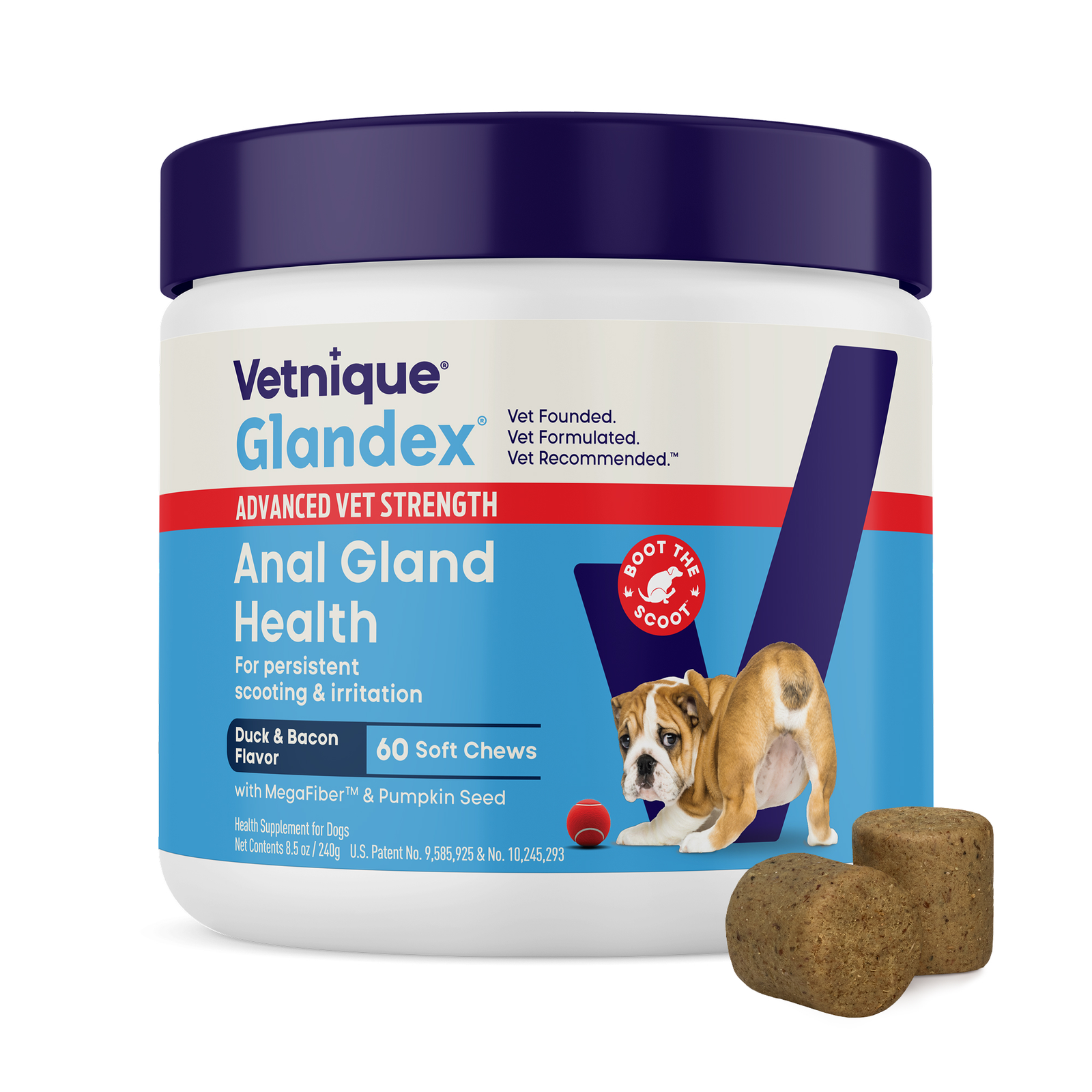
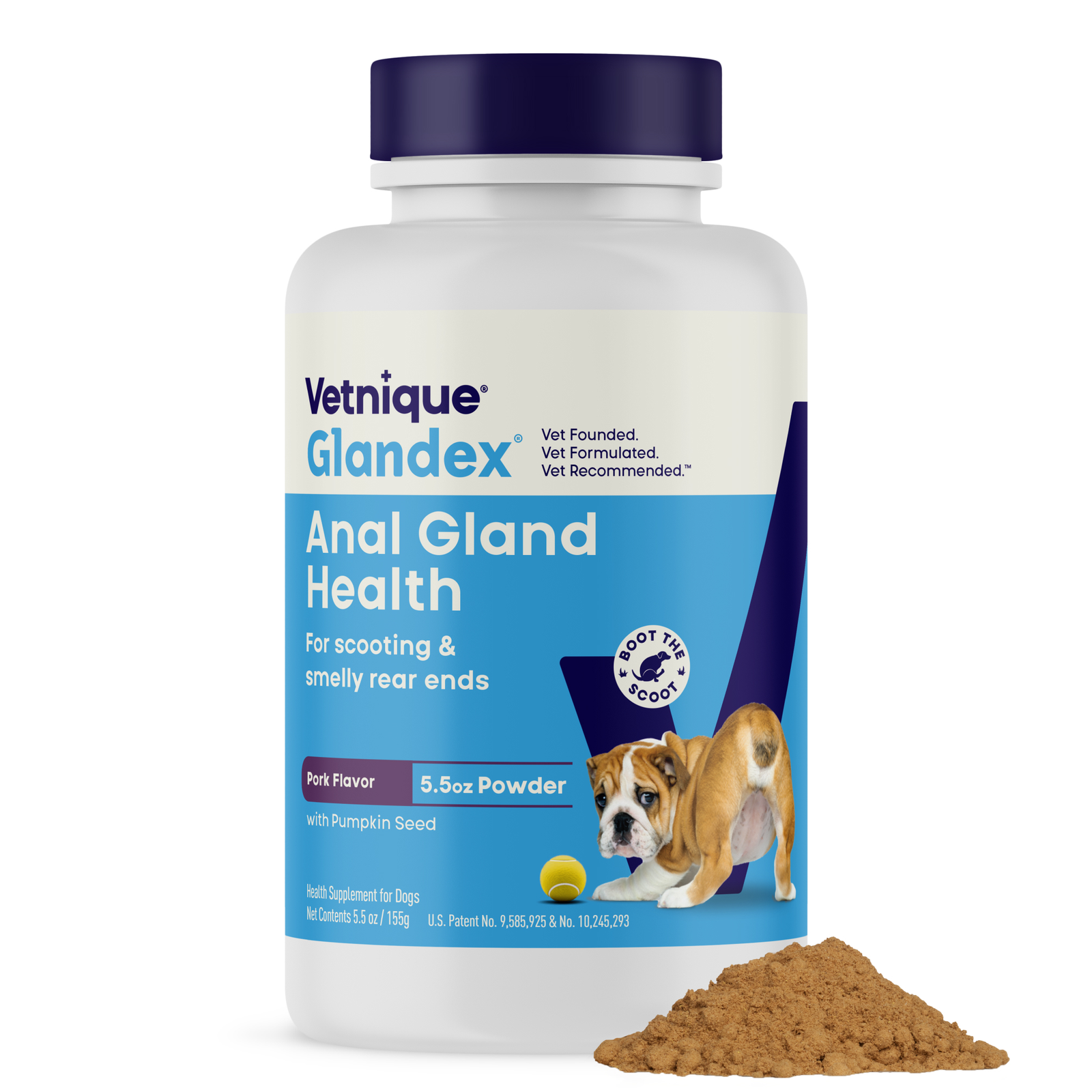
A daily fiber supplement can help keep your puppy's bowel movements regular and support healthy stool consistency. Glandex Soft Chews are formulated with pumpkin-based dietary fiber and can safely be given to puppies over 12 weeks of age at the recommended amount based on their weight. If your puppy's stools tend to be soft, mushy, or runny, a fiber supplement can help bulk them up. Firmer, bulkier stools also help your puppy naturally empty their anal glands during defecation.
Keeping an eye on your puppy's bowel habits is an important part of raising a healthy dog. Share any concerning symptoms or behavioral changes with your veterinarian so issues can be addressed early.