Dog Arthritis & Joint Conditions: Causes, Symptoms, and Treatment

Key Takeaways
Arthritis in dogs is caused by inflammation of joints when cartilage deteriorates, leading to bone-on-bone contact. The most common type is osteoarthritis from wear and tear. Other types include rheumatoid arthritis (autoimmune) and septic arthritis (infection).
Hip dysplasia is a genetic condition where the femur and hip socket grow at different rates, causing displacement. It has no cure but can be managed with diet, exercise, supplements, and surgery in advanced cases.
At-risk breeds for arthritis include German Shepherds, Labrador Retrievers, Golden Retrievers, and Bernese Mountain Dogs. At-risk breeds for hip dysplasia include German Shepherds (nearly 20%), Golden Retrievers (~10%), Great Danes (over 10%), and Saint Bernards.
Signs of arthritis include limping, joint licking, irritability, muscle atrophy, and swollen legs. Signs of hip dysplasia include swaying hips, bunny hopping, avoidance of stairs, and hind leg lameness.
Treatment includes low-impact physical therapy, massage, weight management, home accessibility modifications, daily joint supplements, CBD oil, NSAID anti-inflammatories, and surgery for advanced cases.
Prevention focuses on maintaining a healthy weight, providing breed- and age-appropriate daily exercise, and starting joint support supplements early.
Table of Contents
Which Breeds Are Most at Risk?
Signs and Symptoms of Dog Joint Pain
Pain Relief and Treatment for Dog Arthritis
At-Home Tips for Preventing Joint Issues
Does your dog struggle with pain, stiffness, or hesitate to play the way they once did? Dog arthritis, hip dysplasia, and related issues become more likely as dogs age, limiting mobility and putting a strain on their overall quality of life.
No one wants to see their dog limping or struggling with things that used to be easy — running, jumping, playing — or dealing with the persistent pain that can come with aging. This guide covers how to assess symptoms and severity, risk factors, and treatment options for dog arthritis, hip dysplasia, and other physical conditions affecting dogs of all ages.
Joints are where your dog's bones meet and move together, and can be referred to as synovial joints (which include ball-and-socket, sliding, and hinge joints). Joints enable range of motion and flexibility, allowing your dog to move and maneuver while playing, running, and engaging in other activities.

Arthritis in dogs is caused by inflammation of joints such as the knees, elbows, spine, paws, and hips. Joint inflammation occurs when the cartilage that cushions each joint begins to change or deteriorate, leading to a higher risk of bone-on-bone contact when a dog moves — along with it come the painful, telltale symptoms of arthritis. Dog arthritis affects older dogs, obese dogs, overworked dogs, and dogs with immune or metabolic disorders like diabetes.
When it comes to hip and joint issues, causes come down to either abnormal conditions in the joints or mechanical overuse. The most typical type of dog arthritis is osteoarthritis, which is caused by wear and tear in a dog's joints, whereas other types can be linked to food allergies, disease, injury, or infection.
Hip dysplasia happens while dogs are growing. The ball-shaped end of the femur (thigh bone) is supposed to grow at the same rate as the hip socket joint, allowing the two parts of the joint to fit together.
When a dog genetically inherits hip dysplasia, the two parts of the joint grow at different rates, causing displacement and dysfunction of the hip joint. The resulting symptoms are moderate to severe pain and worsening skeletal function. When left untreated, hip dysplasia can lead to arthritis and other more serious injuries.
Dysplasia occurs when a joint is displaced from its socket and is considered a genetic condition that can be made worse by a dog's lifestyle or certain activities. Unfortunately, hip dysplasia cannot be avoided for some breeds and it has no known cure. To prevent symptoms from worsening, help your dog maintain a healthy diet, promote regular exercise, and support weight management. Serious hip injuries can occur from untreated or worsening dysplasia, leading to arthritis in the hip joints and in extreme cases, lameness of the hind legs.
When treating advanced hip dysplasia, surgery costs can be a concern — making early detection and treatment important.
Arthritis is not limited to older dogs — joint-related diseases can affect dogs of any age, size, or breed. However, certain breeds are historically more prone to arthritis.
German Shepherd. German Shepherds suffer from both arthritis and hip dysplasia, which can create or worsen arthritic conditions in their joints. Osteoarthritis is especially common in this working breed.
Labrador Retriever. The larger body type and general athleticism can accelerate symptoms of arthritis in Labrador Retrievers.
Springer Spaniel. The energetic athleticism in Springer Spaniels is likely the cause of most cases of arthritis in this active breed.
Australian Cattle Dog. This working breed is prone to osteoarthritis due to a history of prolonged wear and tear on joints from a lifetime of running and herding.
Other breeds at risk for arthritis include Golden Retrievers, Bernese Mountain Dogs, Rottweilers, Old English Sheepdogs, Newfoundlands, and Pomeranians.
To prevent hip injuries, exercise is an important component for all breeds — especially larger breeds. Maintaining muscle mass helps support their skeletal structure. Without that strength, larger dogs will struggle even more with the symptoms of joint disease.
The top breeds prone to hip dysplasia are usually larger animals like German Shepherds and Great Danes, but small breeds are not immune.
German Shepherd. Nearly 20% of German Shepherds will experience hip dysplasia because of certain genetic factors like size and growth rate.
Golden Retriever. About 10% of Golden Retrievers will develop hip dysplasia throughout their lifetime, but the risk is higher if a Golden Retriever has an imbalanced diet or has experienced injury or overexertion.
Great Dane. As one of the world's largest dogs and a member of the giant breed category, over 10% of Great Danes will inherit hip dysplasia. A balanced diet and breed-specific exercise can lower these odds.
Other breeds at risk for hip dysplasia include Saint Bernards, Pugs, Neapolitan Mastiffs, French Bulldogs, Basset Hounds, and Bloodhounds.
When a dog's joint health is impaired, the symptoms will be apparent. All joint diseases in dogs have some overlapping or similar symptoms, so it is important to note anything that seems especially off for your dog — including how long symptoms have been present and how often they occur.

Common signs of arthritis include licking affected joints in an attempt to ease pain or discomfort, irritability or aggression toward people or animals who come too close to arthritic areas, limping or a noticeably slower gait, loss of appetite or fever (specifically in rheumatoid arthritis), muscle atrophy, quivering, or weakness, and legs that are swollen or tender to the touch.
Common signs of hip dysplasia include swaying hips or hind legs while walking, a narrow stance of the hind legs (from behind, legs look abnormally close together), avoidance of certain activities like climbing stairs or jumping, "bunny hopping" with hind legs, lameness of hind legs, and hips sagging or dropping.
After noticing these behaviors in your dog, call your vet for a more comprehensive diagnosis. Describe any new behaviors you have noticed, such as limping or difficulty jumping onto furniture. Even if you are unsure about the severity, it is best to give your vet the full picture.
If arthritis symptoms are present, it is time to talk to your veterinarian for a diagnosis and treatment options. There are a few potential diagnoses.
Dog osteoarthritis is a degenerative joint disease caused by mechanical wear and tear of joints — in essence, when the joints have been used for a prolonged period (often as a normal process of aging). Osteoarthritis can also develop in more acute cases when a younger dog has been overexerted regularly for an extended period.
Rheumatoid arthritis is common in dogs and is usually a chronic (long-term) condition. An overreactive immune response causes a dog's body to attack and destroy its own proteins, specifically targeting and degrading the cartilage that cushions the joints. Over time, the cartilage becomes so damaged that arthritis symptoms begin. Lifelong arthritis medication may be prescribed for ongoing pain management.
Septic arthritis can occur in dogs with fungal or bacterial infections that reach their joints, which can happen after a traumatic injury that exposes joints to infection. Septic arthritis is an acute condition that can usually be treated by antibiotics alone, but more persistent cases may require surgical opening of the joint to remove affected tissue.
Not all hope is lost for dogs with arthritis or hip dysplasia. The best approach for keeping your dog comfortable — and preventing some forms of joint disease — is a steady combination of healthy lifestyle choices. Make sure your dog eats a balanced diet, maintains a healthy weight, and gets breed- and age-appropriate exercise every day.
If your dog is already suffering from arthritis pain, the following treatment options can help.
Exercise might seem counterintuitive for an arthritic dog, but it is one of the best treatments. Physical therapy helps to lubricate the joint with synovial fluid and strengthens the muscle tissue surrounding the joint.
Low-impact exercises that are safe for dogs with arthritis or hip dysplasia include swimming in warm water, underwater treadmills, walking on softer surfaces like dirt or grass (alternating between flat and uneven terrain to strengthen muscles of the feet, legs, and hips), encouraging sit-to-stand repetitions with a healthy treat as a reward, and passive motion exercises (while a dog is sitting or standing, gently hold and extend their limbs to strengthen the joint and muscles).

For dogs with severe or end-stage arthritis or hip dysplasia, make sure their pain is controlled before they begin any exercise. Bone-on-bone contact is extremely painful, so do not engage your dog in exercise — even beneficial exercise — until you have addressed their pain.
If any of these exercises cause your dog pain or require any force on your part, stop immediately. Try the exercise again on a different day, and discuss any ongoing obstacles with your veterinarian.
Gentle massaging of your dog's muscles around the affected joints can help encourage blood flow, flexibility, and movement of synovial joint fluid. You can apply heat to certain areas to help loosen stiff muscles and joints, but stop immediately if your dog shows any signs of irritation or discomfort.
Weight management is important for both prevention and treatment. If your dog already has arthritis, take any necessary steps to get them to a healthy weight for their age and breed. The more excess weight on arthritic joints, the more they will struggle.
Does your house have a lot of steps? Slippery wood floors? High sleep surfaces? Minimize arthritis symptoms by making your home more accessible for your dog's limited mobility. Add rugs for better grip to avoid sliding and falling, and a dog ramp where needed to provide access to elevated surfaces. Place food and water bowls on a raised surface so your dog will not have to bend lower than chest height, and ensure they have a soft sleeping surface where they can rest.
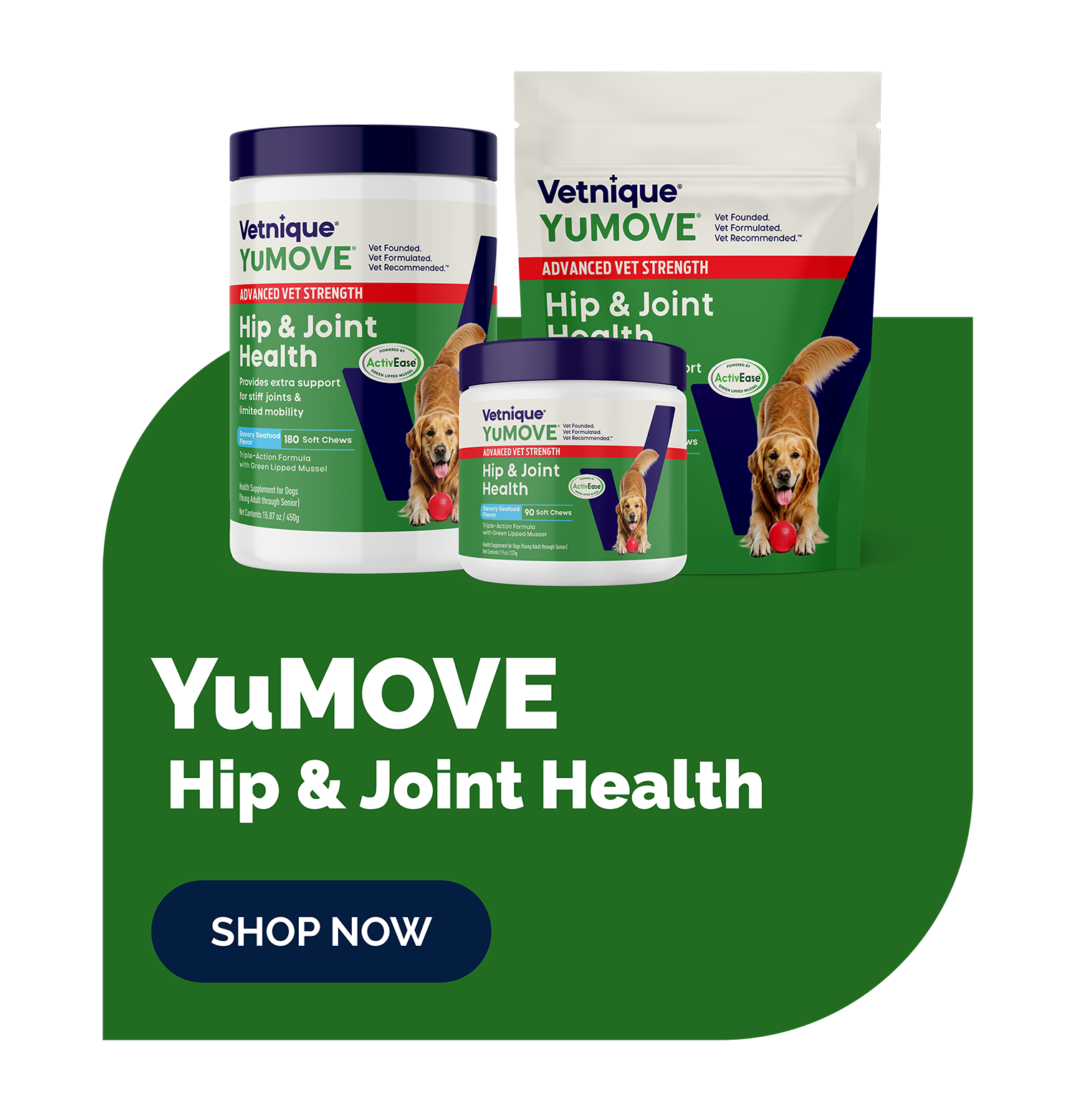
For daily hip and joint support, YuMOVE Advanced Vet Strength Chews provide targeted joint support with ActivEase Green Lipped Mussel, glucosamine, and hyaluronic acid for dogs already showing signs of stiffness and joint discomfort. For general preventive support, YuMOVE Tasty Health Bites deliver daily joint nutrition in a convenient treat format. Browse the full YuMOVE hip and joint health collection for all available products.
CBD oil is considered an alternative therapy that has shown promise for pet pain management. There are topical CBD balms and salves that can be massaged onto painful areas, or CBD oil that can be ingested (with careful attention to dosage) for pain relief. Follow the instructions on the CBD manufacturer's packaging, and start low and slow if it is your dog's first time using CBD. Consult your veterinarian before starting any CBD regimen.
NSAID anti-inflammatories are often used to treat pain from joint issues. Talk to your veterinarian if you think your dog needs more advanced support for their symptoms. Your vet can recommend the right medication based on your dog's unique health history.
Keeping your dog at a healthy weight — especially if you have a high-risk breed — is the number one safeguard against joint issues. The more weight your dog carries, the more stress will be placed on their joints, especially as they age.
Getting your dog moving daily is a great way to keep their joints lubricated and the musculature surrounding the joints strong. You can find your dog's optimal range anywhere from 30 minutes to two hours per day. Watch for signs of fatigue, as overexerting your dog will not do their joints any favors.
Starting a daily joint supplement before symptoms appear can help support cartilage health and joint function over the long term. YuMOVE Tasty Health Bites are formulated for daily preventive joint care, while YuMOVE Advanced Vet Strength Chews provide stronger support for dogs already experiencing stiffness or reduced mobility.
If you find that your dog's condition is deteriorating quickly or your dog is in pain, do not wait to call your vet. Make a note of symptoms and trust your observations.
These signs could mean your dog needs immediate veterinary treatment: vomiting or loss of appetite, fever, unusual low energy or malaise, inability to stand up from a sitting position, inability to stand for longer than a few minutes, and constant yelping or signs of severe pain.
For senior dogs with arthritis or similar joint issues, owners might be less likely to call the vet, thinking that stiffness and worsening mobility are normal for dogs of a certain age. However, if symptoms of arthritis and associated pain are overlooked, your senior dog could face irreversible damage to their legs, spine, hips, or other at-risk areas. This makes it important for dogs of all ages to be seen by a veterinarian for arthritis concerns.
The good news is that even for a dog with arthritis or hip dysplasia, it is still possible for them to live a long, healthy life. Finding the right treatment will depend on your dog's symptoms and severity, but no arthritis should be ignored. Take notes on how your dog is behaving — physically and emotionally — and present these findings to your vet to help find the best solution. Together, you can help your dog live a more active, comfortable life.
Browse the full YuMOVE hip and joint health collection for daily supplements, advanced vet strength formulas, and tasty health bites.
Arthritis is caused by inflammation of joints when the cartilage that cushions each joint begins to deteriorate, leading to bone-on-bone contact during movement. The most common type is osteoarthritis, caused by wear and tear over time. Other types include rheumatoid arthritis (an autoimmune condition) and septic arthritis (caused by infection). Risk factors include aging, obesity, overexertion, genetic predisposition, and immune or metabolic disorders like diabetes.
Hip dysplasia is a genetic condition where the ball-shaped end of the femur and the hip socket grow at different rates during development, causing displacement and dysfunction of the hip joint. This results in moderate to severe pain and worsening skeletal function. When left untreated, hip dysplasia can lead to arthritis and in extreme cases, lameness of the hind legs. There is no known cure, but symptoms can be managed through diet, exercise, weight management, supplements, and surgery in advanced cases.
Breeds at higher risk for arthritis include German Shepherds, Labrador Retrievers, Springer Spaniels, Australian Cattle Dogs, Golden Retrievers, Bernese Mountain Dogs, Rottweilers, Old English Sheepdogs, Newfoundlands, and Pomeranians. Breeds at higher risk for hip dysplasia include German Shepherds (nearly 20% affected), Golden Retrievers (about 10%), Great Danes (over 10%), Saint Bernards, Pugs, Neapolitan Mastiffs, French Bulldogs, Basset Hounds, and Bloodhounds.
Signs of arthritis include licking affected joints, irritability or aggression when someone touches the painful area, limping or a noticeably slower gait, loss of appetite or fever (specifically in rheumatoid arthritis), muscle atrophy or quivering and weakness, and swollen or tender legs. Signs of hip dysplasia include swaying hips or hind legs while walking, narrow stance of the hind legs, avoidance of stairs or jumping, bunny hopping with hind legs, lameness of hind legs, and hips sagging or dropping.
At-home strategies include low-impact physical therapy (swimming, underwater treadmills, walking on soft surfaces, passive range-of-motion exercises), gentle massage around affected joints with optional heat application, weight management to reduce stress on joints, making your home more accessible with rugs for grip and ramps for elevated surfaces, daily hip and joint supplements like YuMOVE Advanced Vet Strength Chews, and CBD oil for pain management. Always ensure pain is controlled before starting exercise, and consult your veterinarian for a comprehensive treatment plan.
Contact your veterinarian if your dog shows vomiting or loss of appetite, fever, unusual low energy or malaise, inability to stand up from a sitting position, inability to stand for longer than a few minutes, or constant yelping or signs of severe pain. Dogs of all ages should be seen for arthritis concerns, as overlooking symptoms in senior dogs can lead to irreversible damage.
We are devoted to helping pets thrive & lead healthier, happier lives through unique, vet-formulated products.