Dog Arthritis & Joint Conditions: Causes, Symptoms, and Treatment
Medically reviewed by James Bascharon, DVM | Last reviewed: April 2026

Dog hip and joint conditions — primarily arthritis and hip dysplasia — cause cartilage deterioration and inflammation that make everyday movement painful. The earlier you catch the signs and start supporting joint health through weight control, daily supplements, and appropriate exercise, the better your dog's long-term mobility outlook will be.
Key Takeaways
Arthritis in dogs is caused by inflammation of joints when cartilage deteriorates, leading to bone-on-bone contact. The most common type is osteoarthritis from wear and tear. Other types include rheumatoid arthritis (autoimmune) and septic arthritis (infection).
Hip dysplasia is a genetic condition where the femur and hip socket grow at different rates, causing displacement. It has no cure but can be managed with diet, exercise, supplements, and surgery in advanced cases.
At-risk breeds for arthritis include German Shepherds, Labrador Retrievers, Golden Retrievers, and Bernese Mountain Dogs. At-risk breeds for hip dysplasia include German Shepherds (nearly 20%), Golden Retrievers (~10%), Great Danes (over 10%), and Saint Bernards.
Signs of arthritis include limping, joint licking, irritability, muscle atrophy, and swollen legs. Signs of hip dysplasia include swaying hips, bunny hopping, avoidance of stairs, and hind leg lameness.
Treatment includes low-impact physical therapy, massage, weight management, home accessibility modifications, daily joint supplements, CBD oil, NSAID anti-inflammatories, and surgery for advanced cases.
Prevention focuses on maintaining a healthy weight, providing breed- and age-appropriate daily exercise, and starting joint support supplements early.
Table of Contents
Which Breeds Are Most at Risk?
Signs and Symptoms of Dog Joint Pain
Pain Relief and Treatment for Dog Arthritis
At-Home Tips for Preventing Joint Issues
Does your dog struggle with pain, stiffness, or hesitate to play the way they used to? Dog arthritis, hip dysplasia, and related joint issues become more likely with age — limiting mobility and dragging down overall quality of life.
No one wants to see their dog limping or struggling with the simple things they used to love. This guide covers how to assess symptoms and severity, which breeds carry genetic risk, and what actually works for treatment and prevention across every life stage.
Joints are where bones meet and move together — ball-and-socket, sliding, and hinge joints all enable the range of motion your dog uses to run, jump, and play. When those joints fail, everything from walking across the room to climbing onto the couch becomes a problem.

Arthritis is inflammation of joints — knees, elbows, spine, paws, hips. Inflammation happens when the cartilage cushioning each joint deteriorates, leading to bone-on-bone contact during movement. That contact is the source of the pain, and it's the signal I look for in early clinical exams: dogs shifting weight off one limb, hesitating before jumping, or taking stairs one at a time instead of bounding.
The condition disproportionately affects older dogs, overweight dogs, overworked dogs, and dogs with immune or metabolic disorders like diabetes. Causes fall into two categories: abnormal conditions in the joints themselves, or mechanical overuse over time. The most typical form is osteoarthritis from wear and tear. Other forms trace back to food allergies, disease, injury, or infection.
Hip dysplasia develops during growth. The ball-shaped end of the femur (thigh bone) is supposed to grow at the same rate as the hip socket, so the two parts of the joint fit together properly.
In dogs that genetically inherit hip dysplasia, those two parts grow at different rates. The result is joint displacement, chronic pain, and progressive loss of function. Left untreated, hip dysplasia leads to arthritis and in severe cases lameness of the hind legs.
It's a genetic condition that lifestyle factors can worsen. For some breeds it can't be avoided and there's no known cure. But you can slow progression dramatically with healthy weight, consistent exercise, and early supplement support. Surgery is reserved for advanced cases — and by that point, costs and recovery time get significant. Early detection and consistent management are what protect quality of life.
Arthritis isn't just an old-dog problem — I see it in younger working breeds regularly. Any breed can develop joint disease at any age, but some are substantially more prone than others.
German Shepherd. Suffer from both arthritis and hip dysplasia, which compound each other. Osteoarthritis is especially common in this working breed.
Labrador Retriever. Larger body type plus general athleticism accelerates arthritis onset.
Springer Spaniel. Energetic athleticism is likely the primary driver in this active breed.
Australian Cattle Dog. A working history of herding and running translates to prolonged joint wear.
Other breeds at elevated risk: Golden Retrievers, Bernese Mountain Dogs, Rottweilers, Old English Sheepdogs, Newfoundlands, and Pomeranians.
Exercise matters for every breed but especially larger ones. Muscle mass supports skeletal structure — without it, big dogs struggle more with the symptoms of joint disease as they age.
The top breeds for hip dysplasia skew larger — German Shepherds, Great Danes — but small breeds aren't exempt.
German Shepherd. Nearly 20% will experience hip dysplasia due to genetic factors related to size and growth rate.
Golden Retriever. About 10% develop hip dysplasia during their lifetime. Risk climbs with imbalanced diet or history of injury or overexertion.
Great Dane. Over 10% of Great Danes inherit hip dysplasia. Balanced diet and breed-specific exercise can lower the odds.
Other at-risk breeds: Saint Bernards, Pugs, Neapolitan Mastiffs, French Bulldogs, Basset Hounds, and Bloodhounds.
When joint health is compromised, the symptoms are usually visible — if you know what to watch for. Note anything that seems off, how long it's been present, and how often it occurs. Those details matter in diagnosis.

Common signs include licking affected joints to ease discomfort, irritability or aggression when someone comes too close to a painful area, limping or a noticeably slower gait, loss of appetite or fever (specifically in rheumatoid arthritis), muscle atrophy or quivering and weakness, and legs that are swollen or tender to the touch.
Common signs include swaying hips or hind legs while walking, a narrow stance of the hind legs (from behind, legs appear abnormally close together), avoidance of stairs or jumping, "bunny hopping" with the hind legs, hind-leg lameness, and hips that sag or drop.
After noticing any of these, call your vet. Describe every behavior you've seen — limping, difficulty jumping, slowness on stairs. Even if you're not sure about severity, give your vet the complete picture. What looks minor to an owner often tells me a lot about which joint is affected and how progressed the condition is.
If arthritis symptoms are present, it's time for a vet visit and a working diagnosis. A few possibilities.
Osteoarthritis is a degenerative joint disease caused by mechanical wear and tear — a normal consequence of aging in most cases. It can develop acutely in younger dogs who've been overexerted on a regular basis for an extended period.
Rheumatoid arthritis is usually a chronic, long-term condition. An overreactive immune response causes the body to attack its own proteins — specifically the cartilage cushioning the joints. Over time, enough cartilage damage accumulates that arthritis symptoms set in. Lifelong arthritis medication may be prescribed for pain management.
Septic arthritis occurs when fungal or bacterial infection reaches the joints — commonly after a traumatic injury that exposes the joint to contamination. It's an acute condition, usually treatable with antibiotics alone, though persistent cases may require surgical opening of the joint to remove affected tissue.
Not all hope is lost for dogs with arthritis or hip dysplasia. The best long-term approach is a combination of healthy lifestyle and early supplement support: balanced diet, healthy weight, and breed- and age-appropriate exercise every day.
If your dog is already in pain, the options below are what I recommend in practice.
Exercise feels counterintuitive for an arthritic dog, but it's one of the most effective treatments. Physical therapy lubricates the joint with synovial fluid and strengthens the muscle tissue that supports it.
Low-impact exercises that work for arthritic or dysplastic dogs: swimming in warm water, underwater treadmills, walking on softer surfaces like dirt or grass (alternating flat and uneven terrain to build foot, leg, and hip muscles), sit-to-stand repetitions with a healthy treat as reward, and passive motion work (while your dog is sitting or standing, gently hold and extend their limbs).

For dogs with severe or end-stage arthritis or dysplasia, pain must be controlled before exercise begins. Bone-on-bone contact is extremely painful — don't ask a dog in acute pain to exercise, even if the exercise would ultimately help. If any exercise causes pain or requires force on your part, stop and discuss with your veterinarian.
Gentle massage of the muscles around affected joints encourages blood flow, flexibility, and synovial fluid movement. Heat can loosen stiff muscles and joints — stop immediately at any sign of irritation or discomfort.
Weight management is the single most underrated intervention. If your dog already has arthritis, getting them to a healthy weight for their age and breed is the fastest way to reduce joint stress. Every extra pound magnifies the strain on already-struggling joints.
Is your house full of stairs? Slippery wood floors? High sleep surfaces? Simple modifications make a real difference for a mobility-limited dog. Add rugs for grip to prevent sliding, install a ramp where needed, raise food and water bowls so your dog doesn't have to bend lower than chest height, and provide a soft sleeping surface in a draft-free spot.
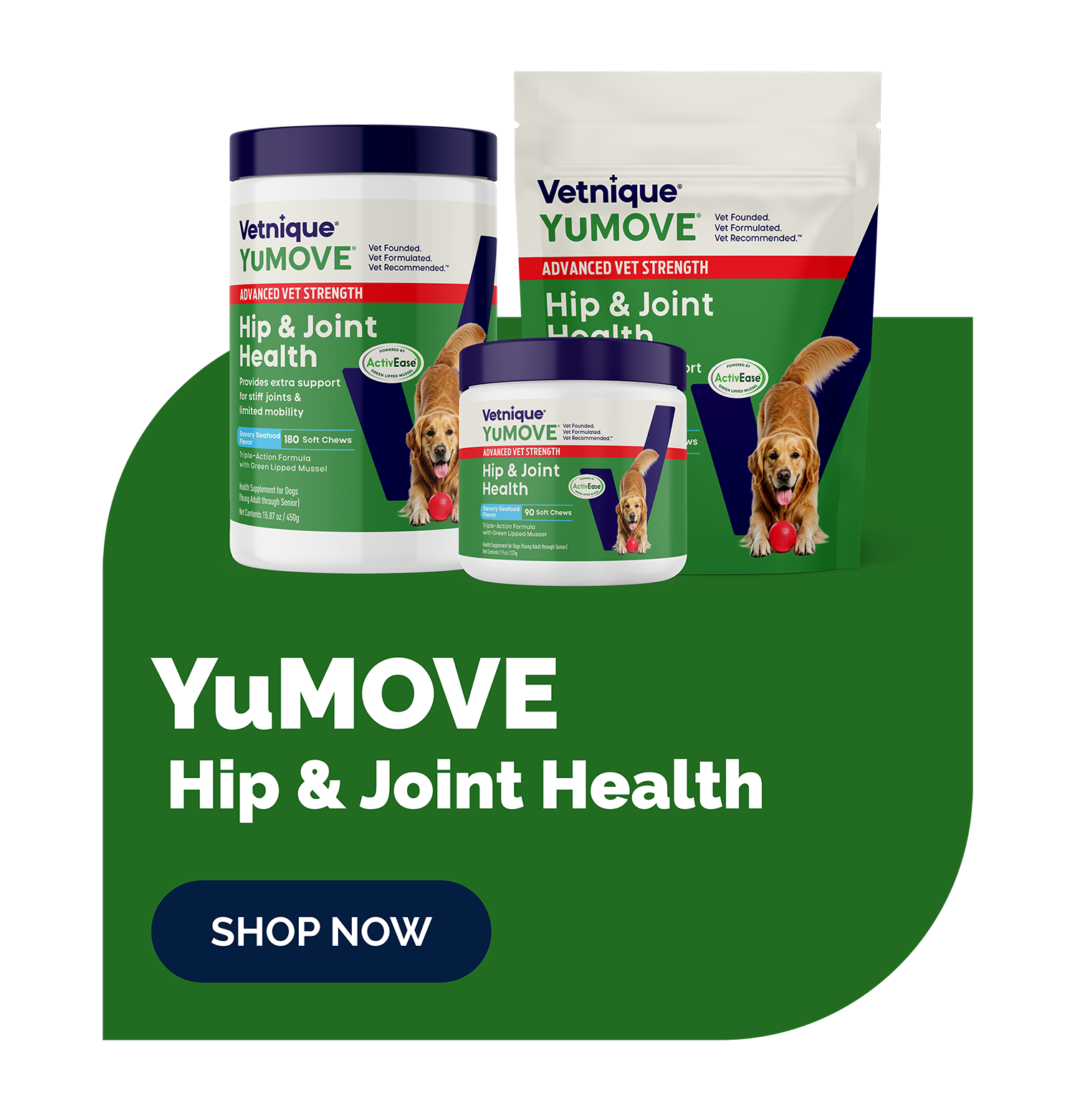
For daily hip and joint support, YuMOVE Advanced Vet Strength Chews provide targeted joint support with ActivEase Green Lipped Mussel, glucosamine, and hyaluronic acid — the right formulation for dogs already showing stiffness and joint discomfort. For general preventive support, YuMOVE Tasty Health Bites deliver daily joint nutrition in a convenient treat format. Browse the full YuMOVE hip and joint health collection for all available options.
CBD oil is considered alternative therapy with some promise for pain management. Topical CBD balms and salves can be massaged onto painful areas, and CBD oil can be ingested with careful dosing. Follow manufacturer instructions and start low and slow if it's your dog's first time with CBD. Consult your veterinarian before starting any CBD regimen.
NSAID anti-inflammatories are commonly used for joint pain. Talk to your veterinarian about whether your dog needs more advanced support. Your vet can recommend the right medication based on your dog's health history and current condition.
Keeping your dog at a healthy weight is the number-one safeguard against joint issues — especially for high-risk breeds. Every extra pound puts more stress on joints as they age.
Daily movement keeps joints lubricated and the supporting muscles strong. The right range for most dogs lands between 30 minutes and two hours per day. Watch for fatigue — overexertion isn't doing their joints any favors either.
Starting a daily joint supplement before symptoms appear is one of the best long-term investments in mobility. YuMOVE Tasty Health Bites are formulated for daily preventive joint care. YuMOVE Advanced Vet Strength Chews provide stronger support for dogs already experiencing stiffness or reduced mobility.
If your dog's condition is deteriorating quickly or they're clearly in pain, don't wait. Make a note of symptoms and trust what you're seeing.
Signs that require immediate veterinary attention: vomiting or loss of appetite, fever, unusual low energy or malaise, inability to stand from a sitting position, inability to stand for more than a few minutes, or constant yelping or severe pain signals.
For senior dogs, owners often assume stiffness and worsening mobility are just "part of aging" and delay the vet call. They're not, and the delay has consequences — overlooked arthritis in seniors can cause irreversible damage to legs, spine, hips, and other at-risk areas. Age is not a reason to wait. Dogs of every age deserve to be evaluated for arthritis concerns.
The good news: even a dog diagnosed with arthritis or hip dysplasia can live a long, comfortable life with the right treatment plan. Take notes on what you're observing — physically and emotionally — and bring those notes to your vet. Together you can help your dog stay active, mobile, and comfortable.
Browse the full YuMOVE hip and joint health collection for daily supplements, advanced vet strength formulas, and tasty health bites.
Arthritis is caused by inflammation of joints when the cartilage that cushions each joint deteriorates, leading to bone-on-bone contact during movement. The most common type is osteoarthritis from wear and tear over time. Other types include rheumatoid arthritis (an autoimmune condition) and septic arthritis (caused by infection). Risk factors include aging, obesity, overexertion, genetic predisposition, and immune or metabolic disorders like diabetes.
Hip dysplasia is a genetic condition where the ball-shaped end of the femur and the hip socket grow at different rates during development, causing displacement and dysfunction of the hip joint. The result is moderate to severe pain and progressive loss of function. Untreated, it can lead to arthritis and in extreme cases lameness of the hind legs. There's no known cure, but symptoms can be managed with diet, exercise, weight control, supplements, and surgery in advanced cases.
Breeds at higher risk for arthritis include German Shepherds, Labrador Retrievers, Springer Spaniels, Australian Cattle Dogs, Golden Retrievers, Bernese Mountain Dogs, Rottweilers, Old English Sheepdogs, Newfoundlands, and Pomeranians. Breeds at higher risk for hip dysplasia include German Shepherds (nearly 20% affected), Golden Retrievers (about 10%), Great Danes (over 10%), Saint Bernards, Pugs, Neapolitan Mastiffs, French Bulldogs, Basset Hounds, and Bloodhounds.
Signs of arthritis include licking affected joints, irritability or aggression when someone touches a painful area, limping or a noticeably slower gait, loss of appetite or fever (specifically in rheumatoid arthritis), muscle atrophy or quivering and weakness, and swollen or tender legs. Signs of hip dysplasia include swaying hips or hind legs while walking, narrow stance of the hind legs, avoidance of stairs or jumping, bunny hopping with hind legs, hind-leg lameness, and hips sagging or dropping.
At-home strategies include low-impact physical therapy (swimming, underwater treadmills, walking on soft surfaces, passive range-of-motion exercises), gentle massage around affected joints with optional heat, weight management to reduce joint stress, home accessibility modifications (rugs for grip, ramps for elevated surfaces), daily hip and joint supplements like YuMOVE Advanced Vet Strength Chews, and CBD oil for pain management. Always ensure pain is controlled before starting exercise, and consult your vet for a complete treatment plan.
Contact your veterinarian if your dog shows vomiting or loss of appetite, fever, unusual low energy or malaise, inability to stand from a sitting position, inability to stand for more than a few minutes, or constant yelping or severe pain signals. Dogs of all ages should be evaluated for arthritis concerns — age isn't a reason to wait, and overlooked symptoms in seniors can cause irreversible damage.
We are devoted to helping pets thrive & lead healthier, happier lives through unique, vet-formulated products.