Dog Dental Care & Health: Common Problems, Symptoms, and Prevention
Medically reviewed by James Bascharon, DVM | Last reviewed: April 2026

Dental health care for dogs and cats isn't cosmetic — it's the single best predictor of long-term health I track in my patients. Periodontal disease affects the majority of dogs over three years old, and the bacteria in infected gums can spread through the bloodstream to the heart, liver, and kidneys. The prevention stack is simple: brush 2–3 times per week, supplement with dental chews or finger-mitt cleaning, and schedule a professional cleaning with your vet.
Key Takeaways
Dental care is crucial for your dog's overall health. Neglecting oral hygiene can lead to periodontal disease, which affects the majority of dogs over three years old and can spread bacteria through the bloodstream, impacting vital organs.
Dental plaque forms when food particles and bacteria accumulate on teeth. If not removed, plaque hardens into tartar, which causes gum inflammation and can progress to periodontal disease, tooth loss, and systemic infections affecting the heart, liver, and kidneys.
Signs of dental problems include persistent bad breath, excessive drooling, swollen or red gums, difficulty eating, and behavioral changes. Early detection through regular mouth inspections is essential.
An effective dental routine includes brushing 2–3 times per week with dog-specific toothpaste, supplementing with dental chews and treats, and scheduling regular professional cleanings with your veterinarian.
Nutrition plays a role in oral health — high-quality food, crunchy fruits and vegetables like apples and carrots, and dental supplements can all support cleaner teeth and stronger gums.
Natural breath fresheners like parsley and store-bought peppermint dental treats can help, but persistent bad breath should be evaluated by a veterinarian to rule out underlying disease.
Table of Contents
Understanding Common Dental Problems in Dogs
Signs and Symptoms of Dental Issues
Dog-Friendly Dental Care Products and Tools
Effective Dental Care Routine for Dogs
Nutritional Factors for Good Oral Health
Most dog owners don't think of dental problems as a major welfare or health risk. They should. Just like humans, dogs can develop dental issues that cause real discomfort, pain, and serious systemic complications if left untreated.
As a responsible owner, dental health belongs on your daily care radar. This guide covers common dental problems, preventive measures, care products, brushing technique, nutrition, and breath-freshening strategies.
A dog's oral health directly influences overall well-being — same as in humans. Neglecting dental care leads to serious consequences, primarily periodontal disease, which affects the majority of dogs over three years old.
Poor oral hygiene does more than cause bad breath. It leads to discomfort, difficulty eating, and in severe cases life-threatening health issues. Periodontal disease, left untreated, spreads bacteria through the bloodstream and impacts vital organs — potentially shortening your dog's lifespan by years.

Proactive dental care is about giving your dog a longer, happier life — not just a clean smile. Regular brushing, professional dental cleanings, and offering dental chews make a measurable difference in outcomes.
Tartar and bad breath aren't cosmetic concerns. In my practice, they're the two most reliable warning signs that something bigger is developing underneath. Dental plaque and tartar buildup are the usual culprits — and they progress to gum inflammation and periodontal disease faster than most owners expect.
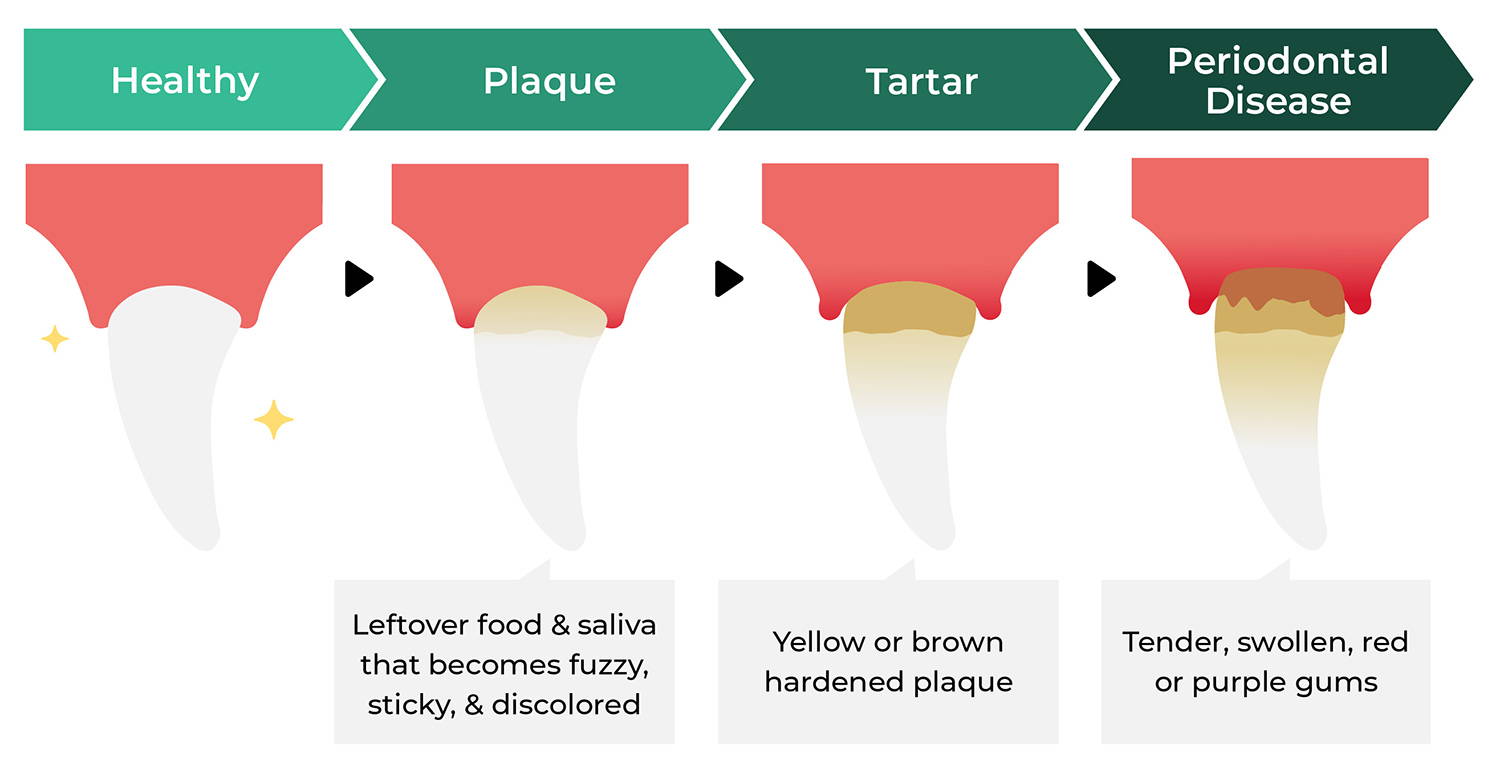
Dental plaque forms when food particles and bacteria accumulate on teeth, leading to gum inflammation and redness. Left alone, plaque hardens into tartar — a yellowish substance that sticks to teeth and harbors bacteria. Tartar irritates the gums, causing inflammation that progresses to pain and eventually tooth loss.
The long-term effects reach well beyond the mouth. Persistent bad breath usually means underlying problems that need addressing — infections, disease, systemic inflammation. Left untreated, gum inflammation becomes periodontal disease, and bacteria from the mouth can reach the heart, liver, and kidneys.
Combating these issues requires regular vet check-ups, professional cleanings, and at-home brushing. Prevention works. The DentaBliss Daily Dental Finger Mitt makes brushing easier — especially for dogs that resist traditional toothbrushes — by letting you gently clean teeth and massage gums with a textured finger wipe.
Bad breath is more than a social problem. It's often the first sign of an underlying health issue. Pay attention to the signs around it — excessive drooling, swollen gums, difficulty eating, unexpected behavioral changes.
A mild "dog breath" smell is normal. Persistent, foul-smelling breath is not. It can point to dental disease specifically or to more systemic concerns like kidney disease, diabetes, or GI issues. Bad breath is the earliest warning most owners notice, which is why it matters so much to act on.
Early detection is everything. Inspect your dog's mouth regularly for any signs of trouble and consult a veterinarian if you notice anything unusual — including bad breath that won't go away. Oral health has benefits that reach well beyond the mouth.
Beyond regular brushing, dental chews and other targeted products play a real role in keeping teeth in good shape.
Dental sticks and dental treats are a fun, effective way for your dog to participate in oral hygiene. These products use textured surfaces to scrape plaque and tartar during chewing — promoting healthier gums and fresher breath with zero effort from you. Look for products endorsed by veterinarians with a track record of real oral health benefits.
Water additives and mouth sprays integrate easily into daily routines. They fight bacteria, reduce plaque formation, and support overall oral hygiene without any brushing involved.
The DentaBliss Daily Dental Finger Mitt is a convenient alternative to traditional toothbrushes. The textured finger wipe lets you brush teeth and massage gums simultaneously — ideal for dogs who resist standard brushes.
Every dog is different, and finding the right products may take trial and error. Ask your veterinarian for recommendations specific to your dog's needs.
Brushing your dog's teeth sounds daunting, but with patience and the right approach it becomes routine.
Step 1: Gather supplies. A dog-specific toothbrush or dental finger mitt and dog-safe toothpaste. Human toothpaste is toxic to dogs — always use pet formulations.
Step 2: Introduce gradually. Let your dog sniff and taste the toothbrush and toothpaste before any attempt to brush. Familiarity matters.
Step 3: Choose the right time. Pick a calm moment when your dog is relaxed. Start by gently massaging gums with your finger — no brushing yet.
Step 4: Brushing technique. Lift the lips and brush using gentle circular motions. Focus on outer surfaces and back teeth, where plaque accumulates most.
Step 5: Positive reinforcement. Praise and reward after every session. The association you're building matters more than the perfection of the brushing itself.
Aim for 2–3 times per week. Supplement with dental chews, which reduce plaque and tartar between brushing sessions. Professional cleanings with your vet play a pivotal role in maintaining optimal oral health.
Establishing a consistent routine is what delivers lifetime healthy teeth and gums. You're not just preventing oral issues — you're supporting overall well-being.
Beyond brushing, diet plays a direct role in dental outcomes.
Choose high-quality dog food that supports oral health. Look for formulations that are nutritionally balanced and contain ingredients helping manage tartar and plaque. Supplement with dental treats that have abrasive textures or enzymes for cleaner teeth.
Crunchy fruits and vegetables like apples and carrots are fiber-rich, teeth-friendly snacks for dogs of any age. The crunch matters — mechanical abrasion cleans teeth naturally. Pay attention to size and preparation to prevent choking.
Dental supplements can add extra support. Look for formulations with antioxidants, vitamins, and minerals that support strong teeth and gums.
Paying attention to diet and including teeth-cleaning treats and fresh produce is how you actively improve dental well-being without additional effort beyond feeding.
Natural remedies can freshen breath and improve oral hygiene alongside other measures.
Breath fresheners and chews. Available in pet stores and online. Contain pet-safe amounts of natural ingredients like parsley, cinnamon, and mint to neutralize odors. Start slowly with any new treat, watch for GI upset, and consult your vet if you're unsure about ingredients.
Peppermint. Popular for its breath-freshening properties. Dogs can have small amounts of fresh peppermint leaves in moderation. Peppermint oil in concentrated form is toxic — only offer peppermint through commercially formulated dental products with pre-measured, pet-safe dosages.
Home remedies. Mixing a small amount of chopped parsley into food helps counteract bad breath. Daily brushing and dental treats compound the effect over time.
Natural remedies help with mild cases. Persistent bad breath that won't resolve usually means an underlying dental issue that needs veterinary evaluation.
Pet care is evolving, and oral health is no exception.
Ultrasonic toothbrushes designed for dogs are changing the brushing experience. They use ultrasonic waves to remove plaque and debris efficiently, delivering a low-stress dental routine. They're not right for every dog — they tend to run expensive, the noise can startle anxious dogs, and they're often too large for smaller breeds.
Dental gels infused with natural enzymes are another category gaining traction. Applied to teeth, they break down plaque and support fresher breath. As more owners look for natural products, ingredients like coconut oil and green tea extract are showing up in dental formulations.
From regular brushing to dental treats — and regular vet check-ups — proactive dental care is what keeps teeth healthy and quality of life high.
Yes, dogs can enjoy small amounts of fresh peppermint leaves. Peppermint's natural properties can help freshen breath. Stick to store-bought dental treats made specifically for dogs and follow the recommended amount on the label rather than giving pure peppermint oil.
No, pure peppermint oil is not safe for dogs. Ingesting too much can lead to toxicity and health issues. Peppermint oil should only be used as part of a commercially formulated dental treat with a pre-measured, pet-safe amount inside. As an alternative, fresh peppermint leaves can be given in small quantities for breath-freshening benefits.
Tartar buildup can lead to gum inflammation and periodontal disease. Regular brushing with a toothbrush or dental finger mitt, dental chews, dental sticks, and professional cleanings can help prevent and manage tartar buildup. Once tartar has hardened, only a professional dental cleaning under anesthesia can fully remove it.
Look for dog-specific toothbrushes, dental finger mitts, and toothpaste formulated for pets. Dental chews with textured surfaces are effective for plaque removal. Water additives and mouth sprays can also help fight bacteria. Always choose products endorsed by veterinarians for optimal safety and effectiveness.
Establish a regular dental care routine including brushing your dog's teeth 2–3 times per week, providing dental treats, and offering safe teeth-friendly snacks like apples and carrots. Regular veterinary check-ups ensure any dental issues are caught early. Professional cleanings are also important for long-term oral health.
Ideally, aim for 2–3 times per week. Daily brushing is even better if your dog tolerates it. Supplement brushing with dental chews to help reduce plaque and tartar buildup between sessions. Regular professional cleanings by a veterinarian also play a key role.
While a bit of dog breath is normal, persistent and foul-smelling bad breath can indicate underlying dental problems such as plaque and tartar buildup, gum inflammation, or periodontal disease. It can also point to more serious concerns like kidney disease, diabetes, or gastrointestinal issues. If bad breath persists, consult your veterinarian for an evaluation.
We are devoted to helping pets thrive & lead healthier, happier lives through unique, vet-formulated products.