

Cats are known for being meticulous self-groomers. So when your cat stops properly cleaning its rear end, it is noticeable — and it usually means something is wrong. A dirty, smelly, or unhygienic bum is not just unpleasant; it can signal an underlying health issue that needs attention.
There are three main reasons your cat may have trouble keeping its rear end clean: grooming difficulties caused by long or matted fur, limited mobility that prevents your cat from reaching the area, and anal gland problems that make the area too painful to groom. Here is how to identify which one is affecting your cat and what to do about it.
1. Matted Fur and Grooming Difficulties
Long-haired cats — Persians, Maine Coons, Ragdolls, Himalayans, and Norwegian Forest Cats in particular — are prone to feces becoming trapped and matted in the fur around the rectal area. When the fur around the bum is long, stool can stick to it during bowel movements and become tangled into the coat. Over time, this creates mats that attract more feces and urine, making the problem progressively worse.
Even short-haired cats can develop this problem if their stool is soft or loose, which causes more material to cling to the fur during bowel movements.
How to help
For cats with matted fur around the rear, the immediate fix is gently cleaning the area with a warm, damp cloth or a pet-safe hygiene wipe. If the fur is severely matted, you may need to carefully trim the matted sections with blunt-tipped scissors — or have a professional groomer handle it, especially if your cat is resistant to being handled in that area.
The long-term solution is maintaining a regular sanitary trim schedule. Keeping the fur around the bum trimmed short prevents feces from accumulating in the first place. Speak to your groomer or veterinarian about how frequently your cat needs this type of trim based on their coat length and texture. For most long-haired cats, a sanitary trim every four to six weeks keeps the area manageable.
Glandex Wipes are formulated for perianal hygiene and can help keep the area clean between trims and baths — particularly useful for long-haired cats that need more frequent attention around the rear.
2. Limited Mobility
If you have ever watched a cat groom itself, you know it involves a remarkable amount of twisting, bending, and flexibility. Cats have to turn all the way around to reach and clean their rear end. When mobility is limited — whether from arthritis, injury, or excess weight — this becomes difficult or painful, and the cat may stop cleaning the area altogether.
Arthritis
Arthritis is common in older cats and is one of the most frequent reasons senior cats stop grooming their rear. The stiffness and pain in the joints makes the twisting motion required to reach the bum uncomfortable enough that the cat simply avoids it. You may also notice your cat having difficulty jumping, hesitating before stairs, or being less active overall.
Excess weight
Overweight cats face a compounding problem: excess body weight both limits the flexibility needed to reach the rear and reduces the energy and motivation to attempt it. The result is a cat that cannot physically maintain proper hygiene, which can lead to skin irritation, matting, and secondary infection in the perianal area.
How to help
If arthritis or weight is limiting your cat's ability to groom, the first step is a veterinary evaluation. Your vet can assess the severity of arthritis and recommend appropriate pain management, and can help you develop a safe weight management plan if excess weight is a factor.
In the meantime, you will need to assist with grooming. Gently clean the area with a warm cloth or Glandex Wipes as needed, and keep the fur around the rear trimmed short to reduce the amount of material that can accumulate.
3. Anal Gland Problems
Cats have two small anal glands (also called anal sacs) located on either side of the anus. These glands normally secrete a small amount of fluid each time your cat passes a bowel movement. When the glands become impacted — meaning the fluid thickens and does not express properly — it causes pressure, discomfort, and pain around the anus.
A cat with impacted anal glands may stop cleaning its rear end because the area is too sensitive and painful to groom. The impaction itself can also cause symptoms that create additional hygiene problems:
- Scooting — dragging the bum across the floor to try to relieve the pressure, which can trap feces in the fur
- Brown fluid leaking — impacted glands can leak a foul-smelling brown discharge onto floors, furniture, and bedding
- Foul smell — a strong, fishy odor coming from the rear end
- Dysfunctional bowel movements — straining, changes in stool consistency, or visible discomfort during litter box use
If you notice these signs alongside your cat's failure to groom its rear, anal gland impaction is a likely cause. For a detailed guide on recognizing and addressing anal gland problems in cats specifically, see our article on how to tell if a cat needs anal glands expressed.
How to help
If you suspect anal gland impaction, a veterinary visit is the recommended first step. Your vet can manually express the glands and assess whether infection has developed. For cats with recurring anal gland issues, supporting firm stool through dietary fiber is the most effective preventive approach. Firm, bulky stool naturally presses against the anal sacs during bowel movements, helping them empty before fluid builds up.
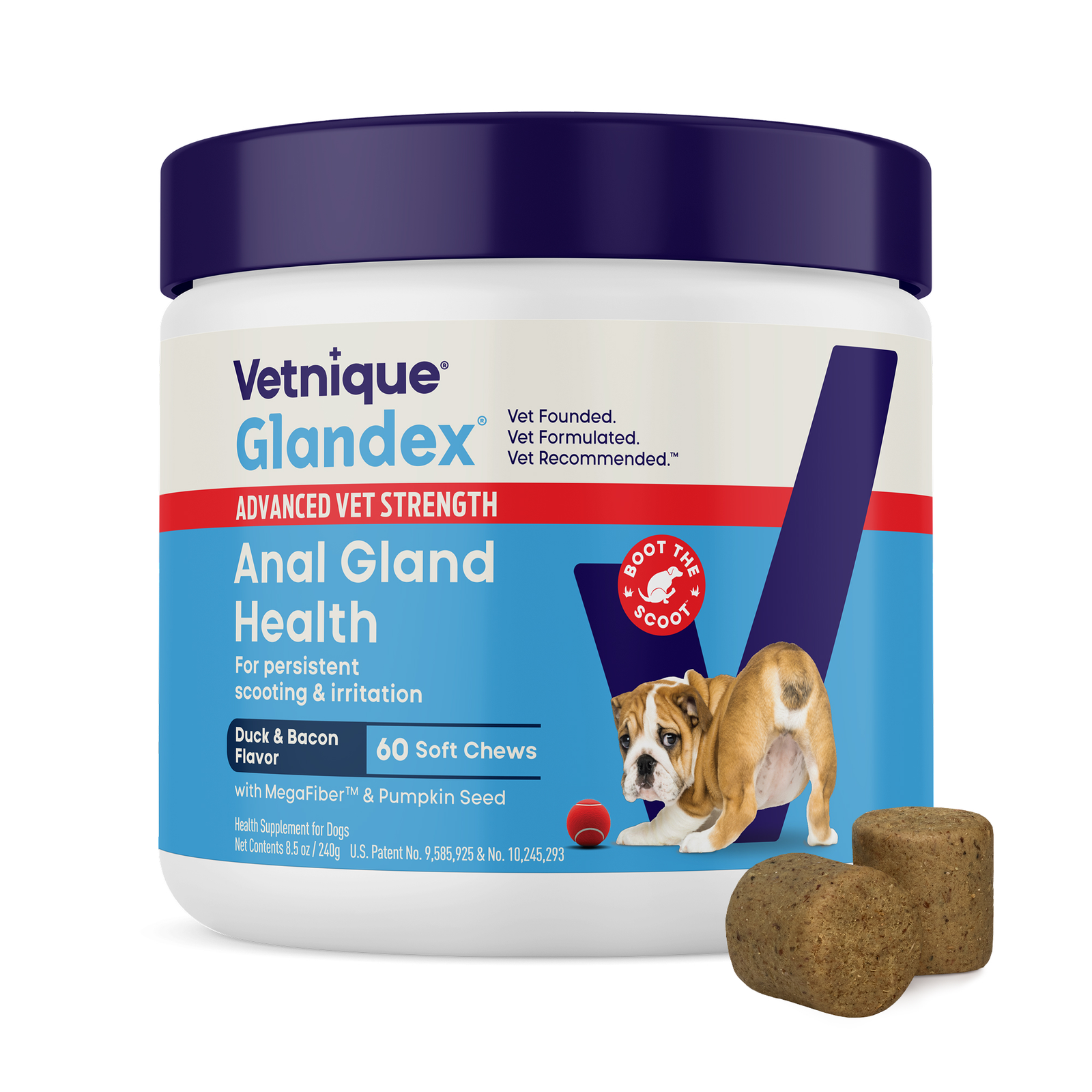
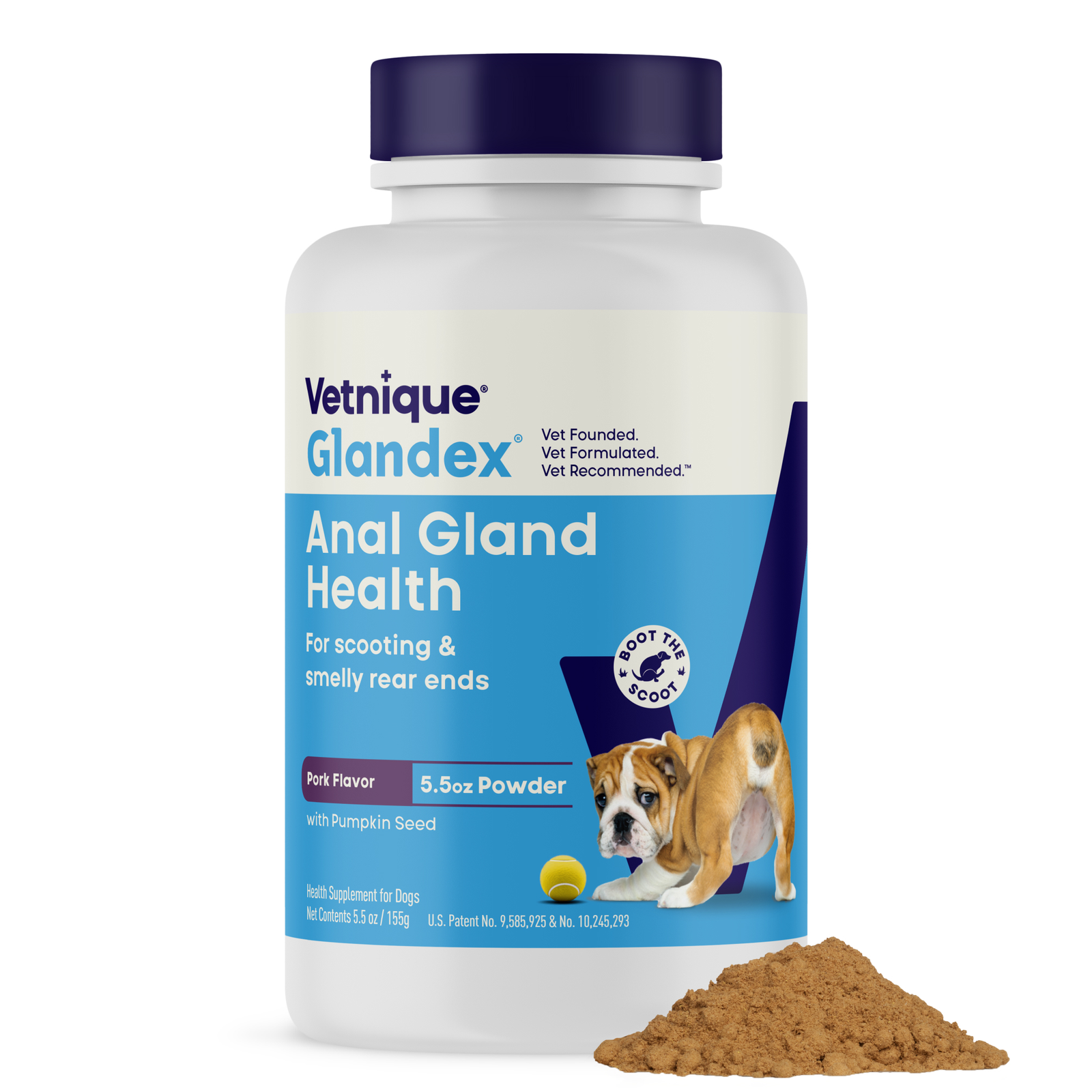
Glandex Powder is the best option for cats — most cats will not take chews, but the powder can be mixed into wet food. It combines fiber, probiotics, and digestive enzymes to promote the stool quality that supports natural anal gland function. For cats with severe or chronic anal gland issues, Glandex Advanced Vet Strength Powder provides a higher concentration of active ingredients in the same mixable format.
How to Identify the Cause
Since all three causes result in the same visible problem — a dirty bum — paying attention to the accompanying signs helps you narrow it down:
- Long-haired cat + visible mats around rear + normal behavior otherwise → likely a grooming/fur issue
- Older or overweight cat + difficulty jumping + reduced activity + no longer grooming other body parts well either → likely a mobility issue
- Scooting + foul smell + brown fluid on surfaces + pain when rear is touched → likely anal gland problems
Multiple causes can overlap. An overweight, long-haired senior cat may be dealing with all three simultaneously. In cases where the cause is not clear, a veterinary evaluation is the fastest path to an answer.
When to See the Vet
Consult your veterinarian if:
- Your cat's rear end has a persistent foul smell that does not resolve with cleaning
- You notice brown fluid leaking or staining on surfaces
- The area around the anus appears red, swollen, or your cat reacts in pain when touched
- Your cat is scooting or showing signs of discomfort during bowel movements
- Your cat has suddenly stopped grooming despite no obvious fur or weight changes
- Regular cleaning and grooming at home have not resolved the problem
A dirty bum is your cat's way of telling you something is not right. Whether the issue is grooming, mobility, or anal glands, identifying the cause early prevents secondary problems like skin irritation, infection, and worsening discomfort — and gets your fastidious feline back to feeling like themselves.